Visa
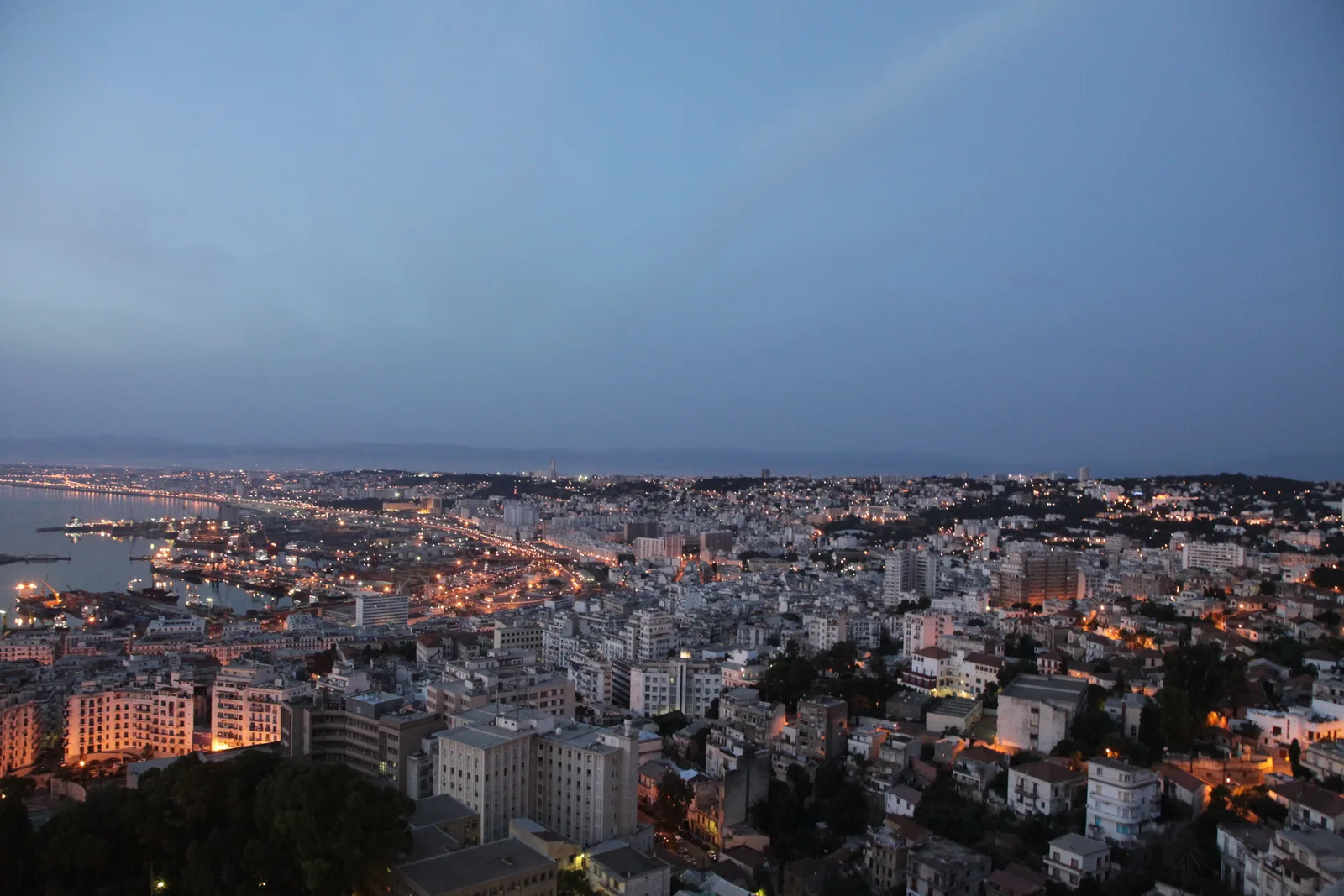
Algiers rewards a slower, better-connected visit
Algiers is a city to explore in layers: the Mediterranean waterfront, streets rising behind it, and a Casbah whose lanes make a very different kind of journey from the broad roads below. A good visit depends as much on choosing a useful base and managing the hills as on collecting monuments. Allow time to sit, look and change direction; an itinerary drawn as straight lines on a map will rarely describe the walking involved.
The official Algiers destination introduction places urban heritage, architecture, museums and food at the centre of a visit. This is Algeria’s capital and a working city, with the everyday demands that entails. Plan around places you want to understand rather than expecting an uninterrupted resort experience. Three full days make a sensible first introduction; add a fourth if you want a day outside the city without squeezing the capital into hurried fragments.
For someone considering a move, use the same stay differently. Make one ordinary journey at the hour you would commute, shop for the things you regularly buy, and inspect a potential neighbourhood on foot. A handsome view over the bay tells you little about the entrance to a building, the stairs home with groceries or the time needed to reach your workplace.
The contrast between the old urban fabric and the French-period boulevards is central to its character. Look at how streets meet the slope, how arcades shelter the pavement and how the port relates to the city above. Those observations connect the scenery with the history. They also explain why two addresses that appear close together can feel quite different to someone travelling on foot.
Read the Casbah as a living neighbourhood
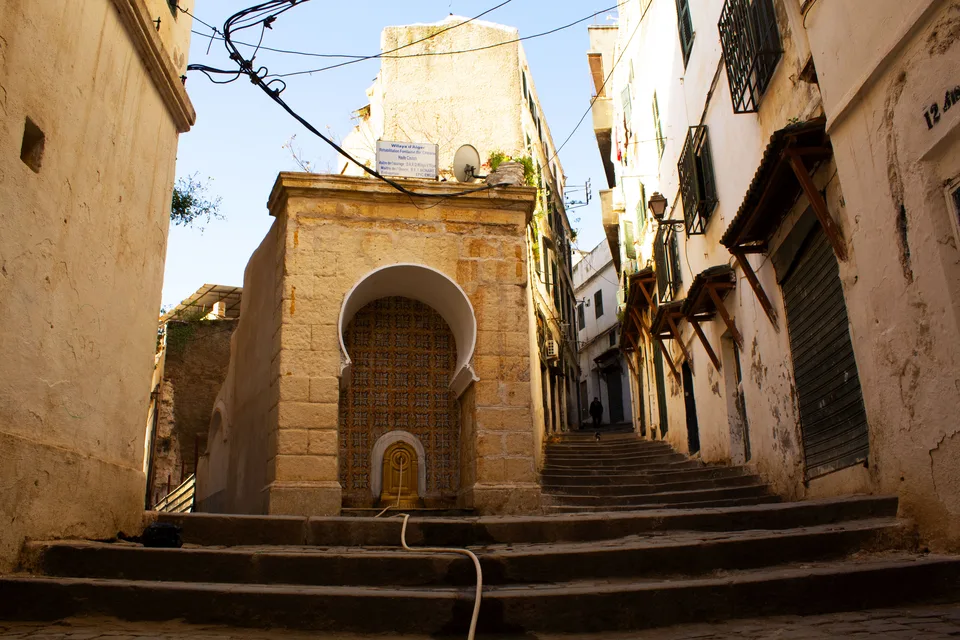
The UNESCO listing for the Kasbah of Algiers recognises a hillside urban ensemble of homes, mosques, palaces and defensive remains. Inscribed in 1992, the property covers 54.7 hectares. Its importance lies in the relationships between buildings, lanes and the community as well as in individual monuments. Ottoman-period layers are particularly significant, but this is a city with a much longer history, not a place created in one building campaign.
Arrange a knowledgeable local guide and agree the route, length, price and meeting point beforehand. Ask specifically how much stair climbing is involved and where a vehicle can collect you afterwards. Starting higher and walking down may reduce climbing, but downhill steps can still be difficult for knees, balance or a pushchair. A guide should be able to discuss an appropriate route rather than promise universal access.
The UK government’s Algeria safety guidance recommends a good local guide for the Casbah and letting your hotel or hosts know your plans. Treat that as practical preparation. Keep the visit in daylight, take only what you need, and avoid wandering into a private doorway because it looks photogenic. Ask permission before photographing residents, workshops or domestic interiors. The most useful explanation may be about how a courtyard house works, rather than the name of another building seen briefly from outside.
Do not assume that every palace or religious building on a map is open to casual visitors. Agree which interiors are actually accessible before paying for a tour advertised around them. A shorter route with time for explanation is usually a better choice than a long list of locked entrances. Residents’ privacy and current conservation work take precedence over completing a sightseeing checklist.
Choose a base by the journeys you will make
For a first visit, compare central accommodation around the streets served by Tafourah–Grande Poste and the lower city with options farther uphill. A central address can simplify a morning walk and a metro journey, but “central” is not a guarantee of a level approach. Ask for the exact entrance location and the nearest useful station, then inspect the route rather than relying on the hotel’s district name.
Hydra and El Biar are alternatives to assess if appointments, friends or a prospective workplace take you to the upper city. Judge them against your actual destinations. A property convenient for a business meeting may require more planning for a sightseeing day around the Casbah and Hamma. Compare the total cost of the room and journeys together, especially if several people will need taxis at different times.
Airport accommodation has a clear role for an early departure or late arrival. For the main sightseeing stay, first check whether its transfer arrangements make repeated trips into town worthwhile. Request a written quote for any hotel transfer, including the number of passengers and bags, and clarify how a delayed flight is handled. A cheap room can lose its advantage when transport is added repeatedly.
Before booking any property, confirm the bathroom arrangement, lift access, air conditioning, noise exposure and cancellation terms. Ask whether the quoted total includes breakfast and all compulsory charges, and which payment methods are accepted. If step-free access matters, request details of the entire route from the pavement to the room. A lift inside the building does not answer the question about steps at its front door.
Give Hamma and its museums a separate day
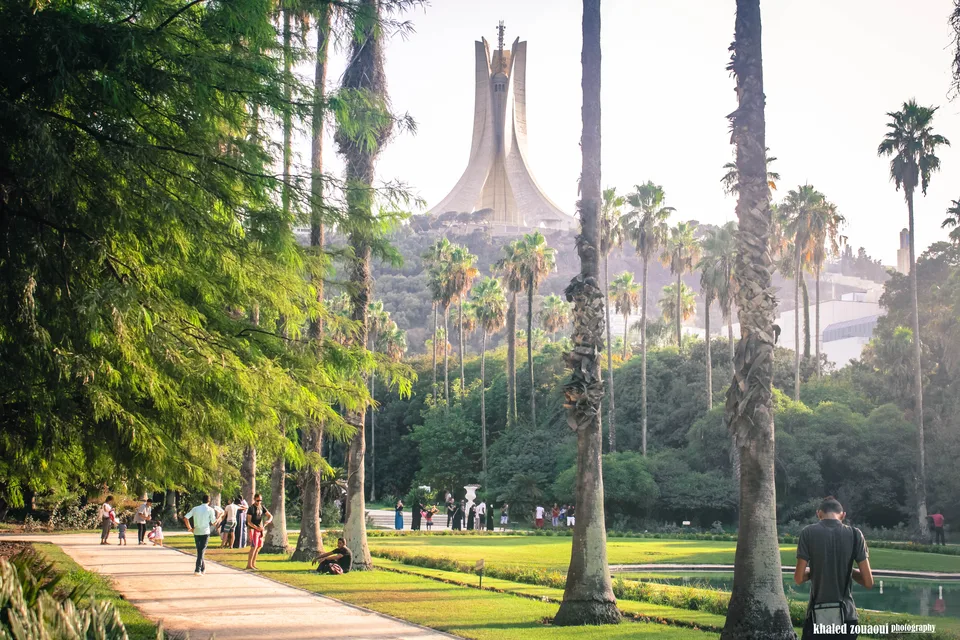
The Jardin d’Essai du Hamma offers a different pace from the Casbah: planted avenues, open views and space to pause between more concentrated cultural visits. The Algiers wilaya’s garden programme identifies the garden’s public managing institution and directs visitors to its official announcements. Check those notices for events and arrangements affecting your date. Reliable current admission prices were not established during this review, so obtain the day’s price directly rather than budgeting from an undated travel listing.
Pair the garden with the National Museum of Fine Arts if both are open on your chosen day. The Culture Ministry’s museum directory also lists the Bardo and the national museum of modern and contemporary art in Algiers. Choose according to your interests rather than treating all museums as interchangeable rainy-day fillers. Confirm the actual galleries available, opening day and any separate photography charge before travelling across the city for a particular collection.
Leave a proper interval for lunch. If visiting with children or someone who tires easily, the garden can be the main outing, with a museum retained as an optional addition. Conversely, an art-focused visitor should give the museum its own generous slot. Neither approach requires pretending that a botanical garden can be fully understood in the spare minutes between other stops.
Make room for the memorial and Notre-Dame d’Afrique
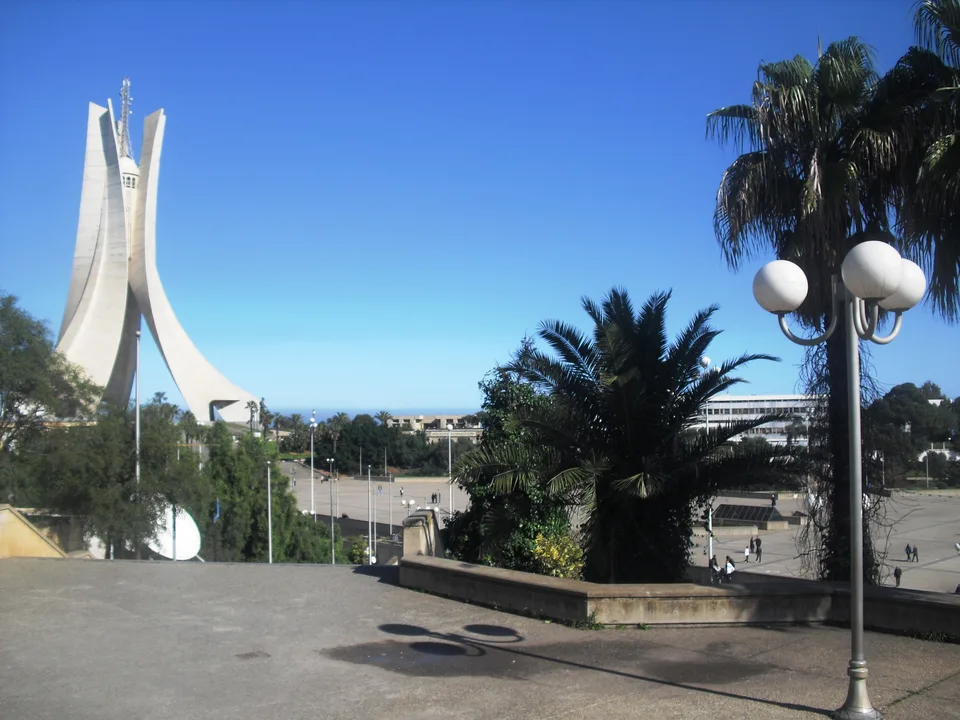
The National Tourism Office’s account of the Martyrs’ Memorial explains that it was erected in 1982, twenty years after independence, to commemorate those killed in the independence struggle. Its elevated setting and striking forms are part of the experience, but the historical purpose deserves attention beyond a photograph. Read the interpretation available and allow for a reflective visit rather than using the place solely as a viewing platform.
Notre-Dame d’Afrique is another distinct outing. The basilica publishes visitor hours of 11am–12.30pm and 3pm–5.30pm, with closure on Friday afternoons and public holidays. Organised groups should contact it beforehand. Build the journey around a confirmed opening period; arriving on the hill during the midday closure is an avoidable frustration. Visitor access and prayer times serve different purposes, so follow the arrangements for each.
For either outing, arrange the return journey before heading uphill. Do not assume that every cable-car connection shown in older itineraries is operating when you arrive. Ask about current service, the final departure and the alternative road route. This is especially important if you have limited mobility or are fitting the visit before a flight. Keep enough flexibility to replace an unavailable connection without losing the whole afternoon.
Airport arrivals and everyday transport
Houari Boumediene Airport has a railway station, and the airport’s terminal-access information explains the walking connections and ETUSA bus access. Follow the signs for your actual terminal rather than assuming a single doorway serves every flight. The SNTF journey planner is the place to check airport trains and city connections for your travel date. Agha is a useful central arrival point, but allow time for the onward journey to your accommodation.
Cached railway search results can carry old dates even when they look like a live timetable. Check the date displayed before relying on a departure and leave a buffer for ticket purchase and the terminal walk. For a late arrival, substantial luggage or a party needing assistance, compare a prearranged road transfer with the complete public-transport journey. Agree the price, meeting place and contact procedure in writing.
The metro can take pressure off a sightseeing day. The operator’s published ticket table lists a single metro journey at 50 Algerian dinars and a metro-only 24-hour pass at 150 dinars. Combined metro-and-tram products are listed at 70 dinars for one journey and 200 dinars for 24 hours. Check current conditions and validity before buying: a metro ticket is not automatically permission to ride every other form of transport.
There is a discrepancy in the operator’s online information: its rules page states a 9pm closure, while its dedicated operating-hours page states 10pm; both show a 5am opening. Confirm the last useful service locally and keep a taxi option for the evening. Ask about lifts and the specific entrance you need if stairs are a problem. A station name alone does not establish an accessible route through the whole journey.
Eat locally and budget in dinars
The official tourism introduction to Algerian cuisine highlights couscous and dishes including rechta, chorba and dolma, alongside coastal ingredients such as fish, olive oil and citrus. Use that as a starting point for asking what a kitchen prepares that day. Recipes differ, so explain allergies and dietary requirements clearly rather than assuming the name of a dish guarantees particular ingredients.
For fish, ask how the price is calculated before ordering, particularly if a menu quotes by weight. Establish what sides, drinks and service are included. A simple lunch near your day’s activities can be a better use of time than crossing town for an unverified restaurant recommendation. Keep a note of a reliable nearby option for arrival evening, when searching widely with luggage adds little pleasure.
Build the budget from actual room quotes and planned journeys, then add meals, museum admissions, guide fees and a contingency. Three separate metro singles at the published rate total 150 dinars, matching the listed metro day pass; choose according to your expected use and the product’s conditions. That calculation is more useful than converting every price through an unofficial exchange rate that may not be available to you.
Ask accommodation providers how you can pay before arrival, and organise access to local currency through lawful channels. Keep small payments manageable without carrying your entire travel budget on a sightseeing walk. For crafts or other purchases, request the total price and retain a receipt; for older objects, check export requirements before buying. A seller’s description of something as a souvenir is not proof that it can leave the country.
Shopping is best fitted around the day’s route. Before ordering a commissioned item or paying for alterations, establish when it will be ready and what happens if collection is delayed. If you want a locally made piece, ask about its material and maker rather than judging origin from a display label alone. Leave space in your luggage for fragile purchases and check airline baggage allowances before agreeing to something bulky.
For a longer stay, make a sample weekly basket instead of extrapolating from restaurant meals. Price the groceries, household supplies and transport you actually use. Keep irregular expenses such as replacement appliances, medical appointments and travel documents separate from ordinary weekly spending. This makes comparisons between homes more meaningful, particularly when one rent quote includes services and another excludes them.
Plan around the season and the day’s conditions
For a walking-led visit, spring and autumn are sensible seasons to investigate first. Algiers is a Mediterranean coastal city, not a Saharan stop: choose clothing and expectations accordingly. In warmer periods, put exposed uphill walking early in the day and reserve a flexible indoor visit for later. In wetter weather, prioritise footwear with grip and shorten routes involving steep steps.
Check Météo Algérie’s forecasts shortly before travel and again for any excursion. A seasonal preference is not a forecast for your dates. Carry a layer for an evening out and plan somewhere to take a break rather than making every hour dependent on dry weather. If the day becomes uncomfortable, changing the order is usually easier than completing an overambitious walk.
Religious holidays and Ramadan can alter the rhythm of meals and visits. Confirm arrangements directly for your dates, especially if arriving before an evening meal or planning a Friday afternoon. The safety guidance linked above explains local expectations and relevant laws, including restrictions on drinking alcohol in public. Consider those details when choosing whether the city suits the kind of holiday you want.
Three days, with a fourth beyond the capital
On day one, take a guided Casbah walk in daylight, with the route adjusted to your fitness and interests. Allow lunch and an unhurried look at the lower city afterwards. Keep the evening close to your accommodation; this gives you a chance to understand the immediate area and confirm tomorrow’s transport without turning arrival day into an endurance test.
Use day two for Hamma and a confirmed museum visit. Give either art or the garden priority and retain the other as a shorter addition. If opening hours and energy allow, consider the Martyrs’ Memorial as a separate later stop, with the transfer agreed. Do not sacrifice the museum you came to see because the morning itinerary contained too many incidental detours.
On day three, visit Notre-Dame d’Afrique during a published visitor period, then keep the remaining hours for a museum, shopping or a central walk missed earlier. This is also the day to make an ordinary neighbourhood visit if relocation is under consideration. Keep departure-day commitments light enough that traffic or a changed connection will not threaten your flight.
For a fourth day, consider Tipasa’s UNESCO-listed archaeological property, about 70 kilometres west of Algiers. It comprises two archaeological parks and the Royal Mauritanian Mausoleum, a separate component southeast of Tipasa. Punic, Roman, early Christian and Byzantine remains tell a different story from the capital’s Casbah. Agree which components an excursion includes; “Tipasa” does not necessarily mean admission and time at every site.
Check the return arrangements and current regional advice before setting out. Compare the Tipasa location page and Blida location page for geographical alternatives, while Oran’s city page helps with planning a separate western-city stay. These location pages are useful points in VisaWand’s directory; check what editorial content is available on each rather than assuming every directory entry is a finished guide.
Assess a home through an ordinary working week
Start a possible move with temporary accommodation and appointments to inspect homes. Compare properties against a real workplace or study address, then make the journey during the hours you would normally travel. Include the walk to transport, waiting time and the final uphill stretch. Test the return trip too: a convenient morning route may tell only half the story of the daily commute.
At each viewing, examine water pressure, hot water, ventilation, cooling, windows, locks and the condition of shared stairs. Ask who handles maintenance and how repairs are reported. Clarify the electricity, gas and water accounts, outstanding bills, meter readings and any storage or supply arrangements. Put the furniture inventory and responsibility for appliances in writing before handing over money.
Compare the full move-in cost, including advance rent, deposit, agency charges and recurring building costs. Request the lease terms in a language you understand and establish how payments and deposit deductions are documented. No reliable comparable citywide rental series was established for this guide; current listings and inspected properties are a sounder basis for your own budget than an unsupported average.
For internet, the Post and Telecommunications Ministry’s service FAQ identifies Algérie Télécom’s fixed and internet products and directs prospective subscribers to its agencies. Verify eligibility at the exact property. A landlord’s statement that fibre exists in the neighbourhood is not confirmation of a working connection inside the flat. Test calls and essential online services before committing, and compare installation timing as well as the monthly package.
Map a grocery shop, pharmacy and suitable medical provider from each candidate home. Ask your insurer about payment, authorisation and emergency arrangements, and investigate any recurring treatment before moving. Families should confirm school places, language, fees and transport directly with schools. For the household itself, a practical kitchen, manageable stairs and dependable access to everyday necessities can matter more than an impressive reception room.
Keep copies of the lease, service agreements and essential contacts somewhere accessible if a phone fails. Discuss how you would obtain help at night from the specific building, including access for a vehicle and any gate arrangements. Establish these practical details during a viewing, when you can inspect and ask questions, rather than discovering them after an urgent problem.
Match immigration permission to your actual purpose
Use the Algerian Foreign Ministry’s visa information and the consulate responsible for your place of residence. Unless exempt, foreign visitors must obtain a visa beforehand. The ministry describes tourist supporting evidence such as a hotel reservation, an appropriately legalised hosting certificate or a travel-agency certificate. Its general application information includes a passport valid for at least six months and insurance with repatriation assistance. Confirm your own consulate’s checklist and fees.
The UK government’s entry guidance for British citizens describes a conditional organised-tourism arrival arrangement associated with travel mainly in southern Algeria. It should not be read as a general visa-on-arrival offer for an independent Algiers city break. Visa exemptions, dual-national arrangements and document requirements depend on the traveller; verify them before buying restrictive tickets.
Tourism permission does not settle permission to take employment, study or establish residence. The ministry lists distinct visa purposes, with work applications requiring employment-related documentation and study applications requiring registration and financial evidence. Ask the employer or educational institution and the relevant authorities about the full process, including any residence formalities after arrival. Neither renting a home nor obtaining a business invitation establishes permanent residence.
Use VisaWand’s Algeria location directory and Algeria destination page to organise further reading, and its consultant listings if you need help identifying a suitable adviser. Explain your nationality, residence, intended activity and duration precisely. A useful consultation produces a documented route and a list of requirements; it cannot substitute for the authority’s decision or guarantee an outcome.
Official planning resources
Reviewed 17 October 2026. Use the official resources linked throughout this guide for admission, transport, housing and immigration decisions. Prices, services and rules can change; confirm the details relevant to your dates. Photography illustrates the locations and is not a live view.
View all official resources
- Visit Algeria: Algiers
- UNESCO: Kasbah of Algiers
- UK government: Algeria safety and security
- Algiers wilaya: Hamma garden events
- Culture Ministry: national museums
- Notre-Dame d’Afrique: visitor hours
- Algiers Airport: terminal access
- SNTF: railway journey planning
- Metro El Djazair: tickets and passenger rules
- Metro El Djazair: operating hours
- Visit Algeria: Algerian cuisine
- Météo Algérie: official weather service
- UNESCO: Tipasa
- Telecommunications Ministry: fixed internet services
- Algerian Foreign Ministry: entry visas
- UK government: Algeria entry requirements
Plan the next part of your journey
Explore the Algeria guide, browse other cities or compare consultants for your travel and relocation questions.