Visa
About Virginia Highlands Community College
A community college serving Southwest Virginia
Virginia Highlands Community College, commonly called VHCC, is an educational institution in Abingdon, Virginia, with a longstanding focus on Southwest Virginia. Its official About page describes more than five decades of service and presents affordability, educational choice, and student participation as central parts of its identity. The college introduces itself through several connected areas: information about the institution, its Educational Foundation, public relations, and opportunities to contact or visit the campus.
For someone researching VHCC, these resources offer different ways to understand the college. Institutional information covers its mission, leadership, governance, and public reporting. The Foundation explains the community support behind educational access, while the news section records college activities and developments. Together, these official resources describe a college whose work extends beyond classroom teaching to relationships with students, former students, and the surrounding community.
Sources: VHCC About ↗
Origins and development
The college's 2025–26 catalog dates its establishment to November 30, 1967, following action by Virginia's State Board for Community Colleges. Its assigned service area included Washington County, western Smyth County, and Bristol, Virginia. The catalog identifies VHCC as part of the Virginia Community College System and explains how its early development combined practical training with an expanding academic role.
During the 1969–70 academic year, the college began providing occupational and technical education previously offered through the Washington County Technical School. Its first classes took place at night in that school's facilities, with an initial enrollment exceeding 300. A move to a permanent campus followed in summer 1970. The college then broadened its offerings to include both career preparation and programs supporting transfer toward a bachelor's degree. This history helps explain the two complementary purposes still visible in its educational options: preparation for employment and preparation for further university study.
Sources: VHCC 2025–26 Catalog ↗
Campus and learning environment
VHCC's Fast Facts page describes a campus occupying approximately 100 acres in Abingdon. Seven academic buildings, walking trails, and a disc golf course are among the features it highlights. The college also identifies specialist learning facilities, including a greenhouse and a cadaver laboratory. These details give prospective students a more concrete picture of the setting than a location listing alone can provide.
The same page reports a student population of roughly 3,000 across full-time and part-time study and describes a faculty comprising more than 200 full-time and part-time members. It states that teaching is provided by credentialed faculty rather than graduate assistants. Student life includes more than 20 clubs alongside campus activities. VHCC also reports institutional accreditation through the Southern Association of Colleges and Schools Commission on Colleges. These published figures are approximate institutional descriptions, so they are best understood as an overview rather than a live enrollment census.
Sources: VHCC Fast Facts ↗
Academic pathways and university transfer
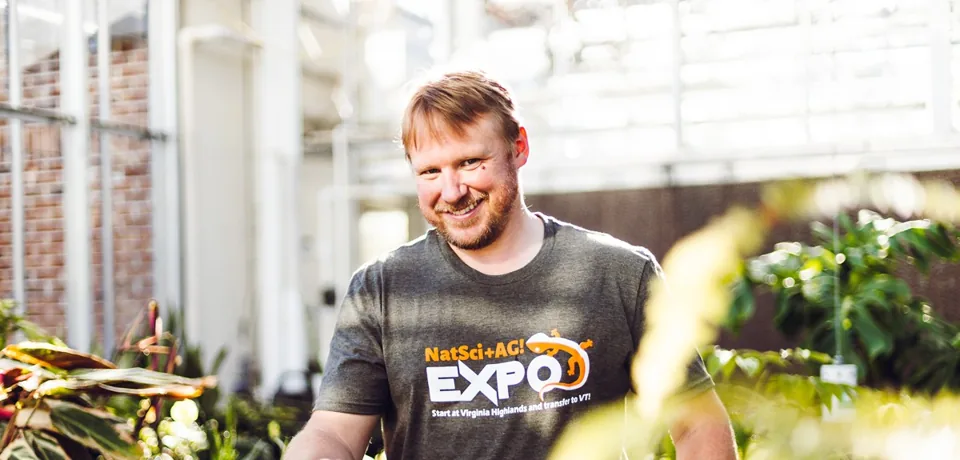
Transfer preparation is a substantial part of VHCC's academic offering. Its official transfer page presents options in business, computer science, education, engineering, general studies, liberal arts, sciences, and social sciences. Creative disciplines include art, music, and theatre. The range allows students to investigate both professionally oriented subjects and broader academic interests while planning the next stage of their education.
The college describes several Associate of Science pathways as preparation for continued study at a four-year institution. Its computer science pathway addresses foundational general education, while engineering covers the early academic work common to many engineering majors. General studies provides an option for students still considering a direction. VHCC also directs students to Transfer Virginia, a portal intended to help them research and organize transfer plans using information from participating institutions. Prospective transfer students should compare the relevant degree pathway with the requirements of their intended destination before choosing courses.
Sources: VHCC Transfer Degrees ↗
Shorter training and workforce learning
Alongside degree study, VHCC advertises shorter training opportunities aimed at developing specific skills. Its training page lists areas such as aluminum welding, phlebotomy, plumbing, commercial truck driving, and certified nurse aide preparation. Other listed options include emergency medical training, billing and coding, workplace safety, and aviation-related ground-school subjects. The page also links to FastForward training and corporate training services.
This part of the college's work is relevant to people seeking a focused qualification or a change in employment direction without immediately entering a longer degree program. Corporate training adds an employer-facing dimension, with the college describing customized provision for businesses. Because individual courses have their own schedules and requirements, the training listings provide a starting point for investigation rather than confirmation that every option is accepting students at a particular time.
Sources: VHCC Short Term Training ↗
Academic support and help with study
Academic assistance is available through the Moose Academic Resource Center, known as the MARC. The college's tutoring page describes free tutoring and writing support, including individual help from qualified tutors. It explains that students can use in-person assistance through walk-in availability or arrange recurring appointments. Online tutoring is also described through a partnership with Brainfuse, accessed through Canvas and provided by appointment.
For a prospective student, these services are an important part of understanding how study is supported beyond scheduled teaching. Writing assistance and subject tutoring offer routes to seek help when assignments or course material become difficult. Students should consult the center's current information when arranging support, since availability, appointment procedures, and service hours can change between terms.
Sources: VHCC Tutoring and Writing Center ↗
Scholarships and regional access
VHCC's scholarship information connects educational access with financial aid and community support. The college identifies Foundation scholarships based on merit and financial need, as well as Promise programs associated with Bristol, Smyth County, and Washington County. Its published guidance asks students to complete the FAFSA and explains that a separate Foundation scholarship application is also required for the Foundation and Promise opportunities it describes.
These programs show the regional character of the college's support network. They also make application planning important: researching a scholarship involves checking its eligibility conditions and completing the relevant forms. The existence of a named funding program does not establish that every applicant will receive support. Students can use the official scholarship page to identify the appropriate program and obtain its detailed requirements.
Sources: VHCC Scholarships ↗
Connections with high school education
VHCC also works with high school students through dual enrollment. The college describes this route as an opportunity for motivated students in grades eleven and twelve to earn college credit while meeting high school graduation requirements. Its published explanation emphasizes partnerships among schools, districts, families, and the college, alongside an introduction to the expectations of college learning.
The dual enrollment page links to a student handbook, participation information, and the Uniform Certificate of General Studies. It also describes how students may continue toward an associate degree after high school and explore transfer agreements with participating universities. This connection between secondary education, community college study, and later university education is another expression of VHCC's role in the region's educational pathways.
Sources: VHCC Dual Enrollment ↗