Visa
About Asia University
A university in Wufeng
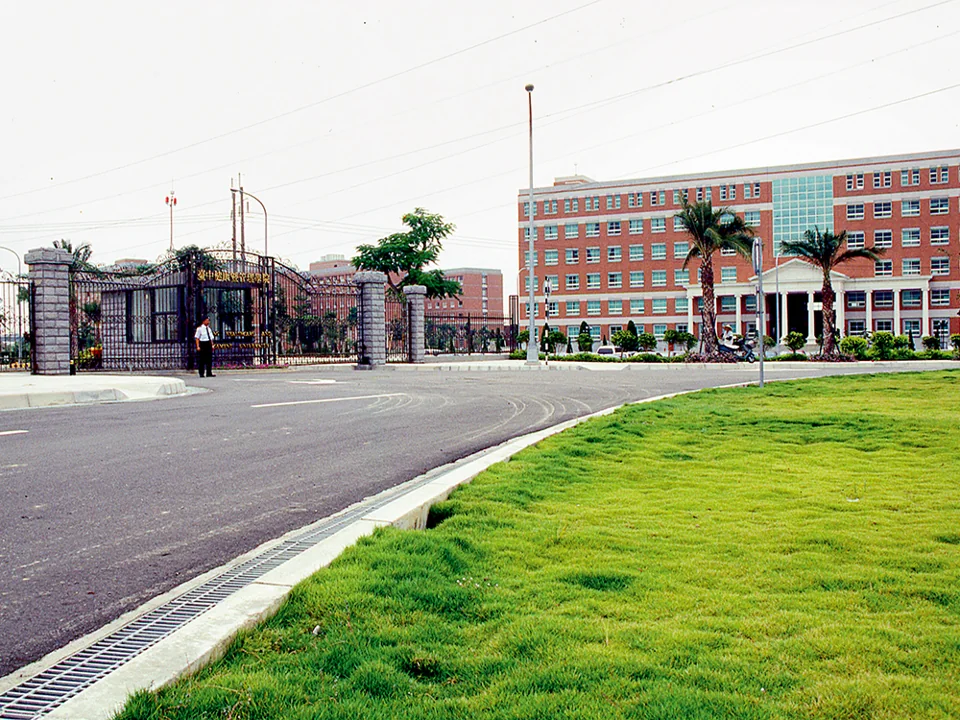
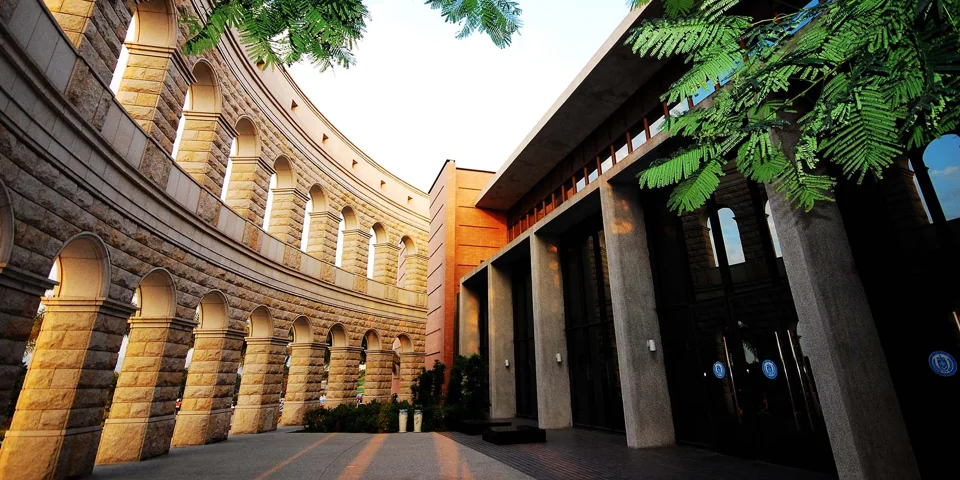
Asia University is based in Wufeng District, Taichung, Taiwan, at 500 Lioufeng Road. Its campus introduction traces the project to an educational initiative developed by founders Tsai Chang-Hai and Lin Tseng-Lien. Wufeng was selected as the site in 1997, and a preparatory office followed in October 1999. Approval to establish Taichung Health and Management College came in March 2001; the institution adopted the name Asia University in 2005. The university describes its educational purpose as combining professional knowledge, humanistic understanding and personal character. Health, care, innovation and excellence form its stated motto. Its account of campus design highlights Greek columns, Roman square columns, pediments and a clock tower, alongside an ambition to create a garden setting with greenery and seasonal flowers. These architectural elements also appear in its explanation of the university emblem.
Sources: Campus introduction and institutional history ↗
The first years of teaching
The early institutional chronology records the first students entering in September 2001. At that stage, teaching already extended across health management, business, information technology, social work, accounting, languages and design. The chronology distinguishes undergraduate departments from master's programmes and other routes, showing the variety of the original college. Subsequent entries record the addition or reorganisation of subjects, including psychology, biotechnology, information communication and computer engineering. These changes accompanied the development of postgraduate study. In August 2003, the institution established a service-learning unit and introduced service-and-learning courses. International academic connections were also part of these early years: the record includes agreements with the University of Montana in 2001 and Tulane University in 2004. The September 2005 unveiling ceremony marked the adoption of the Asia University name, following ministerial approval earlier that year.
Sources: Early chronology, 1999–2005 ↗
General education and common capabilities
General education provides a shared component of learning across the university. The General Education Center plans and teaches these courses with participation from faculty members in individual departments. Its approach combines classroom study with lectures, cultural activities and the surrounding campus environment. The university presents this work as a way to develop broad perspectives, humanistic understanding and concern for society alongside subject expertise. Its curriculum explanation connects learning with everyday life, encouraging students to move from individual concerns towards an understanding of groups and communities. Respect for diversity, empathy and public awareness are among the stated educational aims. Chinese, English and information skills are identified as three basic capabilities, supported through course design and learning assessment. This places language expression and the use of information within the university's common educational framework.
Sources: General education ↗
Practical learning and career exploration
The student-development programme brings together academic preparation, practical experience and career guidance. The university describes regular classes supporting professional, computer and examination-related skills. It also coordinates internships, company visits and employment-oriented learning activities intended to connect coursework with an understanding of workplaces. A network of class-level career representatives, departmental career mentors and enterprise mentors contributes to this support. Workshops, assessments and diagnostic tools help students examine their interests and consider possible directions during their studies. Individual career consultations are complemented by résumé reviews and interview guidance. Campus recruitment activities provide another point of contact with employers. The student-development pages also describe the organisation of online learning resources, professional certification information and practical tools, giving students several ways to plan further learning according to their own academic and career interests.
Sources: Student development ↗
Living and learning in residence
Residential life is organised around shared facilities and a programme of activities. The university describes four student residence buildings, with central air conditioning and campus network connections in rooms. Common facilities include social areas, drinking-water dispensers, laundry equipment and spaces for drying clothes. Buildings also contain areas for independent study and exercise. The housing information identifies Gan-En and Xi-Fu residences as accommodation for women, Zhu-Meng as accommodation for men, and Deng-Feng as a building with separate floors for male and female residents. Four-person rooms are the main room type described. Residence activities include seasonal gatherings, crafts, group games and experiences involving humanities and aesthetics. The associated learning programme connects daily routines with campus culture, interpersonal relationships, self-management and study habits. The university also describes rental advice and outreach for students living away from campus residences.
Sources: Residential life ↗
Sport and shared facilities
The university's sports provision includes a gymnasium with a multifunctional indoor court, martial-arts and movement rooms, a weight-training room and equipment storage. Indoor courts can be requested for student use when classes are not scheduled. Outdoor facilities include an athletics track, volleyball, tennis and basketball courts, with pickleball also included in the university's account of available sports. Billiards and table-tennis rooms extend the range of indoor activities. Departmental student associations participate in organising competitions, while university-wide events include basketball, volleyball, badminton, tug-of-war and billiards. Some competitions are specifically intended for new students, creating occasions to meet others through sport early in university life. Asia University also describes joint sports meetings and inter-university competitions with China Medical University, adding opportunities for interaction beyond its own campus teams and departments.
Sources: Sport and physical education ↗
Societies, performance and cultural life
Student organisations span self-government, service, music, cultural interests, practical skills and sport. The student association, student council, graduation committee and departmental associations provide different forms of participation. Their activities include welcome events, talks and graduation-season programmes. Service societies organise volunteering for a range of communities, while music groups cover singing, guitar, wind instruments, percussion and popular music. Other societies offer opportunities to explore photography, coffee, baking, three-dimensional printing and artificial intelligence. Cultural education also has an organised place in university life. The university dates its annual arts-season programme to 2015, linking literature, performance and aesthetics with museum exhibitions. Sanpin College, established in 2009, connects character education with general-education courses, lectures, informal activities and campus settings, expressing the university's interest in bringing personal conduct and cultural appreciation into everyday student experience.