Visa
About Art Academy of Latvia
An academy shaped by Latvian art
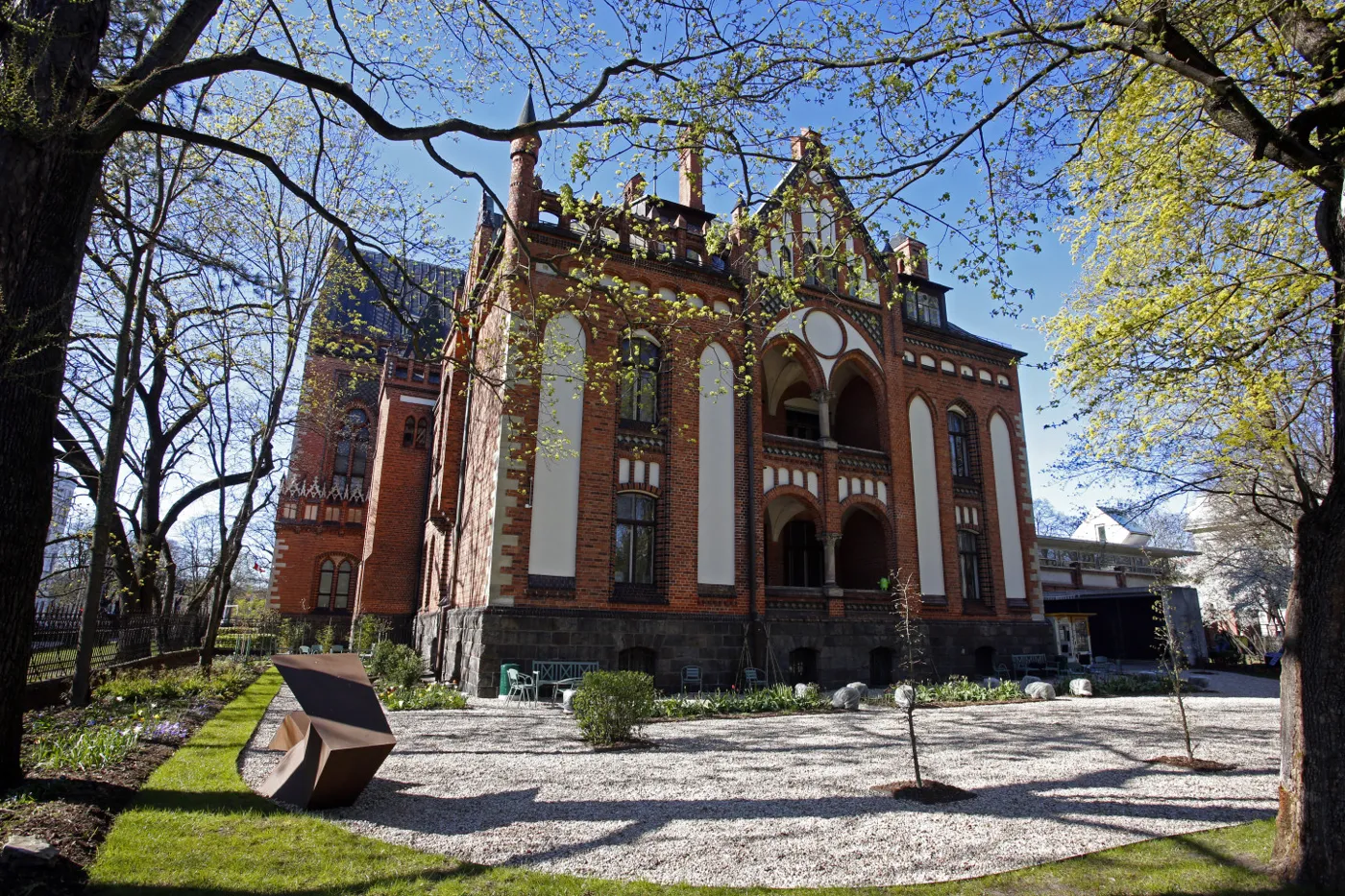
The Art Academy of Latvia is an art university based at Kalpaka Boulevard 13 in Riga. Founded on 20 August 1919, it began teaching on 12 October 1921. Painter Vilhelms Purvītis was central to its establishment, bringing experience from his own artistic training and leadership of the Riga City Art School into the creation of a national institution.
The academy occupies the former Bourse Commercial School, a neo-Gothic building designed by architect V. L. Bokslafs. Its brick architecture reflects Riga's historic trading-city traditions, while the interior includes Art Nouveau decorative elements and stained glass produced in E. Tode's Riga workshop. Within this setting, the academy brings artistic practice and research together across visual arts, three-dimensional media, audiovisual work, design and art scholarship. Its educational approach combines specialisation with drawing, painting, design and theoretical study, maintaining academic traditions while responding to contemporary art and media.
Sources: About the academy and its history ↗
Library resources and cultural study
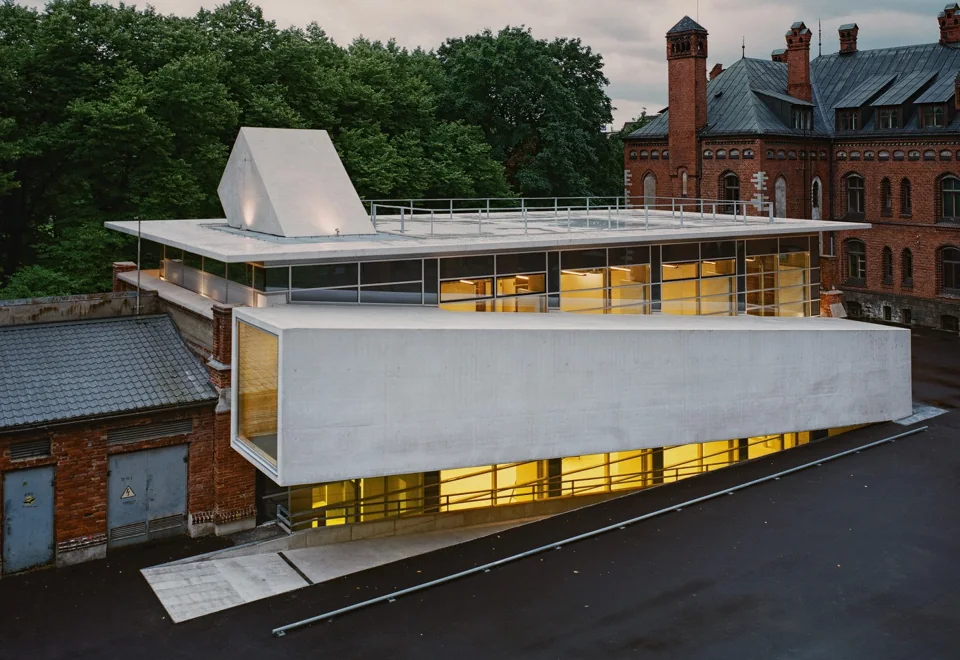
The academy's library supports the study and research of art and culture through its collections of books, newspapers and specialist magazines. Students and employees can also use library computers. Access is not confined to the academy: readers from other universities and the wider public are welcomed.
An electronic catalogue helps readers explore its holdings. The library's official information also highlights books donated by Professor Juris Dreifelds and a collection associated with architect and art historian Carl Johann Wilhelm Neumann. These named collections connect the library's practical role in supporting study with the preservation of material relevant to art and architectural scholarship. The library also publishes a list of its periodicals and directs readers toward Latvia's national library resources.
Sources: Academy library ↗
PILOT as a place for exhibition experience
The academy established Experimental Art Space PILOT in 2020. Located at 3 Riharda Vāgnera Street in Riga's Old Town, the space is intended to form part of the academic study process as well as provide a setting for exhibitions and experiments. Students can gain experience of exhibition activity in a public-facing environment.
Its programme includes exhibitions of student work, competition exhibitions, the results of collaborative projects, lectures and other creative activities. PILOT also periodically announces calls for academy graduates, extending its support beyond the point of graduation. The space has participated in the Art Vilnius fair in Lithuania, connecting its programme with a regional art setting. In this way, PILOT provides a practical context for presenting work, organising creative projects and encountering audiences alongside the academy's studio-based education.
Sources: Experimental Art Space PILOT ↗
Contemporary art, design and architecture research
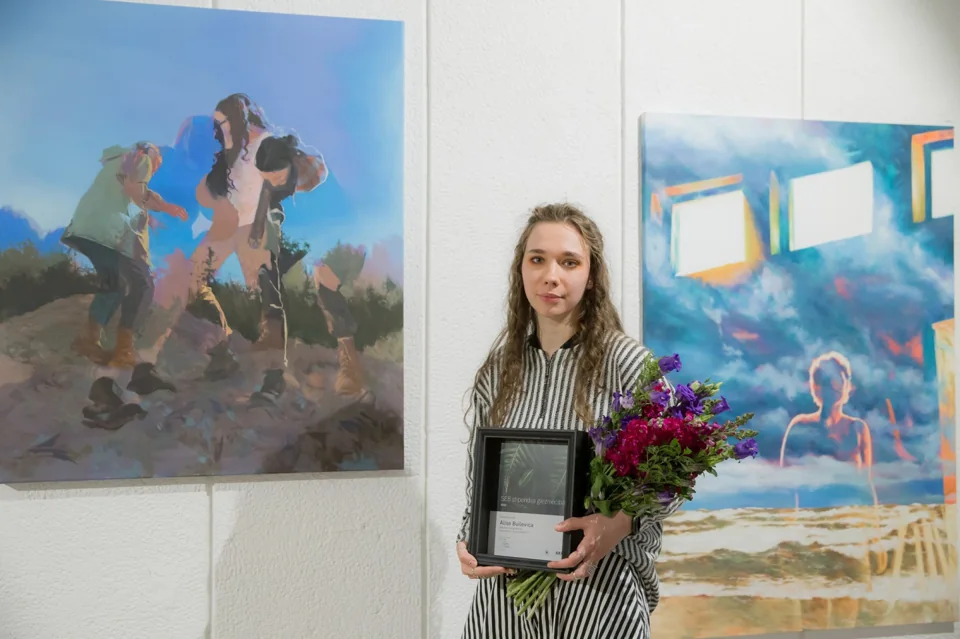
The Institute of Contemporary Art, Design and Architecture, abbreviated LMDA, was founded in 2021. Its remit is applied and fundamental research into contemporary art, design and architecture, considered both within Latvia and in a wider international context. The institute also participates in teaching and involves academy students in research and related activities.
Its stated tasks include interpreting contemporary creative practices and building an interdisciplinary environment that connects cultural, economic, social and technological knowledge. Spatial environments, identity and belonging are among its research concerns. The institute seeks international collaboration, develops theoretical and methodological approaches, and encourages experimental work with new theories and technologies. Publication, conferences, seminars, discussion and public education are identified as ways to share findings. This research structure places contemporary practice in dialogue with critical enquiry, while connecting student learning with work carried out by an academy-based research group and its collaborating institutions.
Sources: Institute of Contemporary Art, Design and Architecture ↗
Art history, archives and publication
The Institute of Art History investigates Latvian and Latvia-related visual art and architecture. It uses archival and library material, the study of monuments on site, and theoretical interpretation to develop knowledge of both earlier and more recent artistic work. Its research also contributes to teaching at the academy and cooperation with other educational and research organisations.
A long-term collective project develops Latvian art history online in Latvian and English. Other activities include the Boris Vipper Memorial Readings and related collected articles, the journal Art History and Theory, and guidebooks in the series Monuments of Art and Architecture in Riga. Digital resources and the systematic archiving of visual material extend this publication work. Staff also teach undergraduate and postgraduate courses, supervise and review doctoral dissertations, and participate in doctoral assessment. These activities connect research collections and scholarly publication with successive stages of art-historical education.
Sources: Institute of Art History ↗
Restoration supported by materials science
The Institute of Restoration and Materialscience was established in 2024 to provide materials-science support for restorers, artists and other specialists working with tangible cultural heritage. It studies physical, chemical and mechanical properties to help identify materials, understand historical techniques and investigate processes of ageing and deterioration.
Its research scope includes pigments and binders, stone, mortar, plaster, ceramics, glass, paper, textiles, metals and polymers. The institute offers consultation on the investigation, identification and preservation of heritage materials, while also studying materials used in contemporary art. Student involvement is intended to strengthen understanding of how materials are examined and identified. Its wider activities include cooperation with museums, educational institutions and other heritage organisations, participation in projects, the creation of databases, conferences and publication of research. This places scientific investigation alongside the academy's artistic and historical disciplines, supporting informed choices about both the preservation of existing objects and the creation of new work.