Visa

About Armand-Frappier Santé Biotechnologie Research Centre
A research and graduate-training centre in Laval
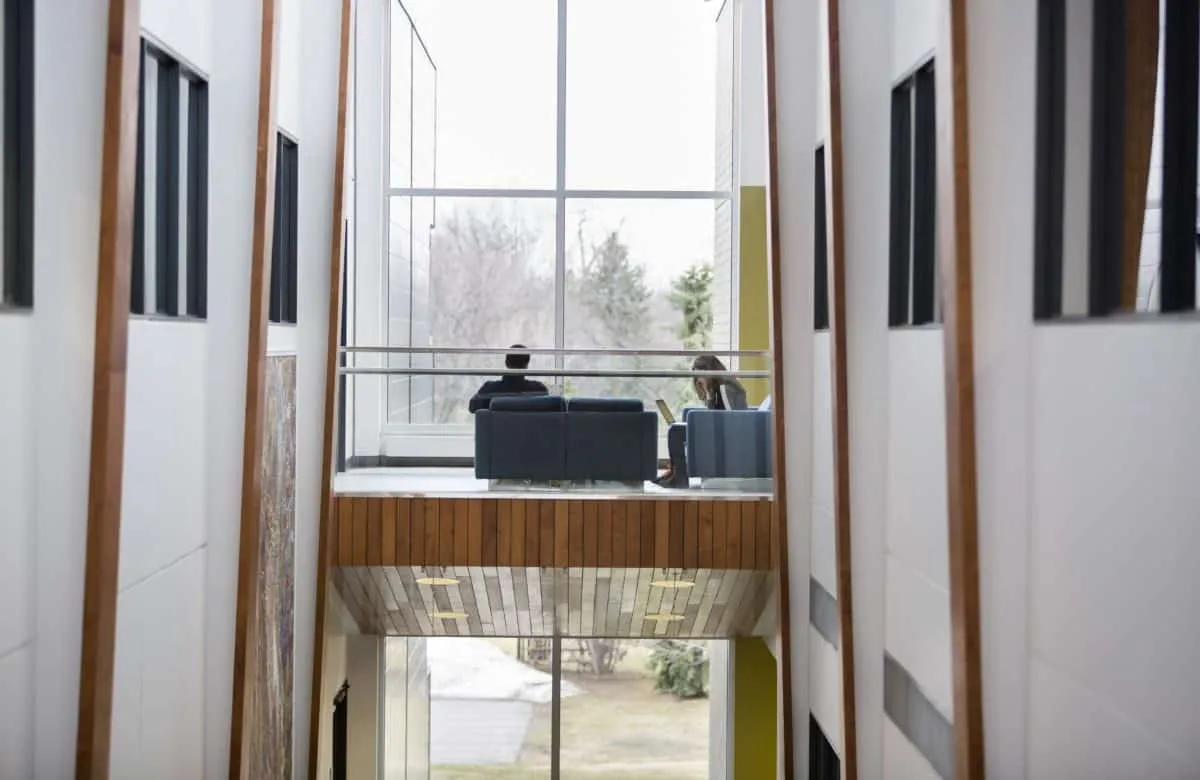
The Armand-Frappier Santé Biotechnologie Research Centre is part of the Institut national de la recherche scientifique, or INRS, in Quebec, Canada. It is located at 531 des Prairies Boulevard in Laval. Its work combines research, graduate training and technology transfer concerning human, animal and environmental health. The centre places its work within the tradition of Armand Frappier, who founded Montreal's Institut de microbiologie et d'hygiène in 1938; that institution became the Institut Armand-Frappier in 1975. Research interests described by the centre include chronic viral infections, links between environmental pollutants and disease, and the use of microorganisms in biotechnology. Interdisciplinary collaboration is an important part of its account of how researchers approach these subjects.
Sources: Armand-Frappier Santé Biotechnologie Research Centre ↗
Graduate education through research
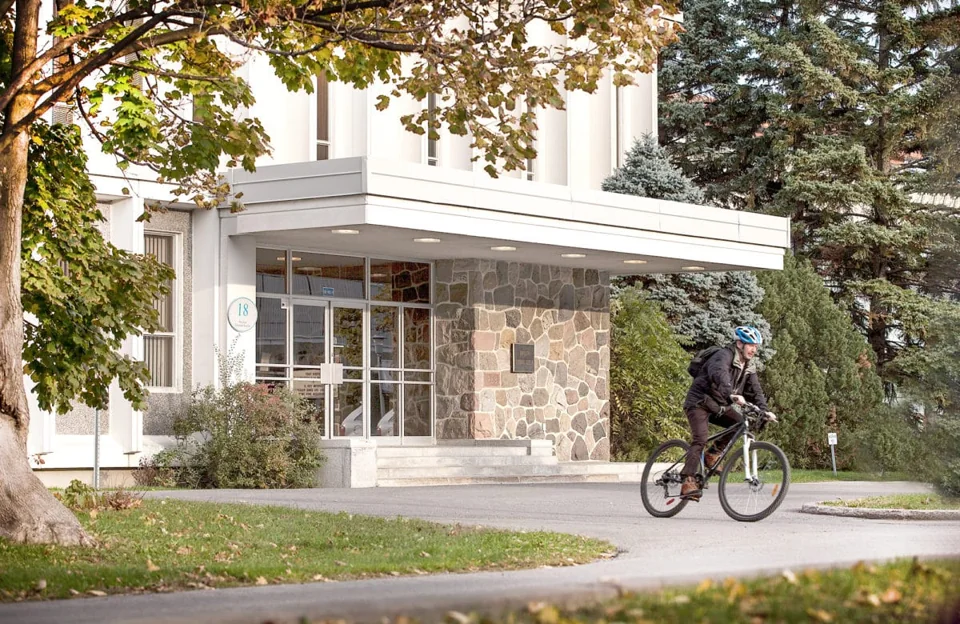
Health and biotechnology studies at INRS connect graduate students with specialist research teams in Laval. The published programs include master's study in virology and immunology, microbiology and biotechnology, and experimental health sciences, alongside doctoral study in virology and immunology and biology. A dual-degree pathway in biomedical diagnostics is also described. Students develop a research subject with supervision in fields such as immunology, toxicology, medicinal chemistry, microbiology or epidemiology. The educational approach emphasizes learning through research problems and participation in scientific work. Opportunities to develop wider academic skills include mentoring, science communication, event organization and management. The student-led Congrès Armand-Frappier brings together people interested in biosciences and offers experience in arranging a scientific event, including its program, logistics, partnerships and communications. The Laval campus also provides a setting for student life, with green spaces, recreational activities, a cafeteria and library services. Published examples of research questions include the molecular mechanisms of resistance in an infected host, the effects of environmental substances and genetic variation, and the development of diagnostic or preventive tools. These examples show how individual graduate projects can connect laboratory investigation with broader questions about health and the environment.
Sources: Health and biotechnology studies ↗
Introducing younger learners to laboratory research
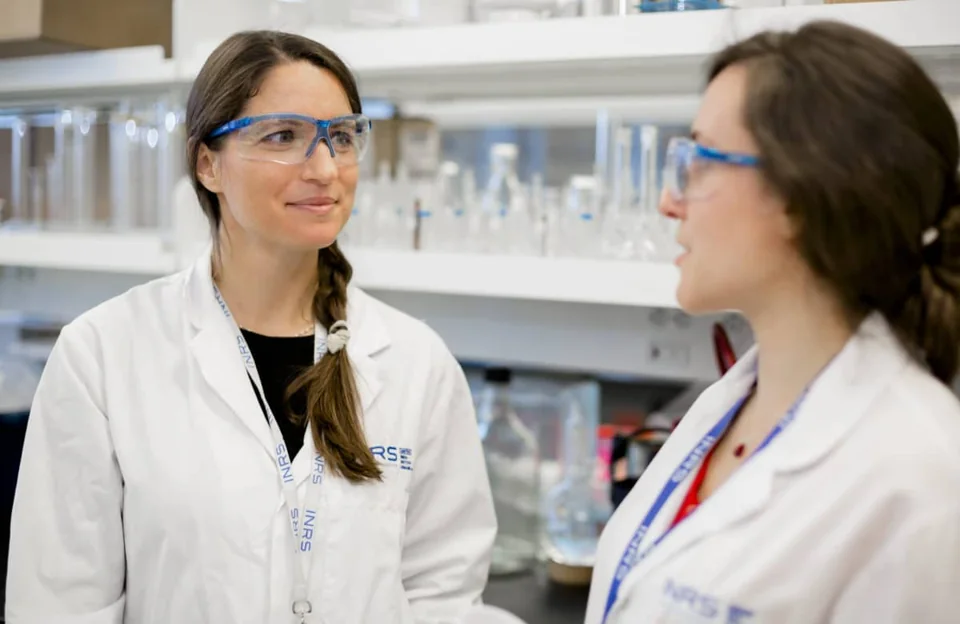
The Apprentis chercheurs program offers secondary-school students a week in a research laboratory with an INRS student mentor. It began in 2002 through INRS and the Musée Armand-Frappier, initially with a strong biosciences focus at the Laval centre. Its purpose includes making research more understandable, helping young people reflect on future study and sustaining interest in science through contact with mentors. Students are matched with projects according to their interests and those of their mentors. Motivation and curiosity about science are central selection considerations; the published criteria do not use school grades as the basis for admission. The program also gives the graduate community an opportunity to explain its work and support a younger learner carrying out a related project. The 2026 schedule listed two Laval sessions, in July and August, within a wider program involving other INRS centres.
Sources: Apprentis chercheurs program ↗
A regional partnership in sustainable health
INRS and the Université du Québec à Chicoutimi have developed a joint research unit in sustainable health. Its published description connects the initiative with genetic and epigenetic determinants of health and therapeutic chemistry. The announcement places INRS's contribution within the research environment of the Armand-Frappier Centre, while identifying Chicoutimi as the location of the joint unit's work in UQAC premises. Its mandate brings multidisciplinary investigation together with master's and doctoral training. The partnership links researchers from the two institutions and situates their collaboration within the Saguenay–Lac-Saint-Jean region's health research activity. The unit's page also connects visitors with related sustainable-health organizations, research infrastructure and specialist groups. This arrangement extends the centre's academic relationships beyond its Laval campus through an institutional collaboration focused on research and the preparation of future researchers.
Sources: INRS–UQAC joint research unit in sustainable health ↗
Documentation and support for scholarly work
The INRS libraries operate together as the Service de documentation et d'information spécialisées, commonly abbreviated SDIS. Their services support teaching, research and academic creation across the institution, including a Laval service point. Students and researchers can use Sofia, the bilingual catalogue shared by Quebec university libraries, to find material and arrange eligible borrowing. Library staff also help with literature searches, organizing information, scientific writing and choosing publication venues. Workshops and self-directed training cover bibliographic and information tools. Other services include research-data management, bibliographic alerts, guidance on presenting theses and dissertations, and access to workspaces and computers. The library describes assistance with the organization, description, storage, preservation and sharing of research data. Its information on bibliometrics emphasizes understanding the strengths and limitations of indicators and tools, adding a critical dimension to support for reading, producing and evaluating scientific literature.
Sources: INRS libraries and specialized information services ↗
Methods and analysis in doping control
The centre's Doping Control Laboratory applies analytical science to the detection and identification of substances prohibited in sport. Its work includes developing methods capable of identifying increasingly sophisticated doping agents, alongside the analysis of samples. The laboratory's historical account traces its involvement in sporting accreditation back to 1976. It describes experience connected with international sporting organizations and Olympic events, placing its technical work within a wider sporting context. The published applications include detecting anabolic androgenic steroids and other prohibited agents. Based at the centre's Laval address, the laboratory illustrates a specialized area where research methods and analytical expertise are applied to a defined external need.
Sources: Doping Control Laboratory ↗