Visa


About Acadia University
A university in the Annapolis Valley
Acadia University is a liberal arts university in Wolfville, Nova Scotia, overlooking the Annapolis Valley and the Bay of Fundy. Founded in 1838, it combines a long institutional history with undergraduate teaching, graduate education and research. Its setting places a residential university campus within a small town about an hour’s drive from Halifax. The university acknowledges that it is located in Mi’kma’ki, the ancestral and unceded territory of the Mi’kmaw nation.
Acadia’s educational approach emphasises collaboration between students and professors, community engagement and opportunities to undertake research during an undergraduate degree. Classroom learning is accompanied by co-curricular activities and campus programmes that develop teamwork and participation. The university’s About page describes a 250-acre campus, with the town and surrounding valley forming an important part of the student environment.
Sources: About Acadia ↗
Origins and institutional milestones
Local Baptists founded Acadia in 1838 with the intention of creating a university that would serve the region without religious tests for students or faculty. The institution became Acadia University in 1891, having previously operated as Acadia College. Early campus life saw the establishment of an alumni association in 1859 and The Athenaeum student newspaper in 1874. A student council followed in the 1880s, giving organised student participation deep roots in the university’s history.
The university’s history also records important changes in access to education. Clara Belle Marshall became its first female graduate in 1884. Lalia Halfkenny graduated from the separate Acadia Ladies’ Seminary in 1889, becoming the first Black woman to graduate from an institution of higher education in the Maritimes. Edwin Borden became Acadia’s first Black university graduate in 1892. The history distinguishes these related campus institutions and recognises the barriers that Black students faced.
Sources: History ↗
Academic breadth
Acadia’s academic provision spans arts, pure and applied science, professional studies and theology. Undergraduate subjects include history, English, philosophy, politics, sociology and languages, alongside biology, chemistry, computer science, geology, mathematics and physics. Professional fields include business administration, community development, education, kinesiology, music and nursing. Environmental studies appear in several forms, including environmental science, environmental geoscience, and environmental and sustainability studies.
Most undergraduate degrees are organised as four-year programmes, while the university also offers diplomas and certificates. Graduate study includes subjects such as applied geomatics, biology, chemistry, computer science, English, political science and psychology. Educational Studies is available through an inter-university doctoral programme. Online learning adds another form of study, including open-entry courses and certificate opportunities, extending the university’s provision beyond the conventional on-campus timetable.
Sources: Academic programmes ↗

Research within undergraduate study
Honours programmes offer an intensive research route within undergraduate education. Students complete the elements of a bachelor’s degree together with a thesis or research project, typically developed during the third and fourth years. Working with a faculty supervisor, they investigate a subject in greater depth and produce a substantial scholarly work. Honours options extend across arts, science and professional studies, including subjects as different as history, biology, business administration and kinesiology.
The honours process involves academic review by a supervisor and a second reader. Completed theses are submitted to the library, where they become part of the university’s scholarly record. The honours page also describes summer research awards, linking financial support with time spent on a project. This structure gives undergraduate researchers a defined sequence from choosing a question and receiving supervision to completing and preserving their work.
Research centres and community connections
The Office of Research and Innovation includes the Office of Industry and Community Engagement. It supports research addressing local and international questions and encourages work across disciplinary boundaries. Launchbox provides entrepreneurship and experiential learning opportunities. These activities connect academic investigation with organisations and communities outside the classroom.
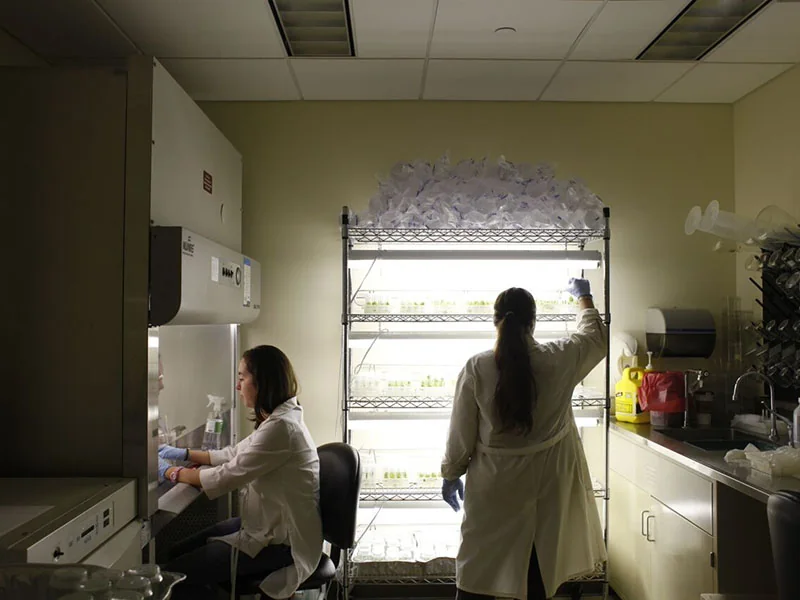
Within the Faculty of Pure and Applied Science, research is integrated with both undergraduate and graduate education. Affiliated centres include the Acadia Centre for Estuarine Research, the Acadia Centre for Microstructural Analysis, the Centre for Analytical Research on the Environment and the Centre for the Sensory Research of Food. The K. C. Irving Environmental Science Centre is another important part of this research environment. Their different subjects illustrate the range from environmental investigation and material analysis to food-related research.
Sources: Research and Innovation ↗ · Research in the Faculty of Pure and Applied Science ↗
Library and scholarly resources
The Vaughan Memorial Library provides access to books, journal articles, electronic journals, databases and subject guides. Research help, citation assistance, interlibrary loans and document delivery supplement its collections. Students can also book study rooms and use printing, scanning and photocopying services. The library’s digital resources include Acadia Theses and Acadia Scholar, making institutional scholarship part of the research resources available to readers. Archives and special collections provide additional material for historical and other research, with a dedicated research room and arrangements for visits.
Sources: Vaughan Memorial Library ↗
Residence and everyday campus life
Acadia’s residence provision includes ten residences with accommodation ranging from shared rooms to single suites. Residence life places students near classrooms, laboratories and the Athletic Complex. The campus-life page also describes woodland trails and food grown in a student organic garden. Meal plans are available to students living both on and off campus. Wolfville provides another part of everyday university life, with local shops, cafés and housing connecting students to the surrounding community.
Sources: Residences and campus life ↗