Visa
About Arkansas State University Mountain Home
A two-year institution serving north-central Arkansas
Arkansas State University–Mountain Home is a public, open-access, two-year institution within the Arkansas State University System. It serves Baxter and Marion counties in north-central Arkansas. Its academic provision includes associate degrees, technical certificates and programmes combining general education with specialised study. Customised training for local business and industry is another part of its educational remit.
The institution summarises its mission through lifelong learning, enhanced quality of life, academic accessibility and diverse experiences. Its published purposes distinguish preparation for transfer to a four-year university from applied associate degrees and shorter technical credentials. Reading, writing and mathematics preparation, academic support, library resources and community education also appear within this framework, reflecting students with different starting points and educational goals.
Sources: Institutional mission and purposes ↗
Advising and student support
The Student Success Center brings academic advising together with practical help for students navigating college. After admission, an onboarding specialist reviews the student’s file and helps arrange an advising appointment. Students initially work with a Student Success Coach to consider programme choices, prerequisites, transfer credits and available resources. They are subsequently paired with a faculty adviser in their field while retaining access to the centre.
Faculty can use an early-alert process to identify academic or personal difficulties that may affect study. Students can also request help themselves. Further support includes study habits, time management, résumé preparation and interview practice. A Canvas resource space allows students to use materials at their own pace, while basic technology tutorials help them navigate university learning systems.
Sources: Student Success Center ↗
Continuing towards an A-State degree
The A-State University Center provides a connection with bachelor’s study offered by Arkansas State University. The Mountain Home page lists early childhood and middle childhood education, along with online options in special education and criminology. These are A-State degree pathways, distinct from Mountain Home’s own two-year credentials.
The transfer centre in McClain Hall assists students considering an A-State bachelor’s degree through provision at Mountain Home or A-State Online. It also supports those planning to transfer to the main A-State campus in Jonesboro. This arrangement gives students a local point of contact for discussing how their studies may continue beyond an associate degree.
Sources: A-State University Center ↗
Workforce education and employers
Workforce Education focuses on the technical and employability skills of current and future employees. Its work includes tailored training, employer partnerships and support for internships, employee onboarding and hiring events. The Dr. Robert L. Myers Technical Education Campus and Czeschin–Newth Workforce Development Center provide a setting for these activities.
The office describes its services in relation to changing industry needs, including the development of customised programmes with individual businesses. A plumbing apprenticeship is one example of its trade-related provision, while online non-credit training is offered through a partnership with Ed2Go. Together, these activities extend the institution’s work beyond conventional semester courses into training developed for employers, workers and people seeking new technical skills.
Sources: Workforce Education ↗
Learning for the wider community
Community Education provides non-credit learning opportunities for people of different ages, educational backgrounds and interests. Its courses are intended for personal enrichment as well as the development of practical knowledge and skills. Participants can explore hobbies, acquire a new skill or pursue an interest without enrolling in a credit-bearing degree programme.
The programme also invites people with specialist knowledge or experience to propose classes. An instructor may bring a complete course or develop an initial idea with the community-education team. The office provides an orientation toolkit and administrative guidance for instructors. This creates a route for local expertise to become part of the institution’s wider lifelong-learning provision.
Sources: Community Education ↗
Marine and composite manufacturing
Marine Manufacturing reflects the boat-building industry of north-central Arkansas. The programme offers an Associate of Applied Science, a Technical Certificate and a Certificate of Proficiency, giving students different levels of engagement with the field. Its technical subjects include workplace safety, hand tools, electrical systems, gel-coat application, mould preparation and lamination.
The associate programme covers both open and closed moulding, while the shorter certificate introduces foundational composite-material skills. Technical-certificate coursework can be applied towards the associate degree. The programme also notes that composite-manufacturing methods have applications in automotive, aviation and other industries. Its curriculum therefore connects a local manufacturing tradition with a broader set of materials and production techniques, rather than presenting boat building as an isolated craft.
Sources: Marine Manufacturing ↗
An honours pathway
The Fran Coulter Honors Program provides enriched academic experiences for students seeking additional challenge. Its stated goals include leadership, scholarship and engagement with dedicated faculty and fellow honours students, through activities inside and outside the classroom. An interdisciplinary approach is central to the programme’s educational purpose.
The programme honours Fran Coulter, a history professor at Mountain Home whose career included teaching and wider educational service. The ASU System Board of Trustees established the programme in December 2003. Its development provides an example of how the institution has added opportunities for deeper academic work alongside its general-transfer, technical and community-education roles.
Sources: Fran Coulter Honors Program ↗
Expanding distance-learning capacity
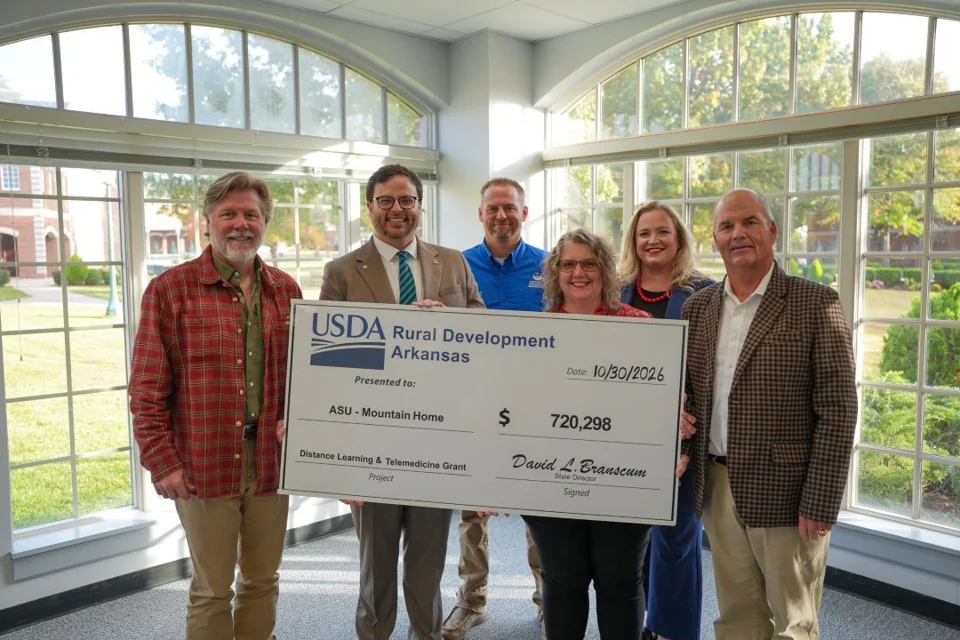
A report published on 3 November 2026 records a USDA grant for distance learning and workforce training. The project is intended to improve classroom technology, videoconferencing and collaboration tools across Mountain Home and partner locations. The university also describes plans for wider access to virtual academic advising, enrolment assistance and student support.
These are announced project aims rather than completed outcomes. The report connects the investment with the difficulties rural learners may face when educational resources require substantial travel. Faculty and staff training is included in the proposed work, recognising that the use of new equipment also depends on preparation and support for the people delivering instruction.
Sources: Distance-learning grant report, November 2026 ↗
Student work in the humanities
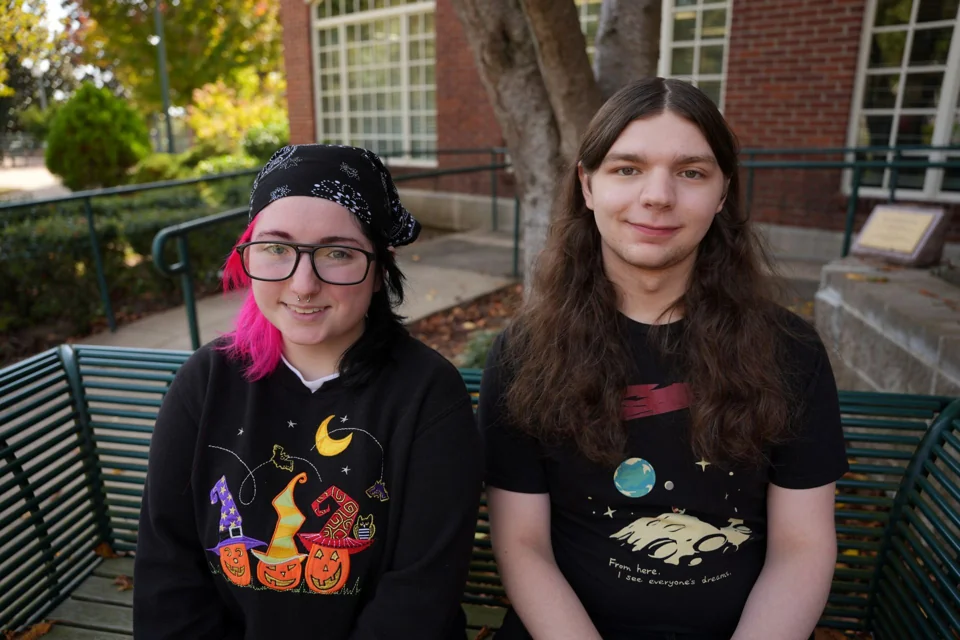
An October 2026 news report announced the selection of two Mountain Home students for Arkansas Liberal Arts and Humanities Day. One project used animation to tell the story of Albert Einstein’s life and scientific development. The other reinterpreted works of literature through visual storytelling and art.
The announcement describes a statewide setting in which undergraduate and graduate students can share research, creative work, demonstrations and performances with institutional leaders and the public. The selected projects provide concrete examples of student activity beyond technical training, showing how communication, artistic interpretation and independent inquiry also form part of the Mountain Home academic experience.
Sources: Liberal Arts and Humanities Day selection, October 2026 ↗