Visa
About Aragon Institute for Engineering Research
A University of Zaragoza research institute
The Aragón Institute for Engineering Research, known as I3A, is a research institute of the University of Zaragoza. It was created in 2002, following the Aragón government’s approval of Decree 169/2002 on 14 May. The institute brought together engineering research capacity from the university’s School of Engineering and Architecture with groups from science, economics and business, and veterinary studies.
Based at the Río Ebro Campus in Zaragoza, I3A organises its work around Biomedical Engineering, Information and Communication Technologies, Processes and Recycling, and Industrial Technologies. Its institutional objectives connect basic and applied research with technological innovation, collaboration with businesses, and the transfer of knowledge to society. International cooperation, including participation in European projects and consortia, forms part of this research setting.
Sources: About I3A ↗
From research results to practical development
Knowledge transfer is a central part of I3A’s work with companies and public institutions. Its published collaboration offer includes joint research and development, technological services, specialist advice and participation in national or international funding programmes. Testing, characterisation and analysis are among the services supported by its research equipment and technical expertise.
The institute also describes prototype development, technological validation and pilot testing as ways of connecting research with industrial applications. Digital technologies feature through artificial intelligence, robotics, advanced computing, sensing, digital twins and simulation tools. These are presented as areas of technological work rather than a single standard product. Training and advisory activity provide additional routes for sharing knowledge, while tailored contracts allow research groups to address particular organisational or industrial requirements.
Ways of working with external organisations
I3A distinguishes several forms of collaboration with industry, government and other organisations. Direct contracts fund work by its researchers or groups through resources supplied by an external institution. Collaborative research involves shared work and costs, often connected with regional, national or European research funding.
More fundamental research may be carried out by I3A with independently obtained funding, while interested organisations follow the project or its results. Agreements provide another framework for developing work between partners, with the arrangements depending on the project and organisation involved. The institute can also establish confidentiality agreements to protect information exchanged during collaboration. Its explanation identifies the University of Zaragoza’s research-results transfer office, OTRI, as the body managing most of these agreements and contracts.
Sources: Public and private collaboration ↗
An introduction to supervised research
The institute’s scholarship and support programme is designed to help students enter research through supervised work. It targets students with strong academic performance and seeks to develop their interest in scientific investigation. Its basic research-training plan places participants within one of I3A’s research divisions, connecting individual projects with an established research group.
The programme describes placements associated with master’s final projects and undergraduate final projects, alongside support for co-financing bridging research contracts. These are different forms of participation within the institute’s research environment. The emphasis is on learning through a tutored investigation, giving students contact with scientific work and the questions pursued by the institute’s multidisciplinary groups.
A forum for doctoral researchers
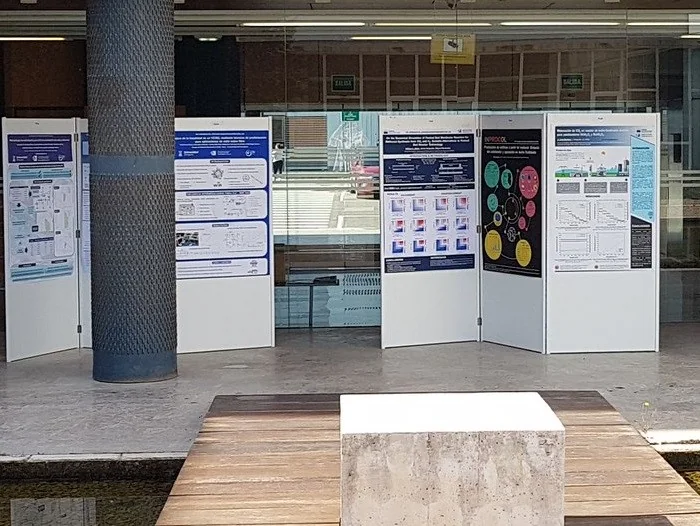
I3A has organised its Young Researchers’ Day annually since 2011. The event provides a meeting point for people undertaking doctoral theses within the institute, allowing them to present their work and learn about investigations in other groups. Sessions follow the institute’s four principal research areas, bringing different branches of engineering into the same forum.
The institute describes the event as a way to strengthen communication and awareness of its research both internally and externally. It also gives early-career researchers an opportunity to explain their first scientific contributions to a wider audience. Contributions are subsequently published in an electronic proceedings volume through the University of Zaragoza’s Papiro journal portal, extending access beyond the day’s presentations.
Sources: Young Researchers’ Day ↗
Circular economy and resource use
The Circular Economy Laboratory connects research into energy systems, renewable resources and the reuse of waste. Its participating groups investigate questions ranging from sustainable thermal systems and energy efficiency to biogas, renewable-material packaging and agricultural technologies. The laboratory’s approach combines environmental concerns with the technical problems of developing useful products and energy supplies.
Published research lines include modelling and designing energy systems, thermal-energy storage, reducing combustion emissions, and recovering value from industrial and agroforestry residues. Other topics concern biofuels and the conversion of carbon dioxide into useful chemical products. The laboratory also supports collaboration, knowledge transfer and training for students, academics, industry and other organisations, acting as an entry point for external partners interested in circular-economy research.
Sources: Circular Economy Laboratory ↗
Hydrogen across the energy chain
The Hydrogen Technologies Laboratory addresses production, storage, distribution, safety and applications across the hydrogen value chain. Its work spans laboratory and test-bench research through to pilot-plant development, connecting scientific investigation with questions relevant to industry. The published research programme covers several different potential uses and sources of hydrogen.
Examples include synthetic natural gas from biogas, synthetic fuels, sustainable aviation fuels, ammonia as a hydrogen carrier and hydrogen derived from wastewater. Other lines concern fuel-cell heavy vehicles, logistics, computational fluid dynamics and the location and operating capacity of refuelling infrastructure. These subjects show the laboratory’s broad technical remit, bringing conversion processes, transport and system design into a shared research framework without treating hydrogen as a single technology or application.
Sources: Hydrogen Technologies Laboratory ↗
A practical campus sustainability activity
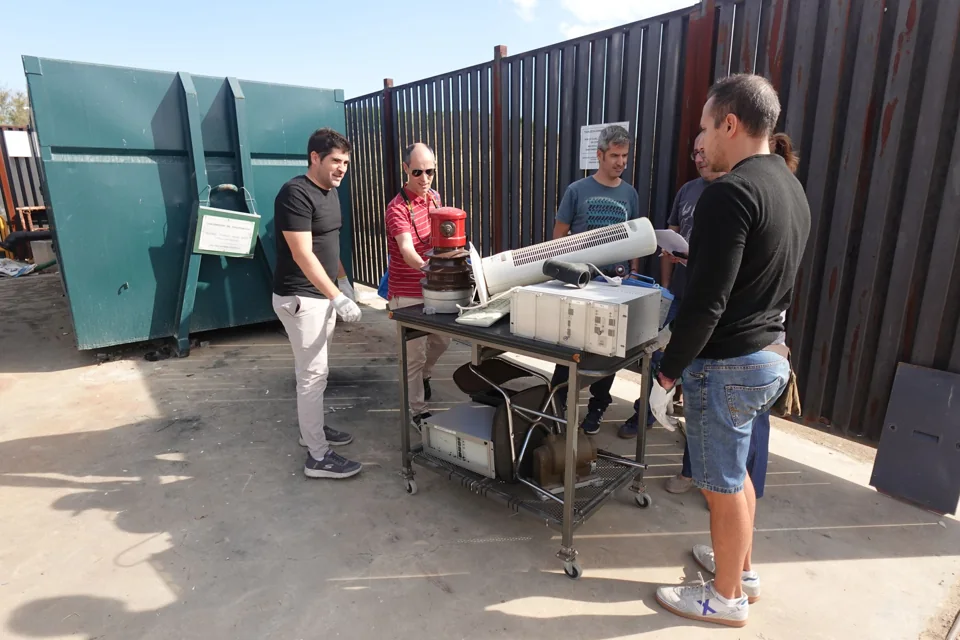
In September 2026, I3A promoted a technology and office-material collection activity at the Río Ebro Campus recycling point. Its report, dated 18 September, recorded participation by around fifty researchers, teachers and technical staff from research institutes and the engineering school. Supported by university sustainability bodies, the activity encouraged reuse, exchange and recycling of equipment and materials that were no longer needed in their existing workplaces.
Sources: Campus recycling event, 18 September 2026 ↗