Visa


About Arab Open University
The Oman branch
Arab Open University in Oman is based in Al Maabilah, Seeb, within Muscat Governorate. The branch’s introduction emphasises the development of knowledge and skills alongside students’ educational goals. Its rector’s welcome presents the website as a source of information for students and invites comments as part of a commitment to improvement.
Sources: Oman branch introduction ↗
Preparation for university study
The General Foundation Programme provides a bridge between secondary education and university courses. It is designed for the Oman branch rather than presented as a single identical foundation curriculum across every Arab Open University country. Its structure follows the requirements of Oman’s Ministry of Higher Education, Research and Innovation and brings English, mathematics, information technology and study skills into a preparatory sequence.
English is arranged in three levels. Mathematics begins with a basic level and then offers applied mathematics for business studies or pure mathematics for information and communication technology. An information technology course completes the main subject areas, while study skills are integrated into the programme. Electronic placement assessments in English, mathematics and information technology determine the appropriate starting level. These foundation courses do not carry degree credit, and completion prepares students to progress to their academic programme.
Sources: General Foundation Programme ↗
Education and teacher preparation
The Faculty of Education was established in 2008. Its development includes master’s programmes introduced in 2011 and 2014 in Educational Technology and Educational Leadership. These areas address different aspects of education: the use of technology in teaching, leadership theories and the development of educational systems. They give the faculty a postgraduate focus alongside its more recent provision for people preparing to work in education.
An Early Childhood Care and Education Diploma was introduced in the 2024–2025 academic year, with preparation for preschool education as its focus. The faculty subsequently introduced an Educational Qualification Programme in the first semester of 2025–2026. That programme is directed towards holders of bachelor’s or licentiate degrees who seek preparation in teaching. Together, these offerings show a faculty working across educational leadership, classroom technology, early childhood education and professional preparation for graduates.
Sources: Faculty of Education ↗
Intended graduate attributes
The university describes graduate attributes as qualities to be developed through academic and wider student experiences. Effective communication and presentation sit alongside ethical conduct and integrity. Students are also expected to develop the ability to locate information, retrieve it and apply knowledge, together with competence in their chosen subject.
Other intended attributes concern how people continue learning and work with others. The framework includes lifelong learning through directed study, independent study and research; productive teamwork; and responsible independent work in an international context. Development begins in foundation studies and continues through curricular and co-curricular activities, linking subject learning with broader habits of study and participation.
Sources: Graduate attributes ↗
Training and community connections
The AOU Academy of Training organises activities around the needs of communities, industries and other sectors. It uses needs assessment to shape tailored programmes and develops training materials in relation to defined learning objectives. Its work includes cooperation with government bodies, private organisations and international partners, connecting university expertise with training requirements outside ordinary academic courses.
The academy’s activities include workshops, training programmes, awareness lectures and summer clubs. These may take place inside or outside the university. Community engagement and cooperation with organisations are therefore part of its remit, alongside the preparation of learning materials and the selection of training methods. Flexibility in the timing and location of activities forms another element of the academy’s stated approach.
Sources: Academy of Training ↗
Help with learning
The Learning Support Centre assists students across academic levels. Its work includes tutoring and support with understanding course content, as well as the development of learning skills. Students can approach the centre to discuss difficulties, while sessions and workshops can also be arranged in response to needs identified by students, faculty members or the university.
The centre helps connect students with academic departments rather than treating support as an isolated service. It supervises tutors in the Peer Assistant Student Support programme, known as PASS, and supports student societies and clubs. Its responsibilities consequently cover both help with study and organised opportunities for students to participate with one another. This combination places peer assistance and wider student activity alongside more direct academic support.
Sources: Learning Support Centre ↗
Library and information resources
The Learning Resources Center describes a library role extending beyond the storage of books and journals. It provides printed and electronic resources across disciplines, together with databases and research tools. Its services are directed towards students and researchers who need to find and use information for academic work.
Training in the use of resources is another part of this provision. The centre links information access with research, analysis and critical thinking, helping users make practical use of the materials available to them. It also promotes cooperation and interaction among students and researchers. Resources, guidance and research-related learning are thus presented as connected parts of the centre’s work.
Sources: Learning Resources Center ↗
Research exchange and innovation
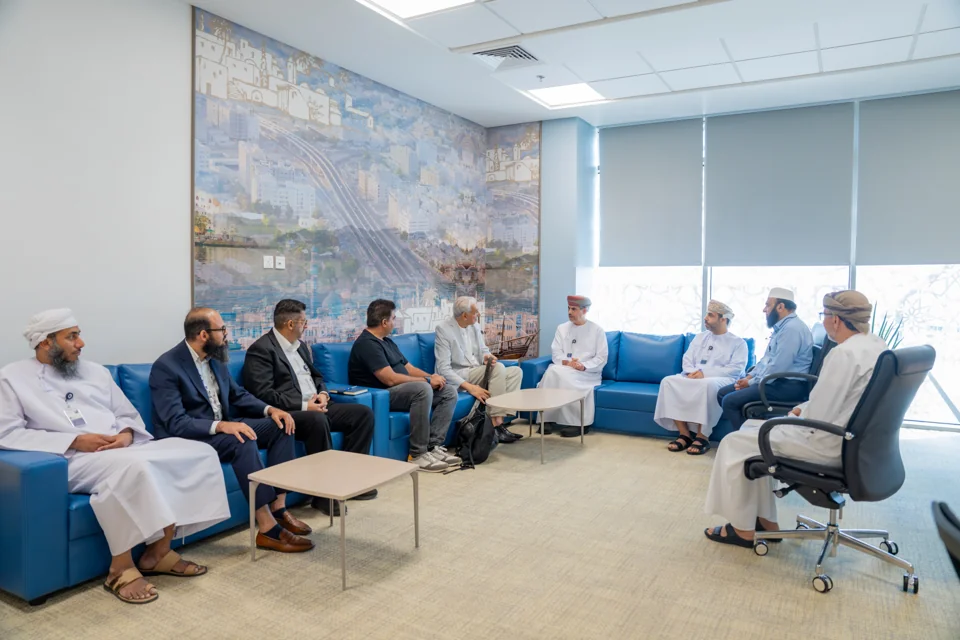
The branch’s research mission includes developing academic staff through participation in research activities organised or supported by universities, research centres and scholarly associations. A report published on 27 October 2026 describes a visit by a delegation from Germany’s Jülich research centre, providing a local example of engagement with an external research organisation.
Other October 2026 reports document an innovation exhibition and the closing of an associated conference. The exhibition brought together 26 projects, with subjects including renewable energy, green hydrogen, food security, environmental technologies and sustainable construction. Projects were evaluated over two days. The closing report records recognition of contributors and recommendations concerning innovation in relation to a 2040 horizon.
Sources: Research vision and mission ↗ · Research cooperation visit, 27 October 2026 ↗ · Innovation conference closing, 27 October 2026 ↗ · Innovation exhibition, 26 October 2026 ↗