Visa

About A'Sharqiyah University
A private university in Ibra
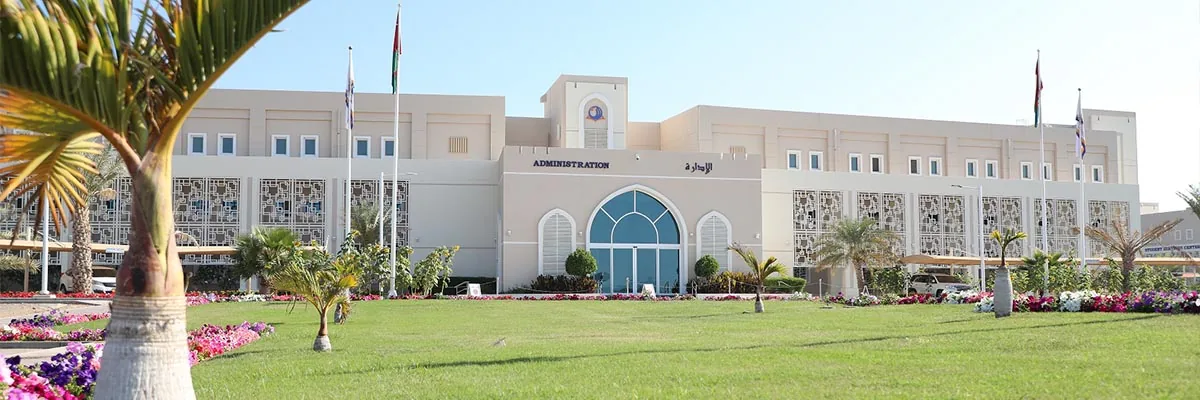
A’Sharqiyah University, commonly abbreviated ASU, is a private higher education institution in Ibra in the Sultanate of Oman. Ibra is the capital of North A’Sharqiyah Governorate, approximately 150 kilometers from Muscat. The university was established in 2009 through Ministerial Decision 78/2009. Its original structure comprised three colleges, while the institutional overview now describes five: Engineering, Applied and Health Sciences, Business Administration, Arts and Humanities, and Law.
This combination gives ASU an academic scope spanning technical subjects, professional education, business, languages, and legal studies. The official overview describes provision at undergraduate and graduate levels. For example, its law college lists a bachelor’s degree alongside master’s studies in private law, public law, and personal status law. The university’s development can therefore be understood as an expansion from its founding college structure into a broader institution serving several areas of higher education within Oman.
Sources: About A’Sharqiyah University ↗
Engineering and sustainability
The College of Engineering was established in 2011. Its official introduction links its development with a campus completed in September 2017 and describes teaching, research, and engagement with industrial partners. The college hosts the International Conference on Energy and Sustainability, placing energy and environmental questions within its wider academic activities. Its account also highlights student participation in competitions, research projects, conferences, and training opportunities.
The current program directory is organized around electrical engineering and computer science, civil and construction engineering, and energy and sustainable engineering. Listed subjects include electronics and communications, artificial intelligence, cybersecurity, civil engineering, construction project management, quantity surveying and commercial management, water engineering, environmental engineering, sustainable systems, and energy engineering. A master’s program in engineering management adds a graduate pathway. This breadth connects technological design and computing with infrastructure, construction, and the management of resources, giving engineering a substantial place in the university’s overall academic structure.
Sources: College of Engineering ↗
Applied science and health education
The College of Applied and Health Sciences describes its work in relation to science, technology, and the sustainable use of Oman’s resources. Its academic remit includes both the scientific foundations of applied work and subjects directly connected with human and animal health. The college presents this combination as part of its contribution to the country’s development and to the preparation of students for professional fields.
The published program list includes industrial chemistry, applied human nutrition and dietetics, medical laboratory sciences, public health, veterinary medicine, and nursing science. The college also lists postgraduate food sciences with a minor in human nutrition. Its departmental navigation groups provision into basic and applied sciences, health sciences, and veterinary medicine. Some older food science and marine science undergraduate programs are explicitly marked frozen on the website; those listings should not be read as confirmation of current recruitment. The active academic descriptions nonetheless demonstrate the college’s range across laboratory science, nutrition, public health, and veterinary study.
Business studies connected with practice
The College of Business Administration describes an educational approach that combines business theory with practical application. Its account identifies case studies, classroom exercises, assignments, projects, videos, and field trips as ways to supplement lectures. Core and elective courses are intended to give students subject knowledge while supporting continued learning beyond a particular qualification. Practical projects provide opportunities to apply concepts to business situations.
The college’s program directory covers accounting and finance, management information systems, internet and information technology, data science and business analytics, management, logistics and supply chains, team entrepreneurship, real estate management, and records and archives management. It lists diploma and bachelor’s routes as well as postgraduate programs, including the MBA, a master’s in records and archives management, and a doctorate in management. The combination of organizational studies, finance, information, and entrepreneurship reflects a broad business college rather than a single management specialization. Its stated approach places professional application alongside intellectual and scholarly work.
Sources: College of Business Administration ↗
Education, languages, and human development
The College of Arts and Humanities connects its mission with human values, research, teaching, and community development in Oman. Its departments include education, psychology, Arabic language and literature, and humanities. This structure brings the preparation of educators together with language study and an interest in counseling and human development, providing a different academic perspective from the university’s technical and business colleges.
The education listings include basic education in two fields, mathematics education, and preparation for teaching Arabic and English. Arabic language and literature appears at diploma and bachelor’s levels, while psychology includes a bachelor’s degree in counseling. Graduate listings encompass educational administration, educational psychology, counseling, measurement and evaluation, and curriculum and teaching methods. The latter includes subject areas such as Arabic, Islamic education, social studies, mathematics, and science. These published pathways illustrate a college concerned with both the subject knowledge of teachers and the educational and psychological processes through which people learn.
Sources: College of Arts and Humanities ↗

A shared center for learning resources
The Sayyid Abdullah bin Hamad bin Saif Al Busaidi Learning Resources Center was established in 2010. It supports the university through books, reference materials, scientific journals, and access to digital resources. Its collection scope follows the institution’s academic breadth, including business, management, engineering, construction, economics, sociology, food science, nutrition, arts, humanities, law, and health sciences. The center describes teaching, research, and community service as central to its role.
Access to MASADER, Oman’s virtual library, extends this provision to electronic information in Arabic and English. The center identifies resources such as EBSCO, El Manhal, El Marefaa, Dar El Mandoma, electronic books, and academic dissertation and research databases. Its website also links to a catalogue, study room booking, interlibrary loan, open access materials, and university dissertations. These services give students and researchers routes to information beyond their individual departments and provide a common academic resource across the university’s different colleges.
Sources: Sayyid Abdullah bin Hamad bin Saif Al Busaidi Learning Resources Center ↗