Visa
About Aquinas College - Tennessee
A Catholic college in Nashville
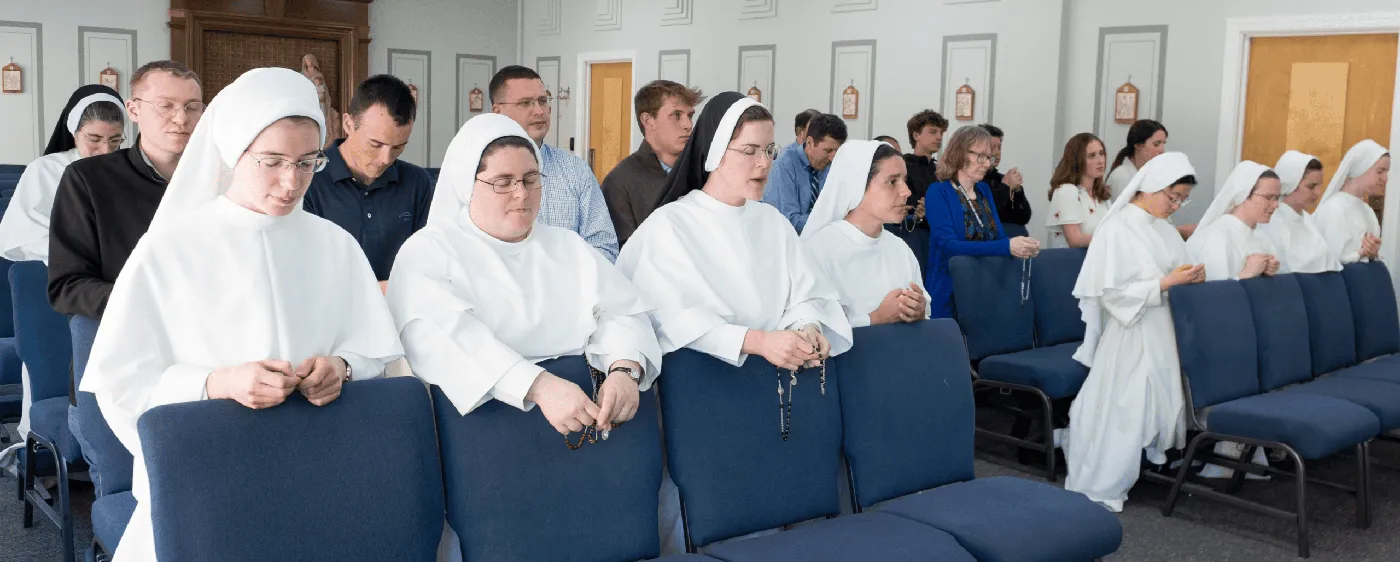
Aquinas College in Nashville, Tennessee, describes itself as a Catholic centre of formation rooted in the Dominican Sisters of St. Cecilia. Its work combines academic study, religious formation and outreach. The college identifies several communities it serves: sisters preparing for teaching and evangelisation, seminarians, teachers and school leaders, catechists, parish leaders and lay learners. These groups connect its educational work with schools, parishes and other settings beyond campus. Its institutional introduction places intellectual, spiritual, professional and moral development together. The college presents the relationship between faith and reason as central to its purpose, with teaching and continuing formation intended to support service within the Church and the wider community.
Sources: A Catholic college in Nashville ↗
Mission and educational principles
The college's mission links education and the liberal arts with service to the Church and the world. It draws inspiration from St. Thomas Aquinas and the Dominican tradition, placing contemplative study alongside the communication of religious teaching. Its published core principles address human dignity and freedom, the relationship between faith and reason, and responsible stewardship of individual and shared gifts. These principles explain the institution's stated educational direction rather than a particular professional outcome. The mission also describes intellectual engagement, growth in virtue and professional formation as connected activities. Its vision gives teaching and preaching a prominent place, while its account of the people it serves extends from formal educators to parish workers and lifelong learners.
Sources: Mission and educational principles ↗
From a normal school to a college
The Dominican Sisters established St. Cecilia Normal School in 1928 to prepare members of the congregation for teaching. An affiliation with the Catholic University of America followed in 1929. In 1961, Aquinas Junior College assumed the normal school's mission at the Dominican Campus and opened to the public. The first class included nursing students, religious sisters and lay women. Coeducation followed in 1962. The institution became a four-year college in 1994, with approval for a bachelor's degree in education; approval for education master's degrees followed in 2012. Its history records earlier programmes in nursing, healthcare, business and law enforcement, while describing a later concentration on teacher formation. These earlier fields are part of the college's development and should be distinguished from its present programme directory.
Sources: From a normal school to a college ↗
Published academic pathways
The current degree directory groups provision into arts and sciences and the School of Education. Arts and sciences entries include bachelor's study in English, history, liberal arts, philosophy and theology. Education entries include elementary education and combinations of English or history with secondary education. At graduate level, the directory lists Master of Arts in Teaching pathways for elementary and secondary education, together with a Master of Education in Teaching and Learning. A Certificate of Catholic Social Emotional Learning also appears. The directory provides a concise overview of the academic portfolio, with links onward to admissions and institutional contacts. Its Nashville address identifies the college at Harding Pike, distinguishing it from institutions with the same name elsewhere.
Sources: Published academic pathways ↗
Library collections and research support
The library supports students, faculty, seminarians, religious sisters and lifelong learners. Its services bring together research assistance, collections and places for individual or group study. A combined search offers access to the college's databases, books and WorldCat, while the resource directory includes electronic books, journals, research guides and help with citing sources. Borrowing-related links cover renewals, holds, interlibrary loans and course reserves. The library also preserves special collections connected with scholarship and institutional or Church history. Named collections include the Monsignor Flanigen Archive, the Denman Collection of Bosley Genealogy, the Sister Aloysius Mackin Papers and rare books. These holdings complement the general research resources and give readers access to more specialised historical materials.
Resources for Catholic education
The Center for Catholic Education extends the college's work to educators, catechists, school leaders and families. It offers educational materials, online resources and selected formation initiatives concerned with Catholic identity, virtue education and faith formation. Its stated purpose includes supporting learning in schools, parishes and homes. The centre's resource categories include Church documents, materials about Catholic identity, themes in Church teaching on education and a catechist-formation video library. Its account describes both online offerings and on-campus programmes, linking the institution's educational tradition with ongoing professional and religious formation. The intended audience therefore includes people already working with young learners, as well as others seeking resources for family or parish education. These outreach activities complement the college's formal academic programmes.
Sources: Resources for Catholic education ↗
A family literacy event
A report published on 7 October 2026 describes the seventh annual Family Literacy Night, held on 1 October. Families from local Catholic schools and the surrounding community visited literacy stations in the Aquinas Center. Volunteers included school teachers and current teacher candidates at the college. The event's theme connected picture books with virtues, with stations exploring subjects such as friendship, perseverance and gratitude. Families moved between reading activities, and children could take a book home. The report gives a concrete example of the School of Education Literacy Center bringing teacher preparation and community participation together. It also records contributions from several local schools, placing the evening within relationships between the college and nearby educational communities.
Sources: A family literacy event ↗

Beginning the academic year together
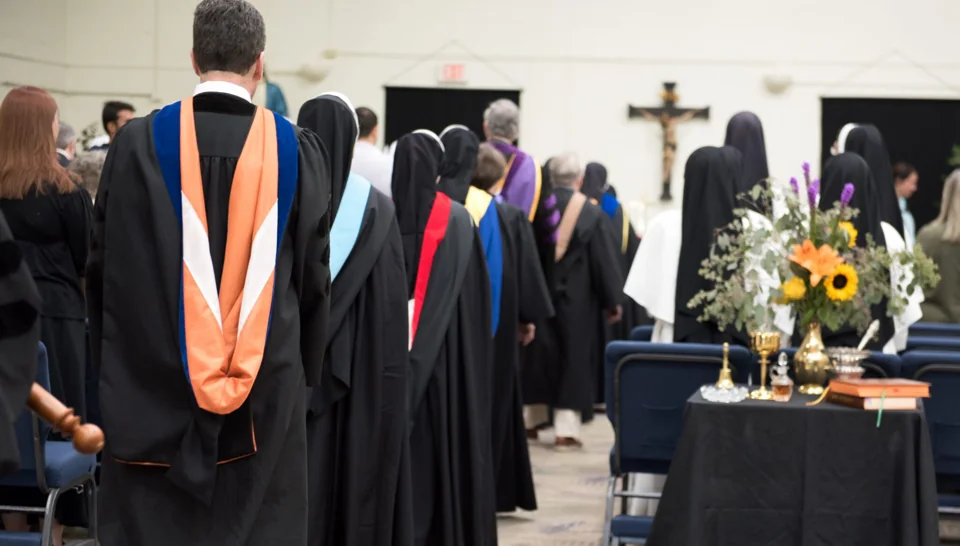
The college's September 2026 news account records its annual Opening Mass of the Holy Spirit, celebrated by Bishop J. Mark Spalding. Students, faculty, staff and friends gathered at the beginning of the academic year, followed by a luncheon. The report relates the gathering to the college's emphasis on study, faith and shared purpose. The luncheon provided an occasion for established members of the community to reconnect and for newcomers to meet others. This combination of worship and social gathering illustrates how communal events accompany academic work at Aquinas.
Sources: Beginning the academic year together ↗