Visa

About Appalachian School of Law
A law school established in southwestern Virginia
Appalachian School of Law is based in Grundy, Virginia. The proposal for a law school in the region was advanced by attorney Joseph E. Wolfe in late 1993, followed by the formation of a steering committee in 1994. Buchanan County's 1996 agreement with the school provided academic and library buildings, grounds and support for renovation and operations. The first classes began in August 1997, and the charter class graduated in May 2000. The school's mission links legal education with service to Appalachia and other communities. Its stated values include professionalism, leadership, community, inclusion and accessibility. It also emphasises professional responsibility, dispute resolution and practical skills. These commitments connect the institution's regional origins with an educational programme intended for students from Appalachia and beyond.
Sources: Mission and history ↗ · Life in the ASL community ↗
The sequence of J.D. study
The J.D. curriculum begins with foundational subjects such as torts, property, civil procedure, criminal law and contracts. Legal research and writing accompany this substantive study, while academic-support instruction introduces the demands of law-school work. First-year provision also includes dispute resolution, negotiation and professional identity formation. In the second year, the published curriculum identifies business associations, constitutional law, evidence, criminal procedure, family law and professional responsibility. Appellate Advocacy gives students further work in legal writing and oral presentation. Later study includes electives and seminars, allowing attention to particular areas of interest. The third-year Lawyering Skills course addresses tasks associated with the transition from legal theory to practice. The school also incorporates diagnostic exercises and preparation courses into the later stages of the programme.
Sources: J.D. curriculum ↗
A supervised summer externship
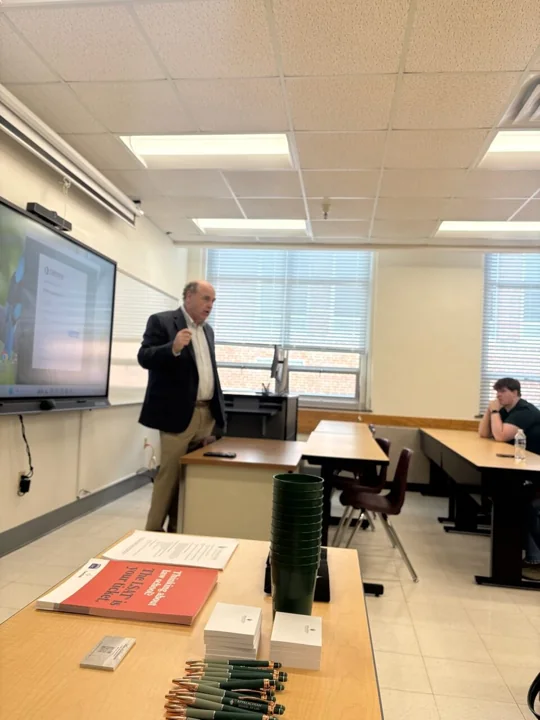
A field placement follows the first full year of law school. The externship programme combines a classroom component with at least two hundred hours working under the supervision of an experienced attorney during the summer. Successful completion earns two academic credits. Its educational objectives include exposure to the workings of the legal system, a substantial research and writing opportunity, professional communication and consideration of ethical issues in an actual working setting. Depending on the placement, activities can include observing proceedings, researching legal questions and assisting with case preparation. Students can select from approved opportunities or request approval for a site they identify themselves. The school's description includes placements in courts, public-interest organisations, government offices and other legal environments, providing different contexts in which classroom learning can be examined.
Sources: Externship programme ↗
Simulation, clinics and applied work
Experiential education combines simulations, practicum courses and clinical opportunities. The school's published outline includes first-year dispute-resolution and negotiation work, the summer externship and a later Lawyering Skills simulation. Practicum examples range from contract drafting and pretrial practice to estate planning, family-law practice and law-office management. The Advanced Appellate Advocacy Prosecutorial Clinic, launched in 2022, gives students work on criminal appeals assigned through Virginia's Office of the Attorney General. Its account describes reviewing court records, conducting research and drafting briefs. Faculty review and discuss drafts before students revise their work and the material receives a further review. This sequence makes feedback and revision part of the learning process. The clinic is presented as an opportunity to develop research, record-analysis and appellate-writing skills through supervised activity.
Sources: Experiential learning ↗
Natural resources, energy and environmental law
The Natural Resources Law Center connects a specialist area of study with the school's Appalachian setting. Its programme addresses energy production, conservation, sustainability and environmental questions. A certificate pathway draws on introductory subjects and more advanced study. The published course examples include administrative law, coal, oil and gas law, environmental policy, mineral title examination, solar-energy law and sustainable-energy law. Students can also encounter related issues through moot court, a natural-resources journal, student organisations and conferences. The school and the Energy and Mineral Law Foundation sponsor an appellate moot-court competition dealing with energy, environmental and natural-resources issues. The programme's stated approach combines discussion, debate and collaboration. Its educational activities extend beyond lectures through regional site visits and other opportunities to examine the relationship between legal questions and resource-based industries.
Sources: Natural resources law ↗
Academic skills and continuing support
Academic support begins before the first semester through an orientation experience. The school's account describes simulated and live classes in which students practise responding to assigned reading, briefing cases, outlining material and writing essays. Introduction to ASL Legal Studies then builds on skills such as critical reading, listening, note-taking and examination writing. The support programme continues beyond the first year. Through its BARBRI partnership, the school uses assessments to identify learning needs and areas requiring further attention. A second-year diagnostic examines knowledge retention, application, comprehension and analysis, while later courses incorporate practice tests and feedback. The published description also includes a post-graduation preparation phase. These arrangements provide a structured sequence of academic exercises and individual feedback alongside the substantive law curriculum.
Sources: Academic and bar support ↗
Community service as part of education
The school requires twenty-five hours of community service each semester. Students can propose a project or choose from established opportunities. The service programme connects this participation with the institution's aim of developing community-minded professionals. Its examples include assisting legal-aid and public-advocacy offices, helping Commonwealth attorneys and public defenders, and volunteering through the local Court-Appointed Special Advocates programme for children. The dedicated service page also identifies opportunities to provide information about advance medical directives at a Remote Area Medical Clinic. This range includes both law-related activity and broader civic participation. The Community Service Office provides a point of contact for the programme. Service is therefore organised as a recurring part of the student experience, alongside classroom study, supervised placements and skills-based learning.
Sources: Community service ↗