Visa
About Appalachian Bible College
From Appalachian Bible Institute to college
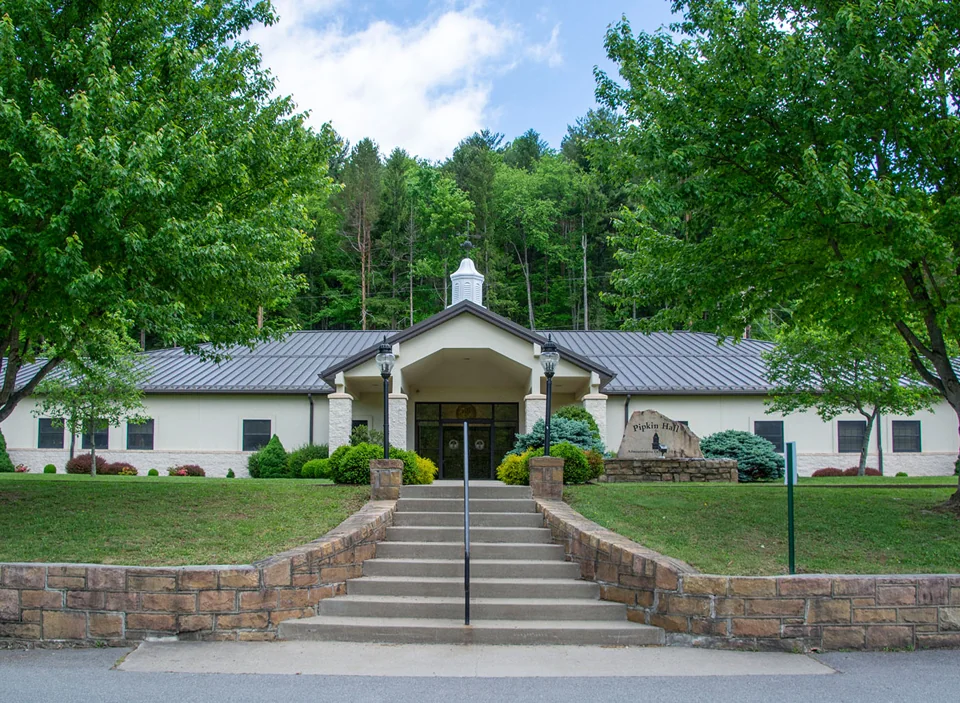
Appalachian Bible College is a Christian college in southern West Virginia, near Beckley. Its origins lie in Appalachian Bible Institute, founded in September 1950 at the Independent Baptist Church in Pettus by Lester Pipkin and Robert Guelich and their wives. The school initially provided Bible training for young people from the Appalachian region. It was incorporated in 1954 and moved to land near Beckley in 1956. As four-year study became a larger part of its provision, the institution adopted the name Appalachian Bible College in 1978. Its history records the development of residence halls, teaching buildings and ministry activities over subsequent decades. Alpine Ministries began with Bible camps in 1960. Later additions included the Gilmore Gymnasium and Conference Center, Appalachian Village for married students, Anderson Hall and the Servant Center. These developments accompanied the expansion of its educational and residential community. Its history also records a 2006 renovation of Pipkin Hall that doubled the size of the Van Puffelen Library.
Sources: History of Appalachian Bible College ↗
A religious mission centred on service
The college describes its mission as preparing people for service in the Christian church while supporting existing church communities. Its published values place the Bible, Christian ministry, integrity and a biblical worldview at the centre of education. The institution presents leadership as a form of service, emphasising humility and the worth of individuals. Its doctrinal statement explains the particular theological position underlying that purpose, including belief in the authority of the Old and New Testaments and a literal, grammatical and historical approach to interpretation. The college operates under Appalachian Bible Fellowship, an independent faith mission, and describes its relationship with like-minded local churches as one of support and cooperation. These commitments shape the educational setting in which its academic programmes and wider ministry activities are offered.
Sources: Mission and doctrine ↗
Certificates and degree pathways
The programme overview sets out several routes into biblical and ministry education. The four-year Bachelor of Arts combines a major in Bible and Theology with a second major. A two-year Associate of Arts combines ministry skills with general education taught from the college's stated biblical perspective. One-year certificate options include a Gap Year Bible Certificate, a Bible and General Education Certificate, and a Bible and Ministry Certificate. The college also presents certificate study online. At postgraduate level, the Master of Arts in Ministry is a professional programme of thirty-six credit hours. Its stated audience includes people already active in ministry, such as pastors, missionaries, Christian educators and other church leaders. This range gives the institution provision at certificate, associate, bachelor's and master's levels, with different amounts of study and different relationships to a student's existing ministry experience.
Sources: Programs offered ↗
Academic assistance and writing support
The college's Learning Support provision combines tutoring, preparation for testing and individual advice. Its Learning Center assists with mathematics and general course content, while students with particular academic concerns can arrange a discussion through the Academic Office to develop an action plan. The Writing Lab offers help with proofreading, editing, research methods and the process of writing papers. A further programme, How to Expand Learning Proficiency, known as H.E.L.P., addresses study habits, personal organisation, test-taking and individual subjects. Its description includes reviewing academic records, counselling and monitoring classwork during the first semester. Some students enter through specified academic criteria, while others seek help voluntarily. The college presents the service as relevant to different transitions, including students finding college-level work more demanding than expected and international students adjusting to a new educational environment.
Sources: Learning support ↗
Residence halls and student families
Residential provision includes several halls with different arrangements. Des Plaines Hall provides women's accommodation with two students sharing a room, individual furniture and a sink, alongside communal bathrooms. McCarrell Hall accommodates men, with each resident having a desk, bed, dresser and closet. Hoops Hall has separate floors for men and women, shared student lounges and rooms with two sinks and air conditioning. The housing page also describes resident assistants who help with aspects of residential life. Married students and their families have a distinct housing community in Appalachian Village. Its townhouses were developed in different phases and provide family accommodation on campus. The college describes family-oriented activities and a Student Wives Fellowship alongside wider college events, including concerts, athletic gatherings and Homecoming activities. Residential life therefore includes both traditional shared-room arrangements and housing intended for students attending with a spouse or children.
Sources: Campus housing ↗
Teaching, gathering and campus spaces
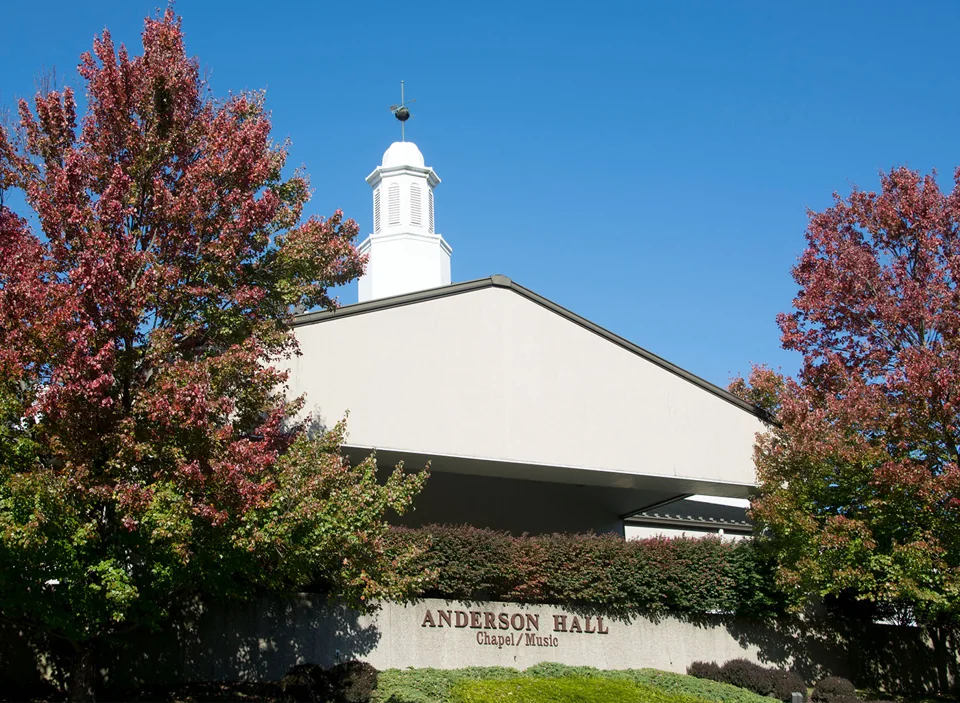
The campus guide places the college north of Beckley, near Interstate 64/77. It identifies Pipkin Hall as the location of the library, admissions and administrative offices. Anderson Hall contains the chapel and music hall, while Beukema Hall provides classrooms. Barker and Pinter halls accommodate faculty offices, with Barker also including teaching space. The Servant Center brings together the dining hall, lounge, coffee shop, classrooms and Student Services. Athletic and gathering spaces include the Gilmore Center, used as a gymnasium and conference facility, and Warrior Field for soccer. The guide links these buildings with the residence halls and Appalachian Village, presenting the campus as a setting for study, worship, recreation and everyday residential life.
Sources: Campus tour and facilities ↗