Visa

About Antillean Adventist University
An Adventist university in Mayagüez
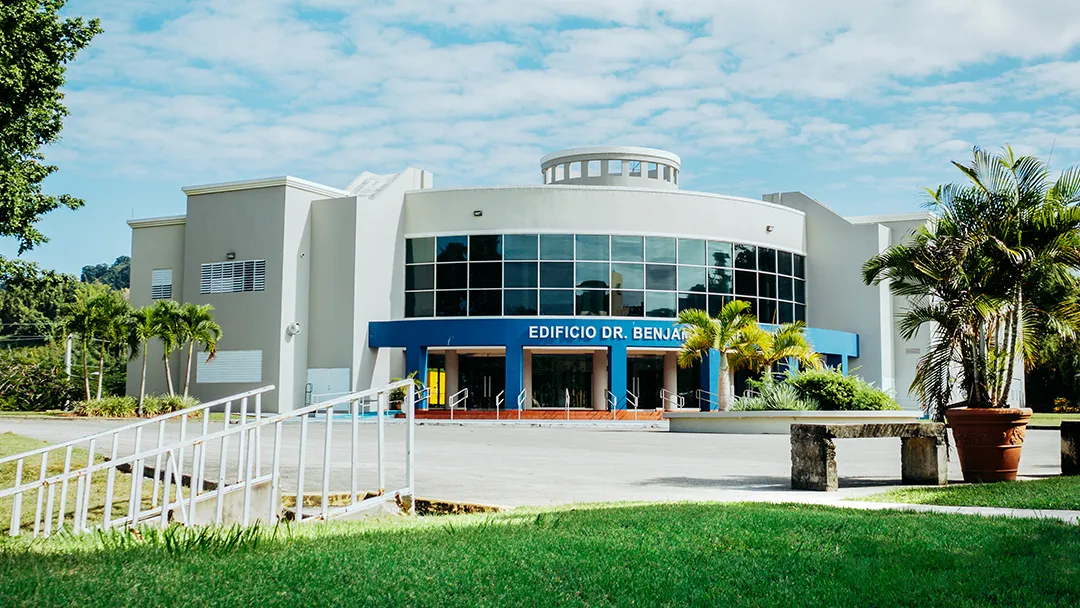
Antillean Adventist University is a higher education institution in Mayagüez, in western Puerto Rico. It is operated by the Puerto Rican Union of Seventh-day Adventist Churches. Its institutional introduction places it about four kilometres from the city centre, in a setting surrounded by mountain vegetation. The university identifies its physical address on Carretera 106, kilometre 2.2 Interior.
The university describes an educational philosophy in which Christian faith informs the curriculum, teaching, research and institutional life. Its mission connects the preparation of competent professionals with service to God and humanity. Spirituality, excellence and service are the central themes of its stated vision. The philosophy also emphasises the development of intellectual, physical, social, moral and spiritual capacities. Within this framework, critical thinking, research, problem solving, effective communication and responsible use of resources are described as educational priorities. These statements explain the religious and educational purpose guiding its work.
Sources: Institutional identity, mission and educational philosophy ↗
Library history and learning resources
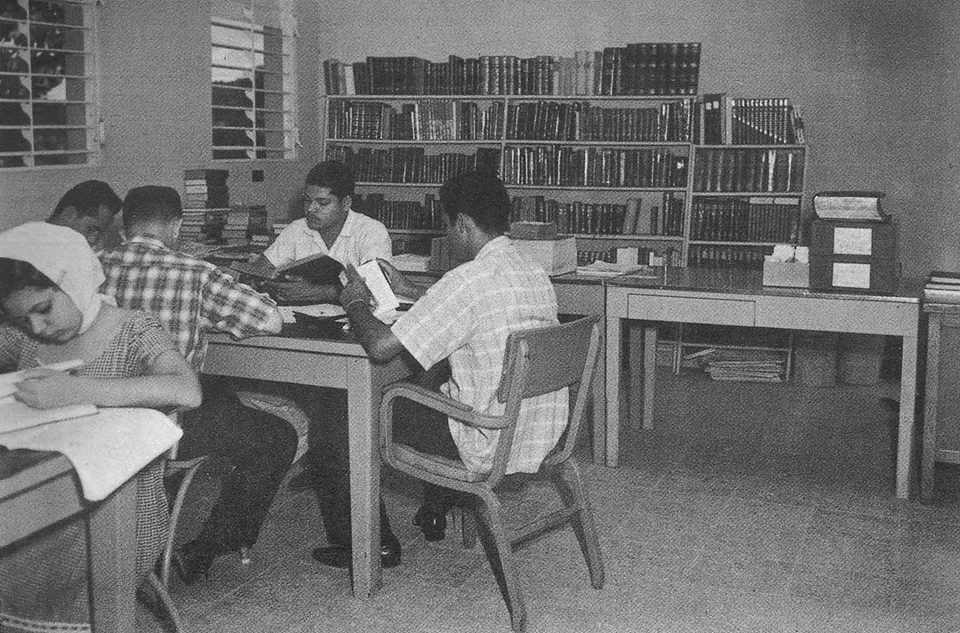
The Dennis Soto Library traces its beginnings to 1961, when Antillian College was established in Mayagüez. The first library occupied a classroom on the ground floor of the central building. It subsequently moved above the cafeteria, before a separate three-storey building opened in 1979. Renovation in 1998 strengthened the building against hurricanes, and the library received the Dennis Soto name in recognition of support for that project.
The library provides printed and digital books and journals for study and research. Librarians offer individual guidance and coordinate group instruction with teaching staff, both in person and virtually. A website chat supports questions about library resources, with video conversations available when further explanation is useful. Computer facilities provide internet access and word processing for academic work, alongside machines used for graphic design. An online catalogue, journal databases and electronic book collections provide further routes to information beyond the physical shelves.
Sources: Dennis Soto Library and its history ↗
Community and student participation
Student life is presented as an extension of the educational experience beyond formal classes. The university describes a multicultural community and a programme of spiritual, recreational and social experiences intended to support personal development and a sense of belonging. Its student-life office links these activities with student wellbeing and opportunities to share talents in service to others.
The published student-life structure includes religious affairs, spiritual-emphasis weeks, ministries and a missions institute. Student organisations are described as opportunities to practise leadership, develop interpersonal relationships and participate in shared activities. A student council also appears within this structure. Residential services, dining, recreation and support services accompany these opportunities. Together, these areas show how the university organises community participation alongside its academic programmes, with spiritual life and relationships between students forming part of its educational approach.
Living within the university community
The university offers on-campus residences and describes residential life as a community in which students learn to live together and respect individual differences. Its stated purpose is to provide an environment supportive of study, social development and constructive relationships. The residence introduction also connects shared living with Christian values and service.
The published facilities include residences for women and men, with rooms containing beds, a desk, a small refrigerator and shared wardrobe space. Common facilities include reception and living areas, study rooms and light-kitchen spaces for heating food. Additional campus apartments are described for students older than twenty-one, while separate apartments accommodate students with families. These different arrangements provide several forms of residential provision. The residence service therefore combines accommodation with shared spaces and an organised approach to community life, rather than treating housing solely as a place to sleep between classes.
Sources: Student residences ↗

Learning through digital platforms
The university’s distance-education service describes provision at technical, undergraduate and graduate levels. Courses may be hybrid or fully online, depending on the design of the individual academic programme. Moodle is identified as the principal platform through which students access courses and participate in learning activities, alongside other digital tools.
The distance-education page brings together resources for navigating online study, accessing the student information platform and understanding student policies. It also provides routes to information about supervised examinations, authentication and academic complaints. These resources connect the delivery of teaching with the practical arrangements needed to participate in a course at a distance. The university presents this form of education as a response to changes in technology and higher education, while retaining its Christian educational values. Its description places flexibility and student-centred learning alongside the institutional support available through the distance-education department.
Sources: Distance education ↗
Psychology as an example of academic study
The Bachelor of Arts in Psychology illustrates the university’s combination of subject knowledge, ethical reflection and practical learning. Its programme description offers both in-person and fully online study. It presents human behaviour through scientific, ethical and Christian perspectives, with attention to critical thinking, social awareness and communication with individuals and communities.
The published curriculum begins with general psychology, human development and neuropsychology. Further subjects include personality theories, psychopathology, health psychology and crisis intervention. Statistics and psychological research form part of the course framework, and supervised practice is described as a way of relating theoretical study to practical settings. The programme identifies understanding mental, emotional and social processes, evaluating theories and data, and communicating empathetically as intended areas of development. It also presents the degree as a foundation for further graduate study. These are the programme’s educational aims and curriculum features, rather than a guarantee of professional registration or employment.
Sources: Bachelor of Arts in Psychology ↗