Visa
About Ana G. Mendez University System
The university system and its development
Sistema Universitario Ana G. Méndez, or SUAGM, is known in English as the Ana G. Mendez University System. Its history forms part of the development of today’s Universidad Ana G. Méndez in Puerto Rico. The official chronology records the legal adoption of the system name in 1993 and the change of its institutions’ names to Universidad Ana G. Méndez in 2019.
Its educational roots reach further back. Ana González de Méndez, Alfredo Muñiz Souffront and Florencio Pagán Cruz established the Puerto Rico High School of Commerce in Río Piedras in 1941. Puerto Rico Junior College followed in 1949. Expansion later produced institutions associated with the Turabo, metropolitan and eastern regions. The history also records the creation of a televised studies centre in 1978 and the inauguration of WMTJ-TV in 1985, connecting the organization’s development with education beyond conventional classrooms.
A broad educational institution in Puerto Rico
Universidad Ana G. Méndez describes itself as a private, nonprofit higher education institution. Its present educational provision ranges from technical certificates and associate degrees to bachelor’s, master’s and doctoral studies. Continuing education adds professional courses to this degree-based portfolio. These different levels give the institution a role in both initial higher education and subsequent professional learning.
The university’s current institutional overview identifies Carolina, Cupey and Gurabo as its principal campuses. It also lists university centres across Puerto Rico, linking the institution to communities beyond those main sites. The overview includes Sistema TV among its educational resources and identifies its association with the Public Broadcasting Service. This combination of academic qualifications, continuing study and educational broadcasting reflects the breadth of the organization that grew from the earlier university system.
Sources: The university today ↗
Campuses and regional connections
The campus directory describes a geographically distributed institution. Carolina, Cupey and Gurabo each have their own campus presentation, while the university centres extend provision to other parts of the island. The directory names Aguadilla, Barceloneta, Bayamón, Cabo Rojo, Cayey, Ponce, Santa Isabel and Yabucoa.
The descriptions emphasize different regional settings. Aguadilla is associated with communities in western, northwestern and northern Puerto Rico. Cabo Rojo’s presentation highlights its southwestern setting and tourism connections, while Ponce serves a southern location. Barceloneta’s description includes educational areas such as health, veterinary studies, engineering, design, architecture, business and tourism. Santa Isabel lists study opportunities at several levels, including technical certificates, associate degrees, bachelor’s degrees and master’s programmes. The campus and centre directory therefore provides a useful picture of how the university connects its educational provision with different local communities.
Sources: Campuses and university centres ↗

Mission, teaching and institutional support
The university’s mission combines teaching, research, innovation, entrepreneurship and international engagement. It describes service to a diverse student population through a multicampus structure, with classroom and distance-learning modes. Community wellbeing, locally and globally, is an explicit part of its educational purpose.
The mission statement also explains the relationship between central administration and institutional units. Campuses, local centres and Sistema TV carry out educational functions, while central structures advise and support those units in specialized areas and oversee system-wide policies and processes. Its stated objectives encompass academic programmes, adult and continuing education, scientific and academic research, and public discussion of social, economic and environmental challenges. These are presented as institutional aims that guide its activities. The campus mission statements add their own emphasis on community commitment, technology, culture, lifelong learning and the development of academic and professional competencies.
Research across disciplines
The university organizes research through thematic areas intended to connect projects, creative work and innovation by faculty members and students. Its published research overview discusses humanity, justice and organizations; healthy communities; healthy animals; and sustainable development. It also identifies themes that cross these boundaries, including biological sciences, island studies, data science and One Health.
The examples within these areas are varied. Humanities, cultural studies, economics and educational studies appear alongside environmental science, clean technology, energy systems and conservation. The overview emphasizes collaboration across disciplines and states that the university supports research beyond its identified areas of strength. This approach places individual projects within a wider institutional framework while allowing research groups and themes to evolve. It also connects research activity with the development of academic programmes spanning more than one discipline.
Sources: Research themes and collaboration ↗
Libraries and information skills
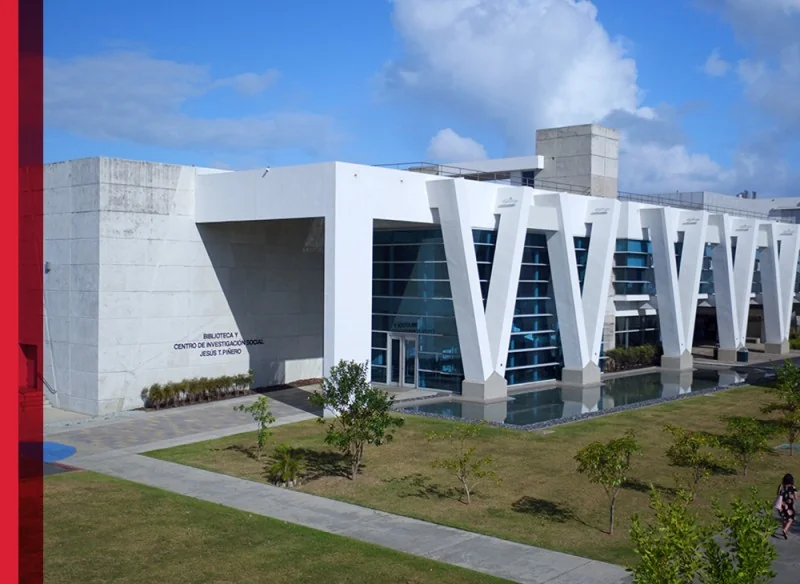
The university’s library and technology-integration service supports access to physical and electronic information resources. Its collections include books, journals and bibliographic databases related to academic programmes and current topics. Users can consult electronic resources remotely or use computers on site, combining a physical library setting with digital access.
The library describes information and technological competencies as part of its educational work. Workshops introduce students and faculty members to available research resources, software and electronic platforms used in courses. Its mission emphasizes ethical and critical use of information, preservation and dissemination of relevant resources, and support for teaching and research. An online librarian service offers another point of contact for assistance. These services place the library within both the everyday work of students and the institution’s wider research and learning activities.
Student services across the campuses
The Deanery of Student Affairs brings together enrolment and student-life services across campuses and university centres. Its published service directory includes admissions, enrolment, financial assistance, treasury services and the registrar. These functions address different stages of a student’s administrative relationship with the institution.
The directory also includes services for students with disabilities, military members and veterans, student associations, international affairs, scholarships and internships, and careers and placement support. Quality-of-life services and student complaint procedures appear alongside these offices. Campus-specific student affairs contacts are provided for Carolina, Cupey and Gurabo. The range of listed services shows an organization supporting both academic administration and participation in university life, with several routes through which students can seek guidance or contact the relevant institutional office.
Sources: Student services ↗