Visa
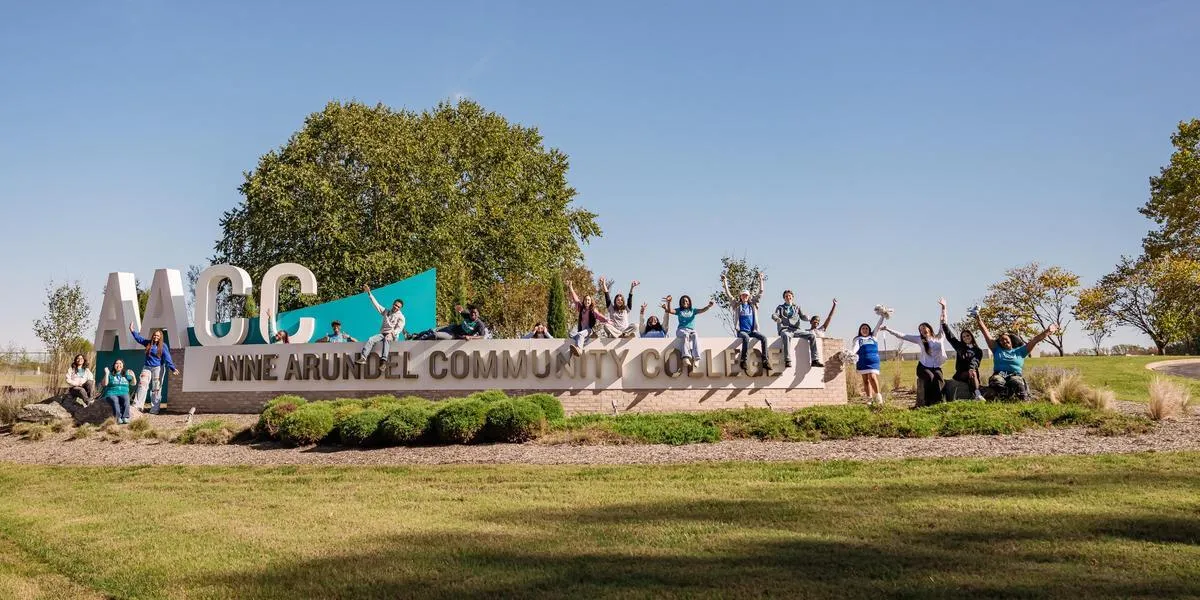
About Anne Arundel Community College
A community college established in 1961
Anne Arundel Community College is based in Arnold, Maryland. The county Board of Education established the college on 2 January 1961, and classes began that September in temporary accommodation at Severna Park High School. Its first president, Andrew G. Truxal, developed a liberal arts curriculum intended for transfer to four-year institutions while also introducing career programmes, including nursing.
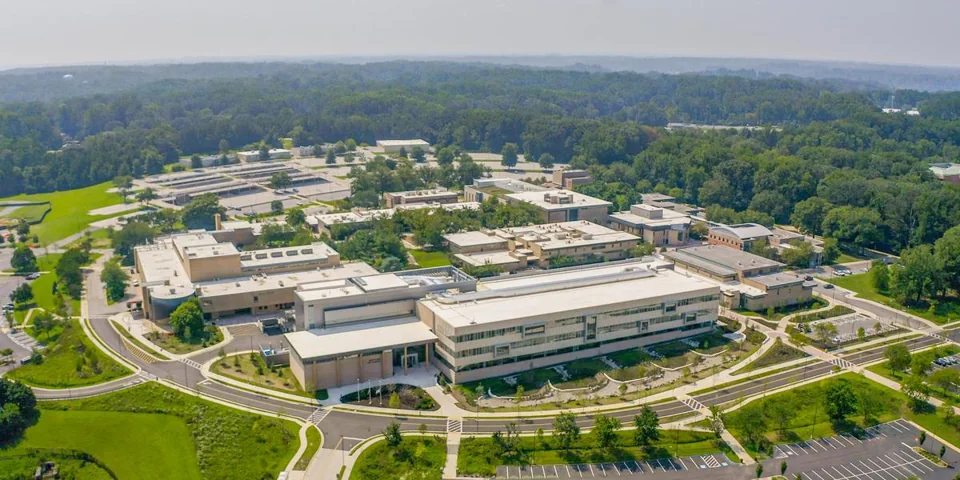
The college moved to its Arnold campus in September 1967. Later developments broadened its teaching formats and geographical reach. Its history records the creation of a Weekend College, cable television courses and contractual training during the 1970s. Subsequent expansion included the Glen Burnie Town Center location and additional off-campus provision. The historical account also describes the introduction of shorter eight-week teaching periods, environmental and local-issues centres, and specialist facilities for hospitality, culinary education and professional training.
Sources: History of Anne Arundel Community College ↗
Several ways to study and develop new interests
AACC describes its educational provision through associate degrees, credit certificates, noncredit professional training and lifelong learning. These routes serve different purposes, from preparing for further study to developing occupational skills or exploring a personal interest. The college presents its programmes as opportunities for people at different ages and stages of life.
Associate degrees and credit certificates are designed to support either transfer or preparation for work in particular fields. Noncredit provision includes career training, opportunities to strengthen basic skills and learning related to new or expanded professional responsibilities. Personal enrichment forms another part of the college’s role, with examples ranging from fitness and local history to summer activities for children. This combination gives the institution a broader remit than degree study alone, connecting formal academic pathways with professional development and community learning throughout life.
Mission and values
Learning is the central purpose of the college’s mission. Its institutional statement links that purpose with accessible, affordable and innovative lifelong learning opportunities that respond to a diverse community. The vision connects education with an engaged and inclusive society.
AACC’s values identify community and relationships, equity and inclusion, innovation and creativity, opportunity and positivity. Its educational philosophy emphasises the chance for individuals to discover their interests and talents and develop their potential. Intellectual, cultural and economic participation in society are presented together, explaining how the college connects personal learning with wider community life.
Library resources and research support
The Andrew G. Truxal Library supports learning through physical and electronic collections, research assistance and lending services. Its catalogue covers books, audiovisual resources and reserve materials, while databases provide access to newspapers, magazines, scholarly journals, electronic books and online audiovisual content. Students and employees can access electronic resources remotely through their college login.
Library guides explain research processes, source evaluation, plagiarism avoidance and citation in MLA and APA styles. Reference staff help learners develop research strategies, choose resources and locate information. Assistance is available through several communication channels and online appointments. Inter-library loans extend access beyond the college’s own holdings, and distance-learning services support students taking online or hybrid courses or studying at other AACC locations. The library also lends equipment, including laptops and calculators, and provides subject-related learning objects such as anatomical and chemistry models. Borrowing is also open to county residents and workers and members of other colleges, reflecting the library’s role as a resource for the wider community as well as enrolled students.
Sources: Andrew G. Truxal Library ↗
Planning for transfer between institutions
Transfer Services supports students moving from AACC to another college or university, entering AACC after study elsewhere, or taking courses as visiting students. The college describes transfer to a four-year institution as a major reason students choose its programmes. Its advisers help students consider courses and degrees in relation to their intended destination.
For learners arriving from another institution, the published process includes submitting college transcripts and meeting an academic adviser to discuss course choices and longer-term goals. Visiting students are asked to confirm with their home institution that an AACC course will transfer and to provide evidence of prerequisites when required. High school students form another group addressed by these services. The transfer page brings these different circumstances together while maintaining a common emphasis on planning, transcript evaluation and coordination between institutions. A transfer-credit equivalency database provides an additional way to explore how previous coursework may be assessed.
Sources: Transfer Services ↗
Science, technology and education
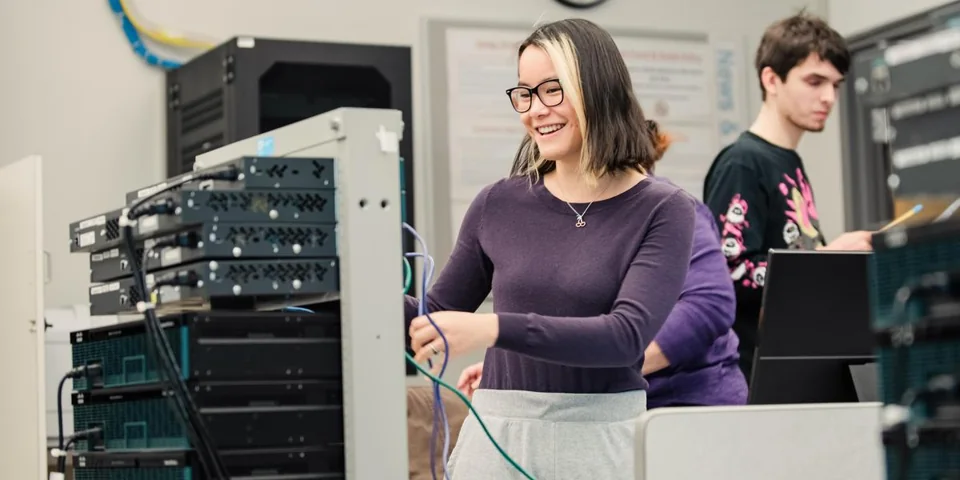
The School of Science, Technology and Education brings together a varied academic range. Its departments include architecture and interior design, biology, computer science, cybersecurity, networking and digital forensics, engineering, management information systems and applied artificial intelligence, physical science, and teacher education and child care. Achieving College and Career Advancement is also included in the school’s organisation.
The school’s educational mission focuses on opportunities to develop knowledge and capabilities in science- and technology-related fields. Its academic page highlights student-driven research experiences and links to projects at the college. Supplemental Instruction provides another form of participation, supporting students in challenging subjects and offering mentoring roles for learners with strong subject knowledge. The school also connects readers with related noncredit study through the School of Continuing Education and Workforce Development. These arrangements place classroom instruction alongside research, peer learning and routes into further professional or personal development.
Sources: School of Science, Technology and Education ↗