Visa

About Angelo State University
A university rooted in San Angelo
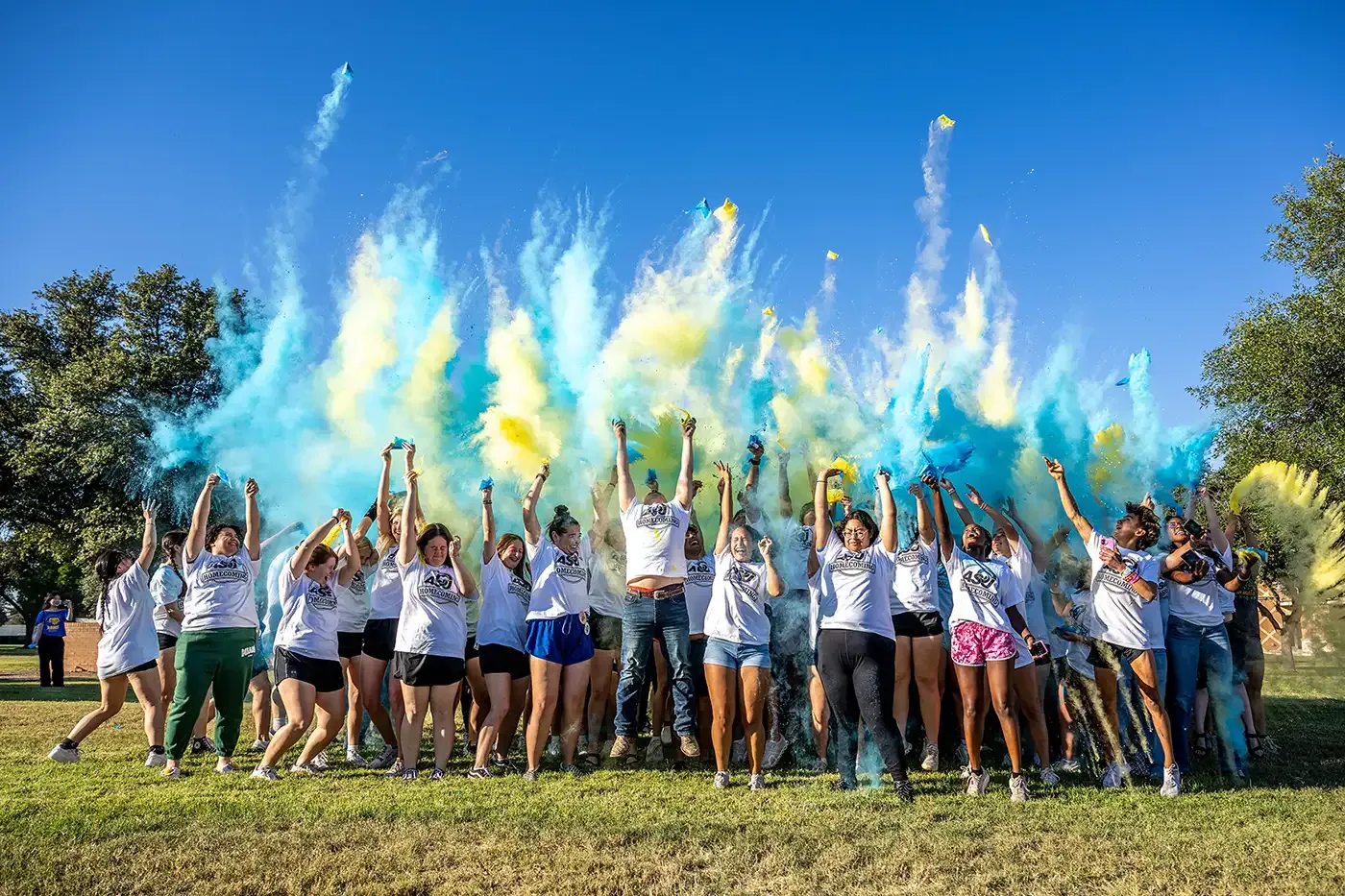
Angelo State University grew from a local effort to establish higher education in San Angelo, Texas. After the city was not selected as the site of Texas Technological College, residents developed their own institution. San Angelo Junior College opened in 1928 near downtown on North Oakes Street. The college later moved to its present campus, with construction beginning on the Administration Building in 1947. Its transition into a state-supported four-year institution brought the Angelo State College name in 1965, followed by Angelo State University in 1969. A further institutional change took effect in September 2007, when the university joined the Texas Tech University System. This sequence connects the present university with both a community-supported junior-college beginning and later development as a comprehensive state institution.
Sources: A university rooted in San Angelo ↗
Academic organization and areas of study
The university organizes its teaching through colleges with different academic emphases. The Archer College of Health and Human Services connects applied learning with community engagement, while the College of Arts and Humanities covers fields including communication, history and the arts. The College of Education is concerned with preparation for educational work and leadership. Science and engineering provide another broad area of study, and the Norris-Vincent College of Business emphasizes business knowledge, practical experience and entrepreneurship. The College of Graduate Studies and Research supports master’s and doctoral education, including online and hybrid formats. Together these units provide a range extending from undergraduate study to advanced programmes. The university’s public identity is also expressed through its blue-and-gold colours and Rams and Rambelles names, which appear across its campus and student activities.
Library resources and regional collections
The Porter Henderson Library combines physical collections, online research tools and assistance from librarians. Its discovery service searches books, audiovisual material and many databases, while separate database and journal tools provide other ways to locate information. Research guides offer topic introductions, course-related resources and tutorials. Interlibrary loan extends access to materials held by other libraries, and government-document collections include records, maps and census information. Students can use individual study areas, group rooms and a presentation-practice room. Services also include equipment borrowing and requests for materials to be collected later. The Dr. Ralph R. Chase West Texas Collection forms the library’s special-collections unit, serving both as the university archives and as a research centre for West Texas history and culture. This places local primary sources alongside the broader resources needed for academic study.
Sources: Library resources and regional collections ↗
Research and creative work with faculty
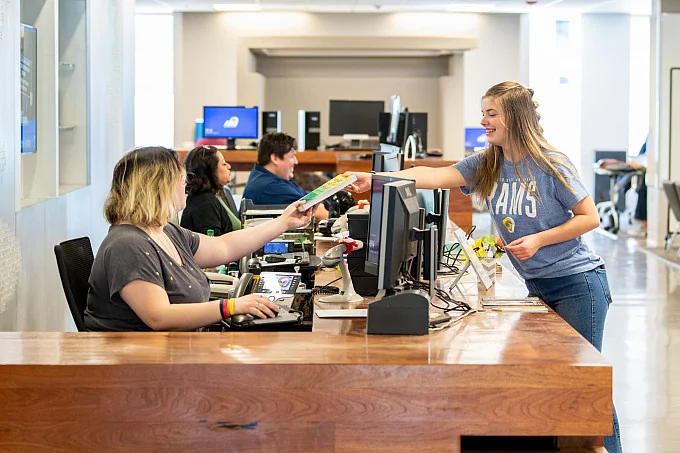
Student Research and Creative Endeavor supports advanced work undertaken by undergraduate and graduate students with substantial faculty mentoring. The university describes research broadly, recognizing that an experiment in a laboratory, investigation in a library archive, fieldwork in a natural setting and work in an art studio can all contribute to scholarly learning. Examples include scientific investigation, reviews of published scholarship, interviews about social questions, environmental fieldwork and artistic creation. Opportunities differ across disciplines, but the stated emphasis is on critical inquiry and an understanding of how knowledge or creative work is developed within a field. Potential outcomes include presentations, publications, exhibitions and performances. The programme therefore gives students ways to move beyond receiving information and take part in producing and communicating work of their own.
The ranch as a working educational setting
The Management, Instruction and Research Center, commonly presented as the ASU Ranch, lies north of San Angelo near O.C. Fisher Lake. It is a working ranch used for teaching and faculty-linked investigation. Its educational activities include livestock care, range and wildlife management, and meat processing. The university describes the centre as a large practical laboratory where students can connect classroom study with the management of animals, land and agricultural products. The ranch also has a public-facing role through its meat market and livestock sales. Its listed livestock include Rambouillet sheep, goats and Angus cattle. These functions bring agricultural instruction, practical management and services to the surrounding community into the same setting, while giving the ranch a different character from conventional classroom and laboratory buildings.
Museum learning and community engagement
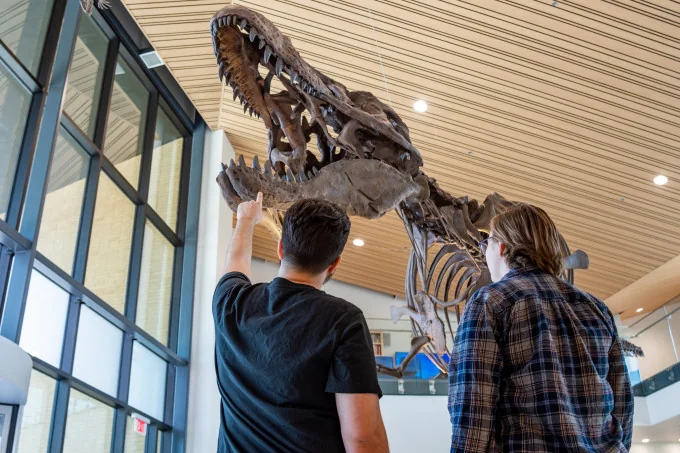
The Mayer Museum is the university’s science and culture museum, located on West Avenue N in San Angelo. Its mission connects the educational experience of university students with engagement of the wider community. Exhibits interpret historic, cultural and natural materials associated with the Concho Valley, Texas and places beyond the region. The museum introduces subjects ranging from dinosaurs to the geological history of the Permian Basin. Its public programme includes guided visits and field trips, together with lectures and activities intended for different audiences. The museum also offers sensory programmes for children. This range makes it a setting for learning through objects, displays and conversation, complementing formal teaching with opportunities for families, school groups and other visitors to explore regional science and culture.
Sources: Museum learning and community engagement ↗
Advising and planning a course of study
Academic advising provides students with guidance on the courses that fit their educational plans and degree requirements. The university’s advising information directs students to different arrangements according to their college and stage of study. Arts and Humanities students receive invitations to arrange appointments before fall and spring registration, while Education and Business students are directed to their professional advisors, including transfer students. Science and Engineering provides major-specific advising for students in the earlier part of their degree. Students who have not declared a major select an exploratory track and use undeclared advising. Degree evaluations and the registration schedule are linked from the advising service. These arrangements place planning alongside instruction, helping students identify the appropriate academic contact as their programmes and interests develop.