Visa

About Andrés Bello Catholic University
A Jesuit university in Venezuela
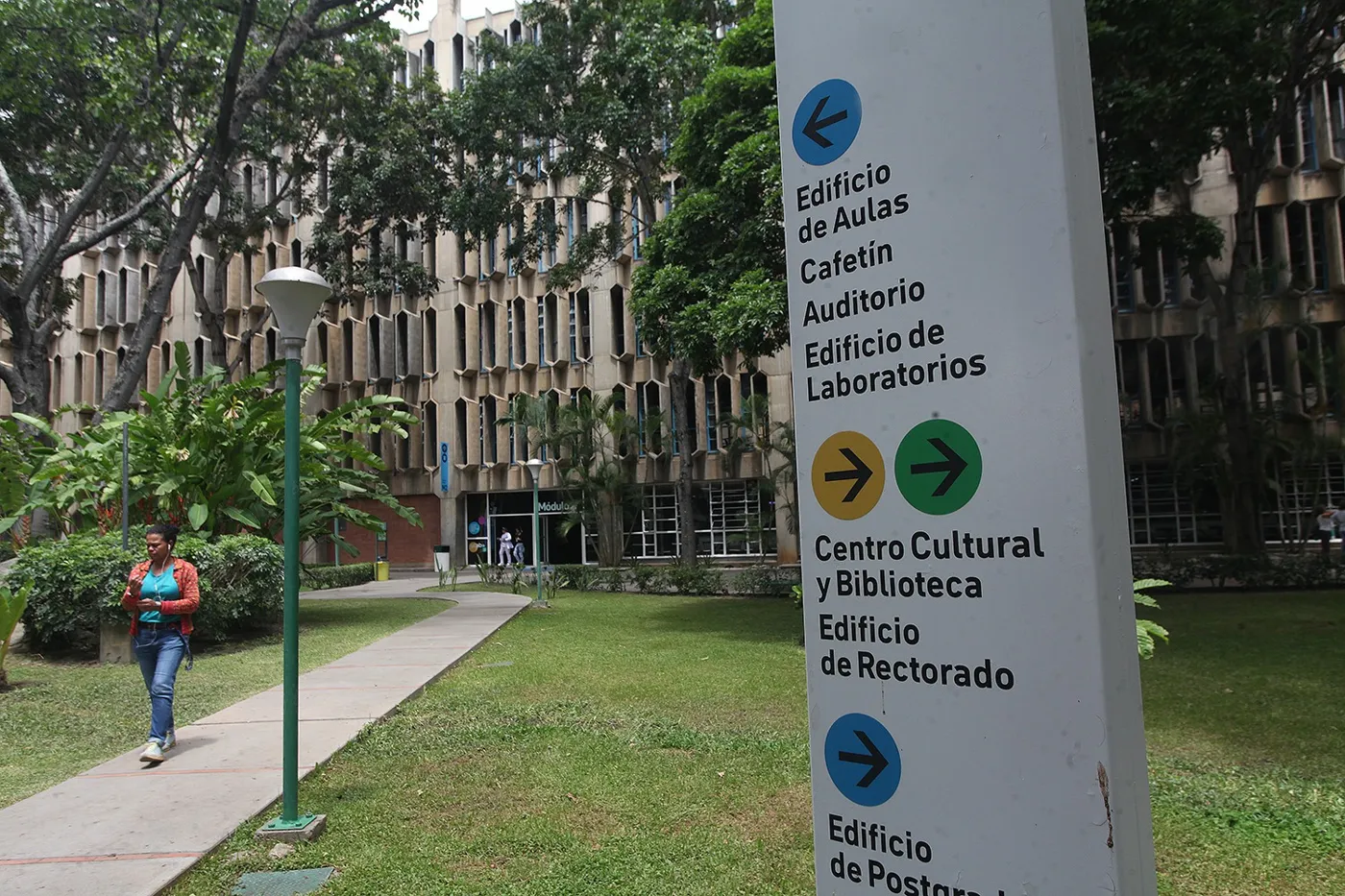
Andrés Bello Catholic University, known as Universidad Católica Andrés Bello or UCAB, is a nonprofit university in Venezuela associated with the Society of Jesus. Its foundation was decreed by the Venezuelan Episcopate in 1951 and carried out in Caracas by the Jesuits in 1953. The university's institutional account places education within a Christian understanding of personal and community development.
Its objectives link teaching, research and the circulation of knowledge with service to Venezuela. The mission also identifies Latin American integration, mutual understanding, social justice and work with marginalised communities as important concerns. Dialogue between scientific disciplines, philosophy and theology forms another part of its educational outlook. UCAB describes the university as a community of teachers, students and authorities engaged in the search for knowledge, with the formation of professionals and technical specialists connected to wider cultural and social responsibilities.
Sources: About the university ↗
Founding and regional development
The university opened in Caracas on 24 October 1953 as Universidad Católica de Venezuela. Its first rector, Carlos Guillermo Plaza, sought authorisation to change the institution's name, and the name Universidad Católica Andrés Bello was adopted on 7 July 1954. The university's historical account connects its subsequent development with the Society of Jesus and the contributions of successive generations of teachers, staff, students and graduates.
Although based in Caracas, UCAB also developed educational activity elsewhere in Venezuela. Its Guayana extension began in Ciudad Guayana in 1995 with continuing education directed toward professionals and technical personnel working in the region's industries. Postgraduate activity followed in 1996. Undergraduate teaching began in 1999 with law, education, administration and accounting. This sequence distinguishes the regional extension's development from the university's earlier Caracas foundation. The history also identifies the Táchira extension as a predecessor of the separate Universidad Católica del Táchira, illustrating another strand of UCAB's regional educational influence.
Sources: University history ↗
Library resources and learning
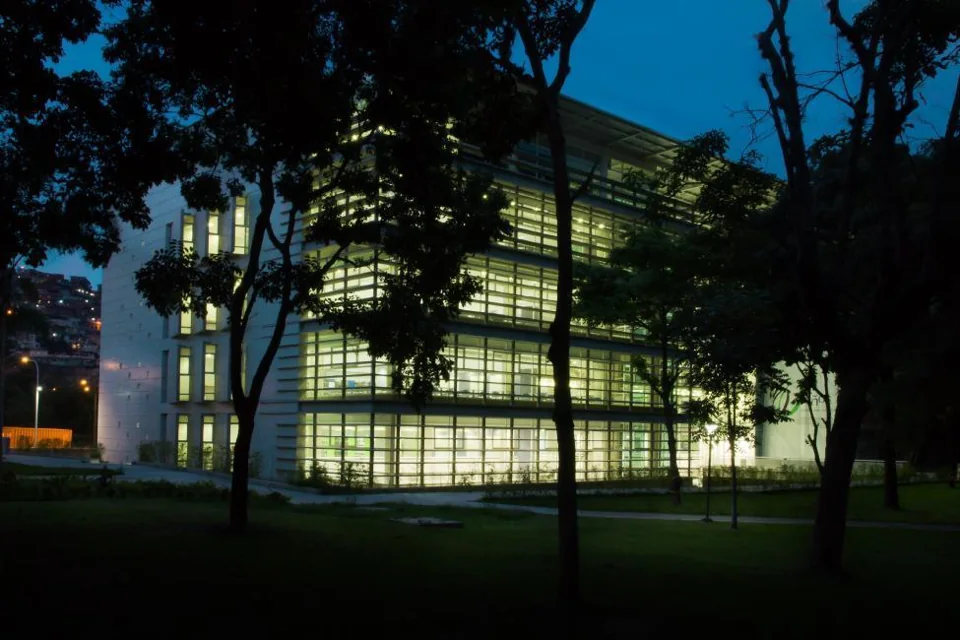
The UCAB library supports teaching and research through its SIBUCAB catalogue, which records books, degree theses, journals, official publications and reference works. The catalogue allows users to locate bibliographic material, while full-text theses provide another resource for exploring earlier research on a topic.
The library identifies research tools including Dialnet, Scopus and EBSCO. It also offers an information-technology workshop concerned with the use of online research resources. Its cultural role extends beyond borrowing and reference: a ground-floor exhibition room presents artistic and bibliographic collections, and its Google Arts and Culture presence shares elements of Venezuela's cultural memory through images, videos and exhibitions. Reading and research take place within a managed study environment, with rules concerning silence, the care of workspaces and the use of furniture. The library's address is on Avenida Teherán in Montalbán, Caracas.
Sources: University library ↗
Culture as part of university education
The Culture Directorate presents cultural activity as part of UCAB's academic life and as a connection with neighbouring communities. Its mission concerns participation, cultural identity and opportunities for recreation, alongside the university's formal educational work. It seeks to support both the university community and people in the surrounding area.
Its stated priorities include strengthening cultural groups, maintaining a varied programme of activities and encouraging wider participation. Training is another element: continuing workshops within the groups are intended to support participants' individual and collective development. The directorate also addresses the practical organisation of cultural activity, including the effective use of available spaces and logistical support. Commitment, responsibility and excellence appear among its stated values. This approach places cultural participation within the broader formation of students and the university's relationship with its environment.
Sources: Culture Directorate ↗
Sport and campus participation
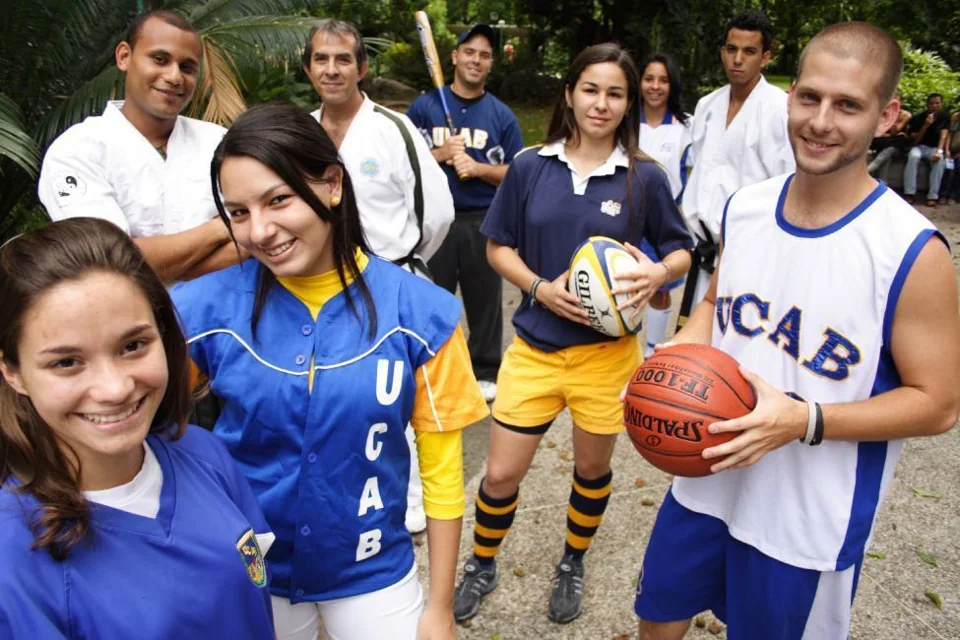
UCAB's sports services include activities for the university community as well as teams that represent the institution in inter-university competition. Its published options range from chess, basketball, baseball, football and futsal to rugby, volleyball, beach volleyball, martial arts and aerobic dance. The sports directorate also lists access to a gym with machines and weights.
Internal championships bring together teams drawn from different parts of the university community. The Copa UCAB is organised around student teams representing their schools, while selected teams participate in external competitions. The services account distinguishes these representative squads from recreational and internal activities. It also describes participation in university sporting events and encounters with other institutions. Together, these forms of activity provide several routes into sport, from organised school competitions to teams competing on behalf of UCAB.
Sources: Sports services ↗
A relationship with surrounding communities
Social extension is the university's framework for applying knowledge and technical experience in partnership with neighbouring communities. Its institutional statement connects this work with responding to exclusion, injustice and marginalisation, expressing a commitment to fairer social conditions.
The university describes a structure in which general policies are defined by the rector together with the vice rector responsible for identity, student development and social extension. A general directorate coordinates the associated technical activities and follows their implementation. The extension website also identifies strategic planning, an organisational structure, regulations and partnerships as parts of this work. Its partners include organisations working in Caracas and Guayana. Social extension therefore represents an organised university function linking academic knowledge with continuing relationships beyond the campus, rather than a single occasional event.
Sources: Social extension: about us ↗
Research and the circulation of knowledge
Research at UCAB is presented as a means of contributing knowledge about Venezuela's fundamental challenges within a wider international context. The Secretariat of Research and Transfer promotes, coordinates and finances projects in scientific, humanistic, social and technological fields.
Institutes and centres provide settings for generating knowledge and developing innovative work. The university also identifies resources intended to support the collection and analysis of information across disciplines. Publishing forms part of this research environment: books, journals and other publications circulate scholarship produced within UCAB and make its work available to wider audiences. The research framework thus connects the development of projects with information resources and the communication of results, complementing the university's teaching and social responsibilities.
Sources: Research at UCAB ↗