Visa
About Alejandro de Humboldt University
A private Venezuelan university
Alejandro de Humboldt University is a private Venezuelan institution known in Spanish as Universidad Alejandro de Humboldt, or UAH. It belongs to Grupo Humboldt and was promoted by the Asociación Civil Educativa Humboldt. Its institutional history identifies two steps in its establishment: a favourable National Universities Council resolution, numbered 28 and dated 25 July 1997, followed by Presidential Decree 2225 of 1 December 1997 authorising its operation. The university describes its educational mission through the creation and dissemination of scientific and technological knowledge. Alongside subject expertise, that mission emphasises ethical values, creative and critical thinking, personal development and sensitivity to social concerns.
Caracas and Valencia locations
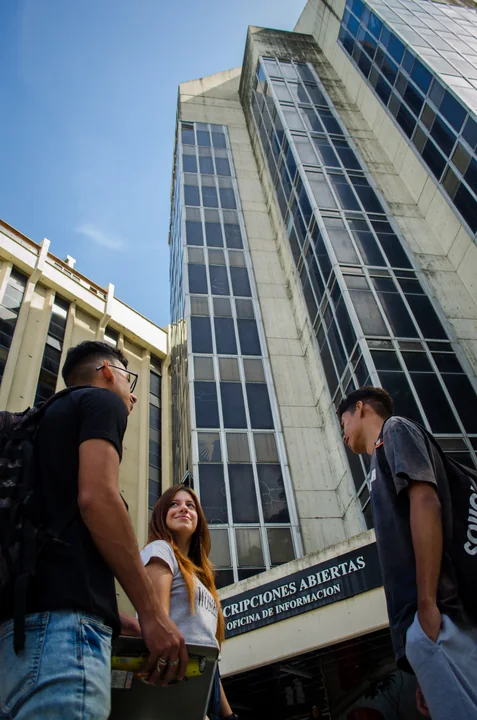
UAH began with a site in Caracas and now lists several addresses across the capital alongside a nucleus in Valencia. Los Dos Caminos is on Avenida Rómulo Gallegos at the first transversal of Montecristo. The Andrés Bello site stands at the junction of Avenida Andrés Bello and Avenida Urdaneta. Plaza Venezuela is on Avenida Lima in Los Caobos, between Plaza Venezuela and Avenida Libertador, while El Bosque is on its principal avenue in Chacaíto. The Valencia nucleus is in El Trigal Centro, where Avenida Pocaterra meets Calle Colinas. These named locations form a university presence distributed across two Venezuelan cities.
Sources: Caracas sites and Valencia nucleus ↗
Computing and systems engineering
The computer engineering programme combines computing, technology and management. Its published ten-semester plan begins with mathematics, logic, computing, research methods, English and communication. Students subsequently encounter algorithms, data structures, programming languages, systems analysis, operating systems and databases. Electrical and electronic circuits sit alongside software engineering and computer architecture, giving the curriculum both hardware and software components. Later subjects include digital systems, computer graphics, systems auditing, microprocessors, networks and digital communications. Multimedia, robotics and expert systems appear near the end of the sequence. Two internship stages, professional ethics, a degree-project seminar and the final degree project connect the specialist subjects with extended practical and independent work.
Sources: Computer engineering: profile and ten-semester curriculum ↗
Maintaining buildings and infrastructure
Infrastructure maintenance engineering addresses the conservation and rehabilitation of built structures and the maintenance of electromechanical equipment. UAH presents inspection, diagnosis, preventive work and corrective intervention as central parts of this field. The curriculum develops from mathematics, physics, chemistry and technical drawing into surveying, mechanics, fluid mechanics, electrical engineering and construction materials. Later semesters introduce structures, soil mechanics, sanitary installations and maintenance management. Students also study reinforced concrete, foundations, metallic construction, industrial hygiene and safety, and the deterioration of concrete structures. The final stages include building-construction technology and the planning, measurement and control of equipment maintenance, together with internships, professional ethics and a degree project.
Sources: Infrastructure maintenance engineering: curriculum ↗
International trade and business
The international trade degree brings together economics, commercial law, logistics and business management. Its ten-semester curriculum introduces accounting, computing, mathematics, research methods and English before developing international commerce and customs procedures. Consular law, financial mathematics, monetary policy and economic geography add legal and economic context. Transport, financial-statement analysis, marketing, import costs and international payment systems follow. The later sequence covers export promotion, inventory and warehouse administration, customs valuation, international markets, finance and economic integration. Packaging techniques and negotiation workshops give the programme additional operational detail. Internships and a final degree project accompany the advanced subjects, while professional ethics appears in the concluding semester.
Sources: International trade: curriculum ↗
Education with an English specialisation
UAH's education degree with an English specialisation integrates language development with the study of teaching. Its curriculum includes English reading and writing, linguistics, grammar, phonology and language laboratories. Educational philosophy, developmental psychology, sociology of education and learning psychology establish a wider pedagogical foundation. Students progress into curriculum, educational research, assessment, instructional planning and learning resources. Three successive professional-practice courses appear in the middle and later semesters. British and North American literature extend the language component, while instructional multimedia introduces another dimension of classroom preparation. The concluding work includes educational administration, learning assessment, professional ethics and a degree project, bringing together language knowledge, teaching practice and educational inquiry.
Sources: Education with English specialisation: curriculum ↗
Community work and student support
Several coordinations organise student support beyond individual academic departments. The community-service coordination plans and evaluates projects in communities selected by the institution. The internship coordination manages relationships with public and private organisations, state bodies, nongovernmental organisations, smaller businesses and entrepreneurial ventures for student placements. It also organises internship and employment fairs as part of its work to develop institutional relationships. A psychological service provides guidance and assistance for students, with individual, group or family attention included in its description. Together, these arrangements place community projects, practical placements and personal support within identifiable university services, each with a specific coordination or service responsible for its activities.
Sources: Student support coordinations ↗
Libraries and student participation
The university describes its library as a set of information services and learning-resource centres supporting teaching, research, extension, innovation and university administration. Its dedicated library page identifies Humboldt Documentation and Information Centres at Los Dos Caminos, Andrés Bello and the Valencia nucleus. In Caracas, the listed centres occupy the first floor of the Los Dos Caminos east tower and the first floor of the Andrés Bello site. Separately, the Directorate of Integral Development supports student initiatives through clubs and sports. Its stated role includes coordinating and encouraging spaces where students can communicate ideas, opinions and proposals benefiting the student community.
Sources: Student services and integral development ↗ · Library and Humboldt documentation centres ↗
Academic leadership
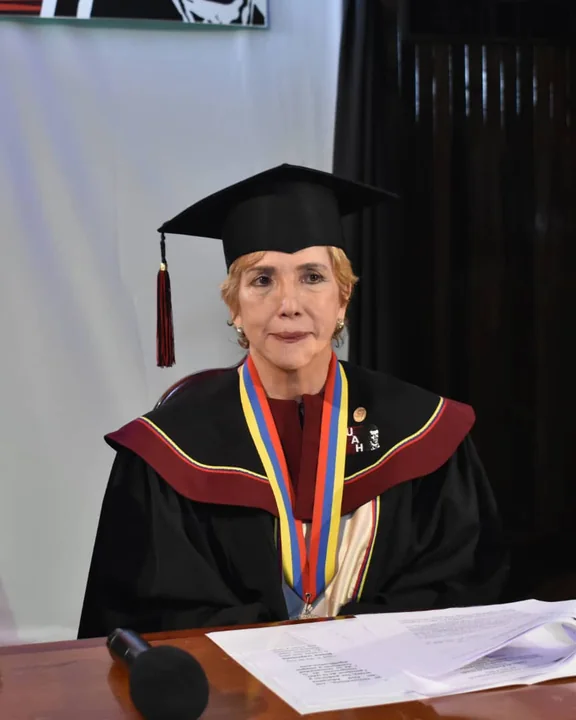
The university homepage identifies Walkyria González as rector. It also lists Seidler Mujica as academic vice-rector and Rogelia Domínguez as secretary general. These academic authorities are presented together in the institution's leadership section.
Sources: University homepage: academic authorities ↗