Visa
About Ancilla College
Ancilla College and its continuing educational legacy
Ancilla College was a Catholic institution in Donaldson, northern Indiana, sponsored by the Congregation of the Poor Handmaids of Jesus Christ. Its earlier name was Ancilla Domini College. Marian University's historical account traces its roots to an extension of DePaul University operating under a charter granted to the congregation in 1925. Originally, the college educated prospective members of the religious community. It later expanded its liberal arts curriculum and opened to students from the surrounding area in 1966. The first associate degrees awarded to members of the public followed in 1967.
Ancilla developed academic support, science facilities and residential provision over subsequent decades. Its history records a Student Success Center in 1989, a new science and technology wing completed in 2003, and two residence halls built in 2015. An agreement with Marian University followed in 2020. Marian opened a new campus in July 2021, named Marian University's Ancilla College in recognition of that legacy. The official timeline records its renaming as Marian University Plymouth in 2026. The current educational services described below belong to that Marian campus.
Sources: Ancilla origins and transition to Marian University Plymouth ↗
Academic organization and individual planning
Marian University Plymouth presents its degree programmes alongside a range of services supporting students' academic development. Its academic pages connect programme information with advising, learning resources and support for students with disabilities. These services form part of the current campus's educational structure, following the transition from the former independent Ancilla College.
Academic advising is described as a collaborative process in which students identify goals and develop an academic plan. Advisors explain general education, programme and graduation requirements, refer students to campus resources, and help them consider their strengths and abilities. They also assist with planning beyond graduation. This approach gives individual course choices a place within a broader educational plan. The campus describes advisors as both a source of information and a continuing source of guidance as students progress through their studies.
Sources: Academic provision and advising ↗
Library resources and the Academic Commons
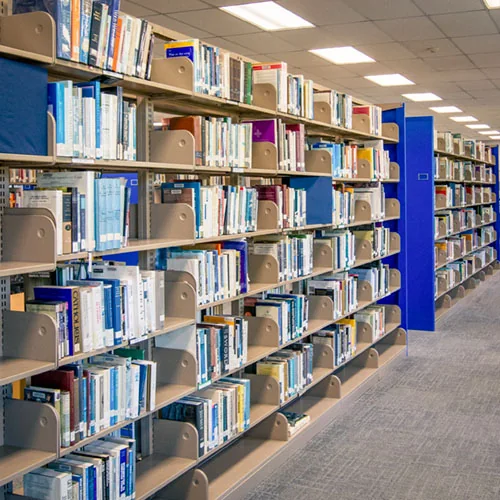
The Academic Commons is located in the Gerald J. Ball Library. It brings research materials, tutoring and collaborative work space together, including areas that study groups and student clubs can reserve. Computers and printers are available, while laptop and Wi-Fi hotspot lending supports study away from campus. Success Seminars provide another route to learning about academic strategies.
Professional academic success coaches meet individually with students to discuss study approaches, time management, goal setting and campus engagement. The frequency and format of meetings depend on individual needs. Peer tutoring offers individual and small-group assistance, although the campus explicitly cautions that a tutor cannot be guaranteed for every course. Supplemental Instruction adds peer-facilitated sessions for selected challenging subjects. Students can compare notes and discuss readings in these sessions. The published guidance emphasizes preparation, independent study and active participation rather than expecting tutors to complete assignments for students.
Sources: Academic Commons and learning support ↗
Living on the Plymouth campus
Living on campus is optional at Marian University Plymouth. Its housing account describes three-storey residence halls with private bathrooms and shared spaces for study, recreation and reflection. Facilities include laundry rooms, media centres, fireplaces and meditation rooms. Residential provision therefore combines accommodation with places where students can meet and work outside their academic classes.
The housing process uses the university's student systems, with room information communicated through Marian email. Residential Life coordinates arrival procedures and hall meetings, while the university publishes housing policies and a residence contract. Its guidance also explains that residence halls close for certain breaks and that remaining on campus requires approval. These arrangements make residential life a structured part of the campus experience, with defined responsibilities for residents and support from the housing office.
Sources: Residential life ↗
Student organizations and participation
The current student-organization directory includes activities connected with faith, creative interests, recreation, leadership and academic development. A Bible study group and Fellowship of Christian Athletes offer discussion, service projects and fellowship. The Creative Arts Club lists activities such as painting and craftwork, while the Fishing Club welcomes participants with different interests and experience levels.
Other groups provide more formal opportunities for representation and professional engagement. Student Voices for Campus meets with senior leadership to communicate students' ideas and concerns. The Student Nurses Association describes activities involving professional development, leadership and community engagement. A Student Athlete Leadership Team operates through nomination. Phi Theta Kappa provides an academic honor-society setting, and DECA connects students with professional development and business-related leadership activities. The Women of Marian Society's Plymouth student circle focuses on philanthropy, service and relationships between student leaders and established members. Students can also contact campus activities staff about establishing an additional organization.
Sources: Student clubs and organizations ↗
A campus community for residents and commuters
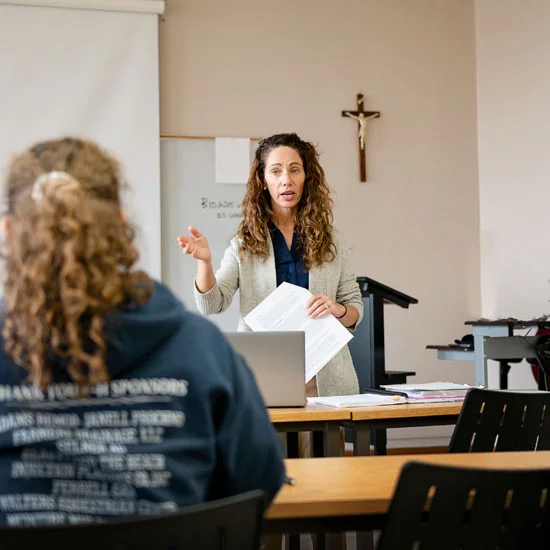
Marian University Plymouth describes campus life as serving both residential students and those who commute. Its Residential and Commuter Life resources aim to help students participate in campus activities and remain connected to the university community. Dining services, student organizations and Welcome Week are presented alongside accommodation and commuter information, placing everyday practical needs within a wider student experience.
The campus-life pages also identify a Student Health Center and counseling and consultation resources. These are described as supporting students' well-being and their ability to make informed choices about care. Emergency-procedure information is separately linked for the Plymouth campus. Together, these resources show how the present Marian campus organizes social participation, daily services and student support around its academic work and the educational legacy associated with Ancilla College.
Sources: Campus life and commuter support ↗