Visa


About Anabaptist Mennonite Biblical Seminary
Origins and institutional identity
Anabaptist Mennonite Biblical Seminary is a theological seminary in Elkhart, Indiana, connected with Mennonite Church USA and Mennonite Church Canada. Its history brings together two educational traditions. Mennonite Biblical Seminary began in Chicago in 1945, while Goshen College's Bible department became Goshen Biblical Seminary in 1946. Their association began in 1958 when Mennonite Biblical Seminary moved to Elkhart. Goshen Biblical Seminary joined it on the Elkhart campus in 1969, and incorporation as one seminary followed in 1994. The present name was adopted in August 2012, replacing the earlier Associated Mennonite identity. Cooperation remains part of its institutional character, with arrangements involving other theological schools and Mennonite educational institutions. The seminary's own historical account also notes that it has welcomed students from different faith backgrounds.
Sources: Origins and institutional identity ↗
Anabaptist learning and community
The seminary's educational values connect disciplined study with worship, community life and Christian discipleship. Scripture, theology and ministry are studied within an Anabaptist tradition that remains in conversation with the wider Christian church. Leadership, relationships and peacemaking are other central elements of that identity. AMBS describes its mission in Christian terms, bringing service, evangelism and reconciliation into the same understanding of theological education. Its Intercultural Competence and Undoing Racism team involves faculty, administrators, staff and students in work concerned with both interpersonal relationships and institutional practices. The seminary presents this activity as part of a strategic commitment to intercultural competence and racial justice, linking its community values with questions about how the institution works.
Sources: Anabaptist learning and community ↗
The Elkhart campus
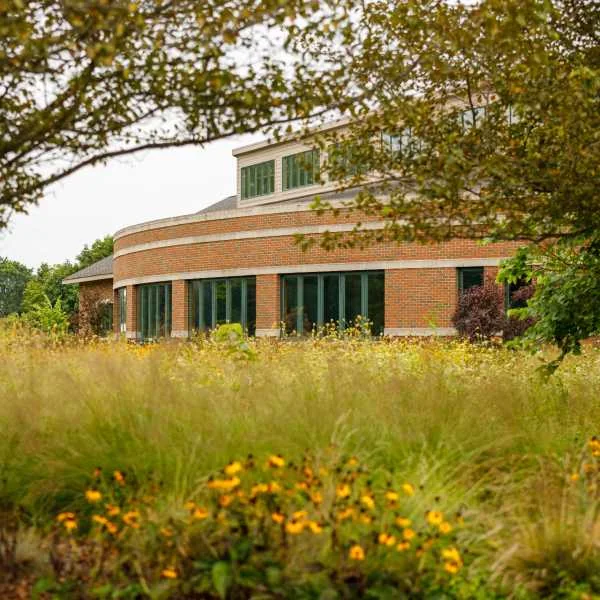
The seminary's home campus is in south-central Elkhart. Its grounds provide room for outdoor recreation as well as study and community activities. A restored native prairie forms part of the landscape, while solar arrays contribute to the campus's energy arrangements. Students maintain a garden for growing produce, and students and employees also participate in tapping maple trees in spring. Indoor recreation includes a lounge with table games. These activities sit alongside the library and academic spaces, giving the residential setting a role beyond classroom instruction. The campus page also publishes a land acknowledgment concerning the Miami and Potawatomi peoples, connecting the place where the seminary studies and worships with the history of the surrounding region.
Sources: The Elkhart campus ↗
Library and study support
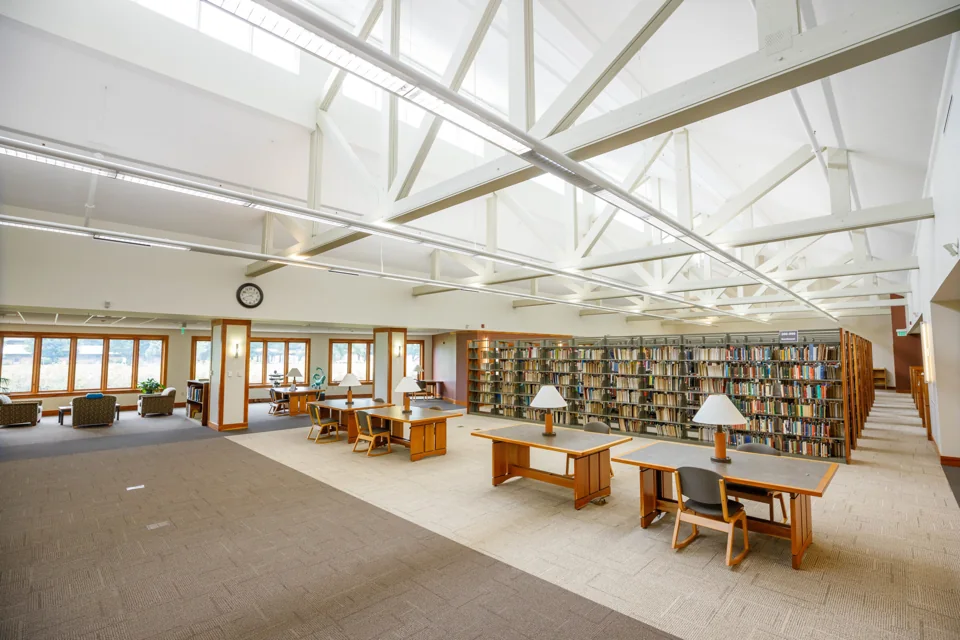
The AMBS Library provides print and electronic books, journals, databases and access to resources held by partner libraries. Its online catalogue and librarian-curated guides offer different routes into those collections. Library staff provide research assistance and writing services for students, while distance services support students and faculty who cannot use the building in person. The library also maintains resources for community borrowers, guests and alumni. Within the building, quiet reading and study are complemented by less conventional amenities, including an exercise bike and a hammock. Its services therefore combine scholarly resources, professional help and places to work or take a break. The seminary publishes access arrangements separately, including restrictions during some evening and weekend periods.
Sources: Library and study support ↗
Master of Divinity
The Master of Divinity focuses on Christian ministerial leadership, including congregational service and wider church work. AMBS offers both a campus programme and the distance-friendly MDiv Connect format. Pastoral Ministry, Chaplaincy and Christian Faith Formation are available as majors in both formats; Theological Studies is listed for campus students. The programme's educational goals address biblical grounding, engagement with historical and theological traditions, personal integrity, understanding ministry contexts and leadership in the church. The campus format places particular emphasis on mentoring and participation in the seminary's residential community. The Connect format allows students to pursue the programme while remaining in their primary setting. Both belong to the seminary's approach of integrating theological learning with personal and ministerial formation.
Sources: Master of Divinity ↗
Master of Arts pathways
AMBS offers three Master of Arts programmes with different emphases. Christian Formation concerns spiritual formation and guidance, teaching ministry and worship, and is available through campus or distance study. Theology and Global Anabaptism connects knowledge of the Anabaptist tradition with service in varied communities; it can be completed fully or partly online. Theology and Peace Studies is campus-based and addresses the relationship between theology and transformative peacebuilding. Across these programmes, the seminary emphasises theological knowledge alongside spiritual formation and practical experience. Intercultural competence, contextual interpretation, leadership and peacebuilding appear among the capabilities the programmes seek to develop. The different formats and subject emphases provide several approaches to advanced theological study within the same seminary community.
Sources: Master of Arts pathways ↗
Research and publication
The Institute of Mennonite Studies, founded in 1958, supports research, discussion and publication concerning Mennonite and Anabaptist traditions. Its work covers scripture, theology, history and mission, with attention to scholarship serving both academic discussion and the church. Publications include Vision: A Journal for Church and Theology and Anabaptist Witness, alongside books and research series. The institute works with T&T Clark on Studies in Anabaptist Theology and Ethics and coordinates scholarly networks and gatherings. Its annual publication celebrations recognise work by seminary faculty, staff and students, as well as publications supported by the institute. These activities give research and writing a place in the seminary's continuing relationships with other scholars, churches and educational institutions.
Sources: Research and publication ↗
Environmental design of the library
The library building expresses the seminary's commitment to creation care through its design. Its environmental features include geothermal heating and cooling, substantial insulation, triple-pane windows and lighting controls responding to occupancy and daylight. North-facing clerestory windows bring indirect natural light into the interior. Rain gardens absorb roof runoff, and restored prairie surrounds the building. Inside, study carrels and varied seating support different forms of reading and research. Locally harvested cherry wood was milled for trim and paneling, connecting the building's materials with its regional setting. The library's account describes these choices alongside the planning and fundraising that supported the facility, bringing its physical learning environment into the seminary's broader environmental commitments.
Sources: Environmental design of the library ↗