Visa
About Amherst College
A liberal arts college in western Massachusetts
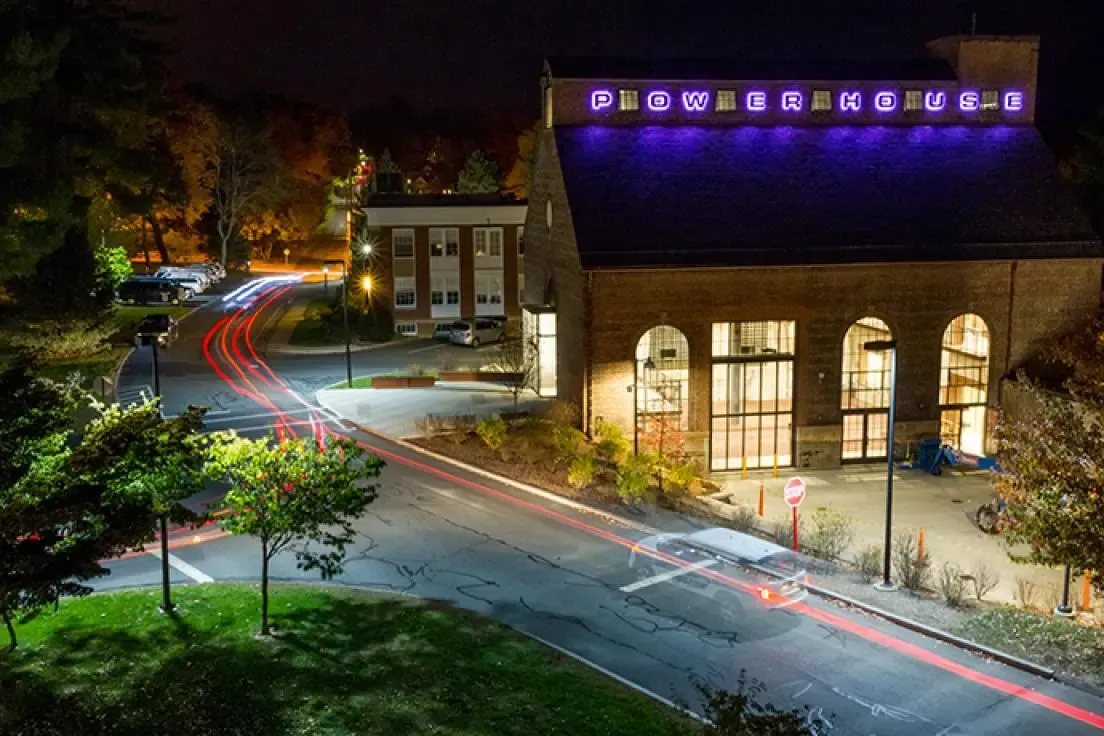
Amherst College is a liberal arts institution in the town of Amherst, Massachusetts, founded in 1821. Its educational identity centres on undergraduate study, small classes and close contact between students and faculty. The college describes critical thinking and individual guidance as important parts of its approach, with professors working as teachers, scholars and mentors. An open curriculum gives students substantial responsibility for shaping their education.
The college also highlights cultural and outdoor resources that extend the setting for study and everyday life. The college’s account of its surroundings highlights the Beneski Museum of Natural History, Mead Art Museum, Emily Dickinson Museum, Johnson Chapel and Kirby Theater. It also points to a wildlife sanctuary, Book and Plow Farm, Memorial Hill and the Yushien Japanese Garden. Sustainability is identified as an institutional priority, linking campus operations with environmental goals. These facilities and landscapes form part of Amherst’s wider residential and cultural environment.
Sources: About Amherst ↗
An open curriculum with faculty guidance
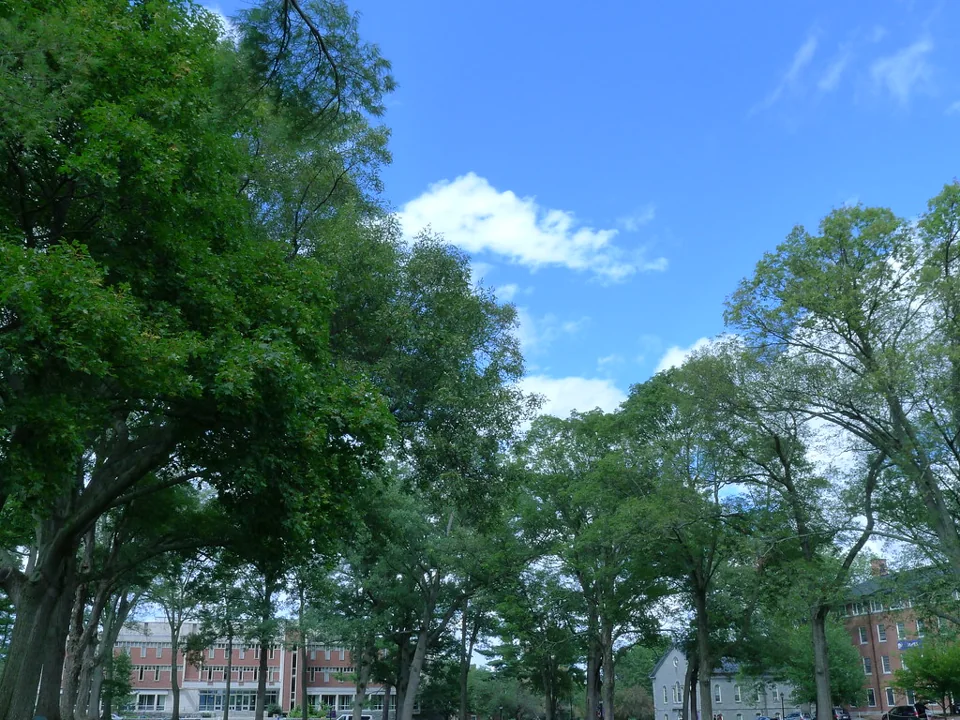
Amherst’s open curriculum is organised around student choice rather than distribution requirements or a common core of prescribed courses. Students complete four years of coursework, a first-year seminar and the requirements of their chosen major. Beyond those requirements, the college describes considerable freedom to select courses and explore intellectual and creative interests. Faculty members support that process through teaching, mentoring and opportunities for independent work.
The academic offering spans the arts, humanities, natural sciences and social sciences. Students can combine exploration across subjects with more focused disciplinary study. Research is another part of the academic experience, with opportunities during both the academic year and summer. Amherst also participates in the Five College Consortium, through which students can take courses for credit at nearby member institutions. The academic model therefore combines a small undergraduate college setting with access to a broader regional network of courses and educational resources.
Sources: Academics and the open curriculum ↗
Research alongside faculty members
Student-faculty research at Amherst takes place individually and in small teams across science, social science and humanities fields. Opportunities may begin in the first year and develop into an honours thesis in the final year. The Summer Science Undergraduate Research Fellows programme offers collaborative projects with faculty mentors, followed by a poster presentation in the early autumn. A Summer Bridge Research Institute introduces approaches and research practices in the humanities and social sciences.
Other programmes support different stages of undergraduate work. Gregory S. Call awards address summer thesis research and academic-year projects, while academic interns work with faculty on research or teaching-related projects. The Schupf Fellows programme supports summer collaboration in the arts, humanities and social sciences. Research Tutorials connect students with faculty in humanities-oriented fields. Amherst–Folger Undergraduate Fellowships offer primary-source research at the Folger Shakespeare Library in Washington, DC, with individual mentorship. These distinct opportunities reflect the college’s provision for research across subjects and levels of experience.
Sources: Student-faculty research ↗
Advising, writing and learning support
Faculty advising helps students navigate the choices offered by the open curriculum. A college adviser provides guidance before a student declares a major, followed by an adviser within the major’s department or programme. Professors’ office hours offer another setting for questions, discussion and feedback on work. Class deans help students develop educational plans and connect with academic and other services.
The Strategic Learning Center provides support with study strategies, time management, planning and understanding how one learns. It also coordinates peer tutoring. Writing Center consultations address interpreting assignments, developing arguments, organising essays and presentations, revising and public speaking. The Moss Quantitative Center supports learning in mathematics and science through appointments, review sessions and other assistance. Student Accessibility Services works with qualified students through an interactive process to identify reasonable accommodations. Research librarians provide individual guidance and collaborate with faculty on course-based research instruction. Together, these services address both subject-specific work and the practical skills involved in independent undergraduate study.
Sources: Academic support services ↗
Library collections and research tools
The college library’s Discover search brings together books, articles, media and other material across the Five Colleges. Separate tools support searching for course reserves, specific journals and newspapers, reference sources and archives. Physical course reserves are associated with Frost, Keefe Science and Morgan Music libraries, while electronic reserves are accessed through Moodle. Research guides and citation guidance help students identify relevant sources and organise their work.
Archives and Special Collections includes rare books and materials such as theses, photographs and yearbooks. Digitised items are available through Amherst College Digital Collections, and ArchivesSpace provides detailed collection guides. One featured digital collection contains daily weather records kept by Ebenezer Strong Snell and Sabra Snell between 1835 and 1902. Other library services include borrowing and renewal, requests for material from partner libraries and access to electronic and audio books. These resources support course assignments, longer research projects and reading beyond prescribed coursework.
A residential and regional learning community
Amherst’s campus covers about 1,000 acres, including a wildlife sanctuary of roughly 500 acres. Its official facts page describes a predominantly residential student community and a wide range of student organisations. Fields of study extend across arts, humanities, natural sciences and social sciences.
The Five College Consortium joins Amherst with Hampshire, Mount Holyoke and Smith colleges and the University of Massachusetts Amherst. This relationship extends the educational community beyond the college’s own campus. For planning after undergraduate study, the Loeb Center for Career Exploration and Planning provides advising, resources and alumni connections. The college presents those services as part of helping students explore further education and different career directions. Residential life, regional collaboration and individual planning thus accompany the academic choices available within Amherst’s undergraduate programme.