Visa

About Amberton University
From extension campus to independent university
Amberton University is based in Garland, Texas, and has a long-established focus on higher education for working adults. It began in 1971 as an extension campus of Abilene Christian University in Mesquite. In 1974 it moved to Garland, where the campus was designed around mature students rather than a residential undergraduate model. Its history specifically distinguishes this setting from a traditional campus organised around dormitories, cafeterias and intramural athletics.
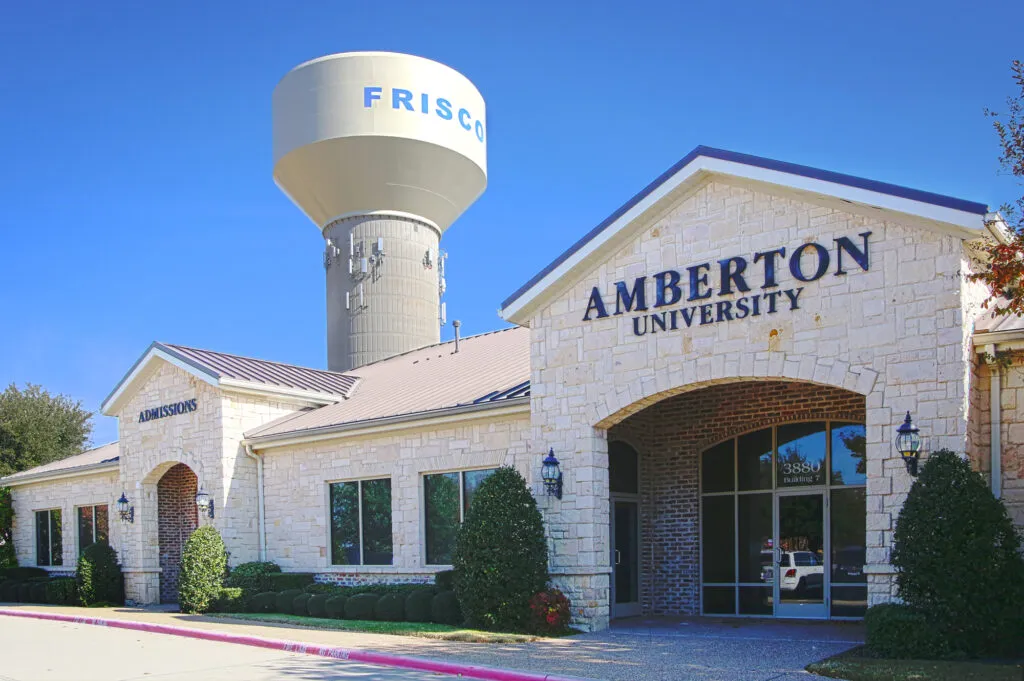
The institution separated from Abilene Christian University in June 1982 and adopted the name Amber University. In 2001 it became Amberton University, a name intended to reflect its community of learners taking both classroom-based and electronic courses. A further stage of development came in 2006 with the opening of a centre in Frisco. These changes trace the development of its adult-learning identity across different locations, organisational arrangements and teaching formats.
Sources: From extension campus to independent university ↗
Christian foundations and an inclusive mission
Amberton describes its educational environment as grounded in Christian principles while welcoming students of different faiths and backgrounds. Sharing the religious beliefs of its faculty and staff is not a condition imposed on students. The university explains its values through the way staff and students interact, with professionalism, respectful communication and personal integrity among its stated service principles.
Ethics has an explicit place in this educational approach. The university says ethical considerations run through its courses and that each degree includes an ethics class. Its mission connects qualities such as honesty, teamwork, trust and respect with academic life. This emphasis gives the institution a stated framework for conduct and learning alongside the subject knowledge taught within individual programmes.
Garland and Frisco
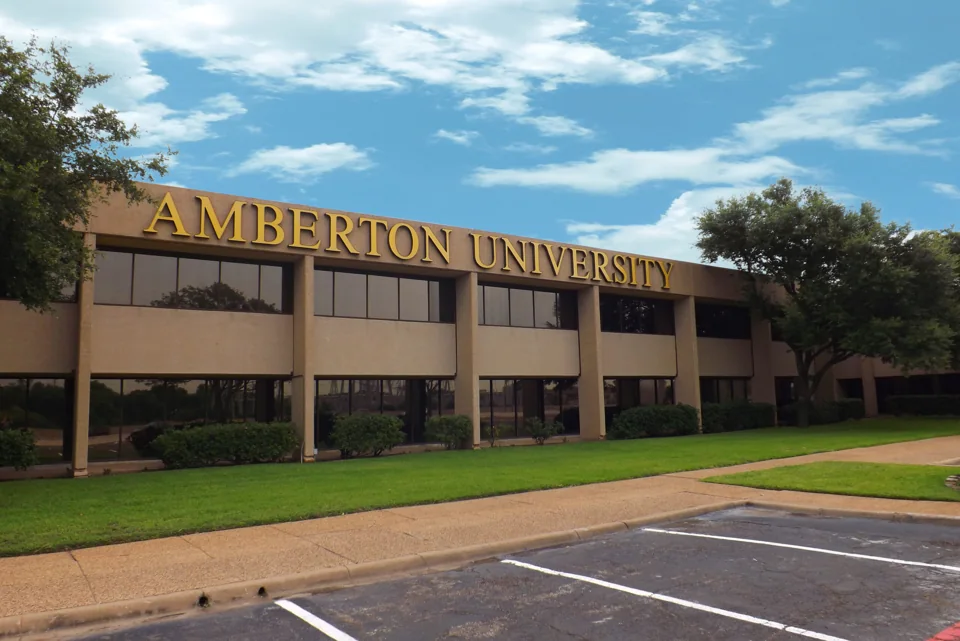
The main campus is at 13601 LBJ Freeway in Garland. Amberton identifies this location as its central university hub and places its library there, providing resources for students’ research and degree study. The campus therefore serves both an administrative and an academic support role.
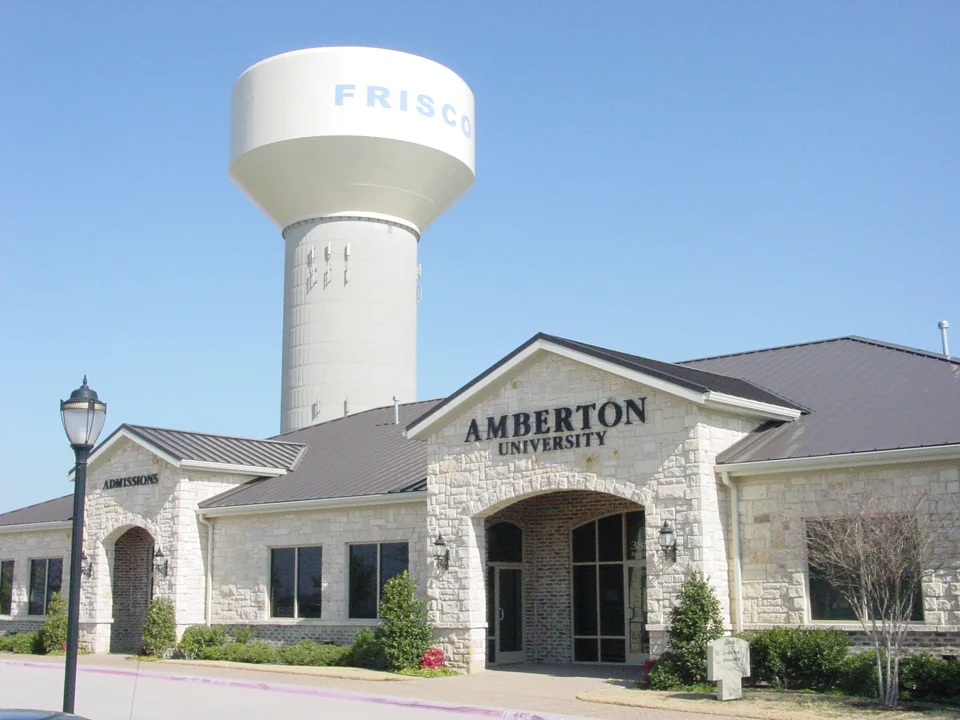
The Frisco Center is at 3880 Parkwood Boulevard, Building 7, in Frisco. The university explains that this location was developed to serve the educational needs of Collin County as its population expanded northward. The two locations provide a geographical presence in different parts of the Dallas-area region. Amberton publishes separate contact and opening information for each, reflecting their distinct campus and centre roles.
Sources: Garland and Frisco ↗
Faculty with academic and professional experience
Amberton’s faculty model combines full-time educators with adjunct instructors appointed for particular teaching needs. The university describes the full-time group as providing continuity, while adjunct appointments contribute additional subject breadth and specialised experience. Its stated selection criteria include academic qualifications, professional experience and personal character.
The university also expects teaching faculty to be practising professionals in their fields. This places professional activity alongside academic preparation in its approach to instruction. Communication with instructors extends beyond scheduled classes through telephone, email and face-to-face contact. Course syllabi and the schedule of classes provide faculty contact details, and the university states that instructors are available before on-campus classes. The faculty structure is therefore organised around both continuing academic provision and access to specialist professional knowledge.
Sources: Faculty with academic and professional experience ↗
Graduate study in data analytics
The Master of Science in Data Analytics combines analytical software with the methods used to examine and interpret data. Its published curriculum covers operations research, mathematics, statistics and database management. The university lists the programme as available entirely online, extending this area of graduate study beyond attendance at its Texas locations.
The degree plan includes research methods and ethics, together with leadership communication, applied business analytics, predictive analytics, database management, and storytelling and visualisation. Business-related electives provide further choices within the programme. Its stated learning objectives address interpreting complex datasets, designing databases, evaluating hypotheses and applying research methods. These elements connect technical analysis with the communication and ethical judgement involved in using organisational information. The programme page also identifies graduate certificates that students may pursue alongside the degree.
Sources: Graduate study in data analytics ↗
Training and development as an academic field
Amberton’s Master of Science in Training and Development examines how organisations identify learning needs and design, deliver and evaluate training. Its description combines adult-learning principles with instructional design, digital education and organisational change. The programme is offered online and is organised around both theoretical study and practical application.
The published degree plan contains required graduate work in research methods and ethics, major courses and electives. Named major subjects include digital and distance learning, adult learning theory, training needs analysis and evaluation, instructional design, facilitation and consultation, and organisational change. Its learning objectives include evaluating training methods and technologies and designing programmes aligned with organisational purposes. The curriculum thus treats workplace learning as a process involving analysis, educational design, implementation and assessment, rather than only the presentation of teaching material.
Academic advising and student support
Amberton combines academic advisers with an online Academic Advising System. Students can consult advisers about their records, course choices and degree requirements. The electronic system brings together a transfer-credit report, an inventory of courses completed at Amberton, and a degree plan showing how academic work applies to the student’s selected programme.
Degree plans are updated after sessions and when transfer work has been submitted and evaluated. Students can obtain this information through university systems or the Student Services Office, with advisers available to help interpret it. The university also describes orientation programmes covering facilities, library opportunities, academic advising, regulations and procedures. For disability-related support, its Office for Strategic Services coordinates accommodation requests with other departments. These services connect academic planning, access to institutional information and individual support throughout a student’s studies.