Visa
About Alvernia University
A Franciscan institution in Reading
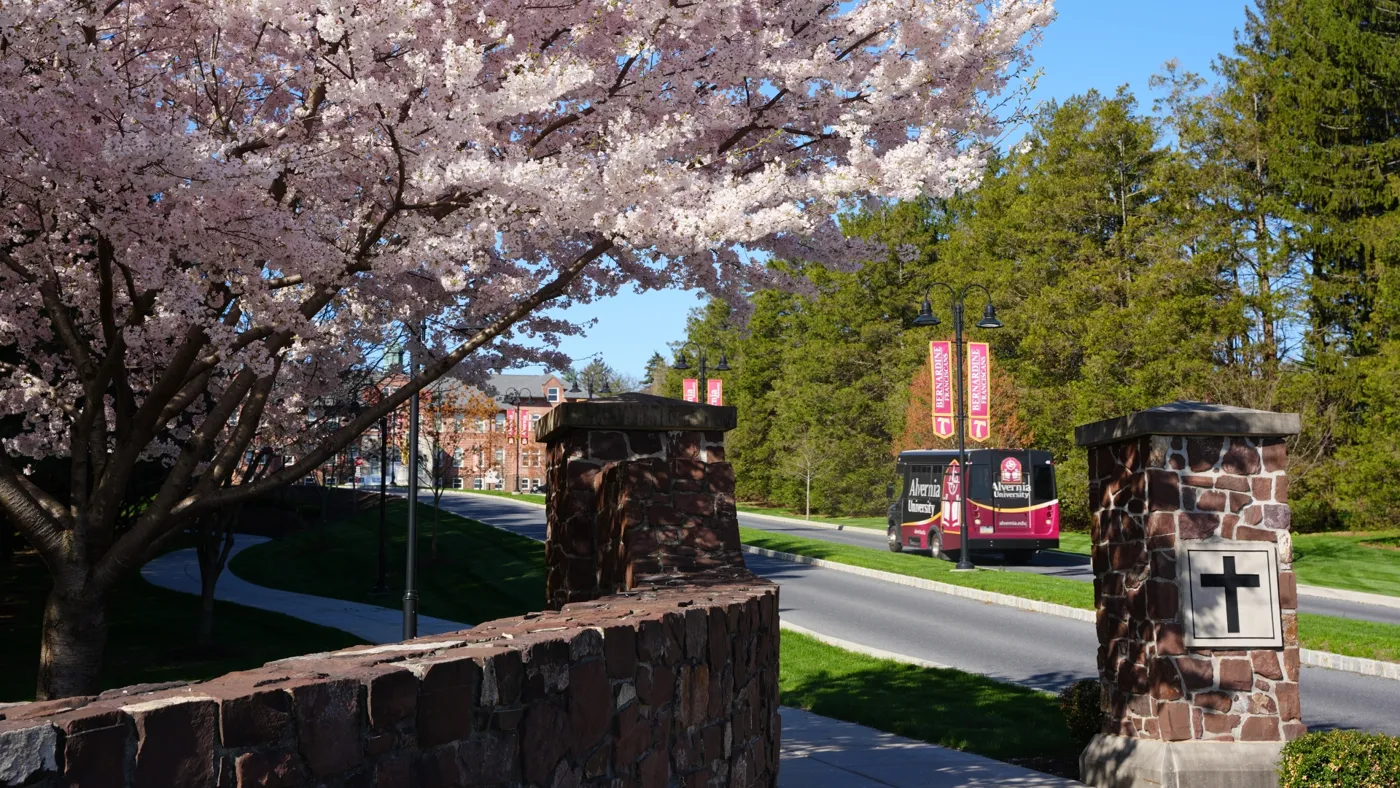
Alvernia University is a Catholic, Franciscan university in Reading, Pennsylvania. The Bernardine Franciscan Sisters founded Alvernia College in 1958, initially to educate members of their religious community. Its site had an earlier educational and charitable history: the sisters opened an orphanage in the building now known as Francis Hall in 1926. The college received its Pennsylvania charter in 1960, admitted lay women in 1961 and began enrolling male students in 1971. Graduate programmes were introduced in 1999. On 25 September 2008, the institution announced university status and the Alvernia University name. Its later development added further graduate and doctoral education alongside undergraduate study. The history includes the introduction of doctoral work in leadership, physical therapy, occupational therapy and transformative education, illustrating the expansion beyond the institution’s original liberal arts college setting.
Franciscan values and the university community
Alvernia’s account of its Franciscan tradition places service, humility, peacemaking, contemplation and collegiality at the centre of its institutional values. These values are intended to inform educational programmes, decisions and relationships within the university. The tradition also emphasises human dignity, hospitality, social justice, environmental care and education of the whole person. Its description welcomes diversity of thought, faith and culture within a Catholic intellectual framework. The university connects that framework with moral leadership and civic engagement, expressed through its motto about learning, loving and serving. Its statement on civil dialogue describes the importance of respectful discussion and the exchange of different perspectives. These principles explain why community involvement and reflection feature alongside disciplinary knowledge in Alvernia’s presentation of university education, rather than being treated only as optional additions to campus life. Its stated commitment to dialogue includes welcoming peaceful protest, respecting differences and addressing disagreement through a framework of human dignity and responsibility to others.
Hill Campus and CollegeTowne locations
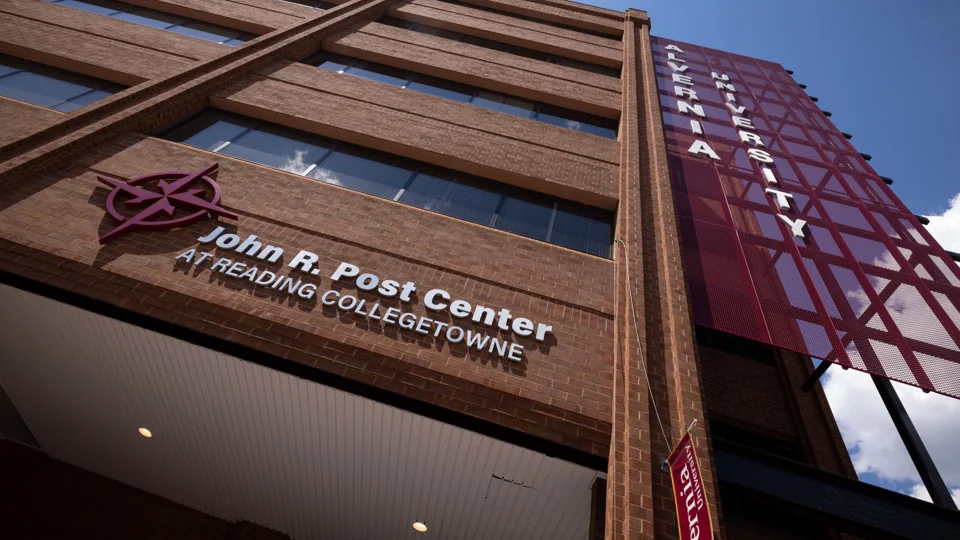
Alvernia’s Reading presence combines its original Hill Campus with the John R. Post Center at Reading CollegeTowne. The downtown facility opened in 2021 and is described as a living and learning environment, extending the university’s activity beyond its original campus. A separate CollegeTowne location in Pottsville includes classrooms, a wet laboratory and a computer laboratory with a Bloomberg Terminal. The university also describes educational partnerships serving Montgomery County and North Philadelphia. Through Montgomery County Community College’s University Center, it participates in a partnership intended to broaden advanced-degree opportunities. Its North Philadelphia collaboration involves Harcum College and I-LEAD, with resources at the Community Resource Center at Deliverance Evangelistic Church. The locations page also identifies transfer partnerships and dual-enrolment relationships with regional secondary schools as additional ways of connecting study across educational settings. These arrangements are presented as different locations and partnerships, preserving the distinction between university premises and community-based access points.
Sources: Hill Campus and CollegeTowne locations ↗
Learning through projects, research and experience
Experiential learning takes several forms at Alvernia. Its published overview connects classroom projects with community activity, research and learning beyond campus. The Student Undergraduate Research Fellows programme allows students to explore scholarship, research or creative work in collaboration with faculty. The Header School of Business uses Bloomberg Terminal resources, while the O’Pake Institute connects student experience with economic development and entrepreneurship. Environmental learning includes Bog Turtle Creek Farm, a student-led regenerative agriculture project responding to the need for healthy, affordable food in Reading. The EcoHouse setting brings together sustainability activity and outdoor resources. International opportunities include short faculty-led study, semester and year-long programmes, and service-oriented alternative breaks. This range gives experiential education an academic, civic and environmental scope, with different activities serving different learning purposes across the university.
Sources: Learning through projects, research and experience ↗
Franco Library and research guidance
The Dr. Frank A. Franco Library Learning Center supports research and coursework through collections, information resources and direct assistance from librarians. Its staff help students and faculty find material, assess information and use sources ethically. Librarians also work with faculty to incorporate information-literacy instruction into courses, including sessions planned around particular subject needs. Individual research appointments provide another way to discuss search strategies and suitable sources. The library provides a catalogue, databases, research guides, interlibrary loan information and reference services. Its guidance includes citation, plagiarism avoidance, copyright, writing and open educational resources. A live-chat service connects users with Alvernia librarians during service hours and partner librarians outside those hours. The emphasis is therefore on developing the skills needed to locate and evaluate evidence as well as making reading material available.
Sources: Franco Library and research guidance ↗
Community engagement through the Holleran Center
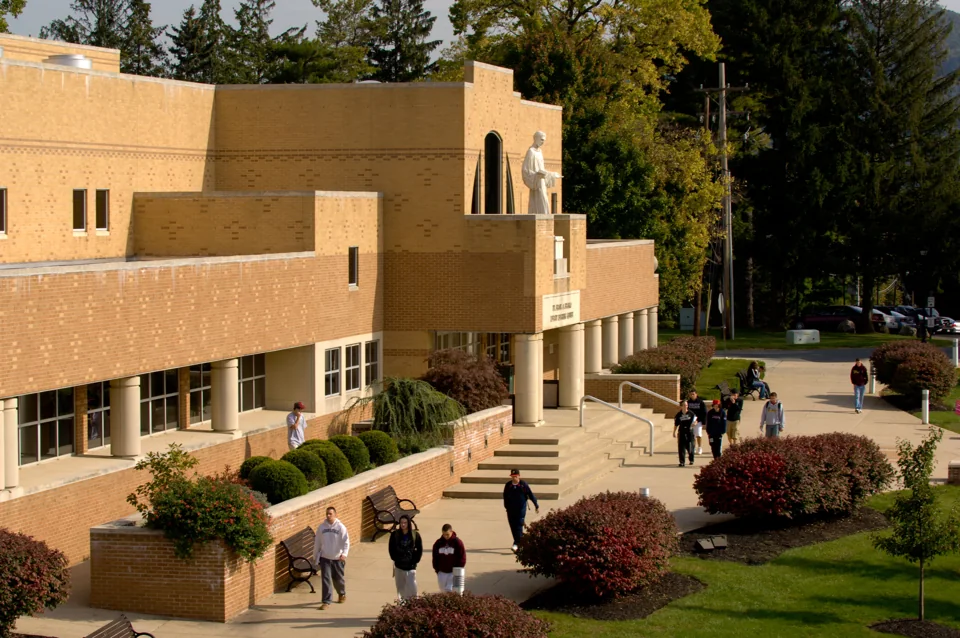
The Holleran Center for Community and Global Engagement was established in 2006. A gift from T. Jerome and Carolyn Holleran in 2008 supported its work and permanent endowment. The centre connects the university’s curriculum and co-curricular activity with community partnerships, bringing students, staff and local organisations into shared projects. It serves as a resource for community-based learning, including service-learning, field experience and internships, and as an access point for community organisations seeking campus resources. Alvernia’s published community-service requirement is forty hours before graduation, with transfer-student requirements determined in relation to remaining credits. The centre also lists alternative breaks, a Reading youth initiative, volunteer opportunities and competitive support for experiential activities. Its work translates the institution’s Franciscan service commitment into organised educational opportunities and sustained relationships with the surrounding community.