Visa
About Allegany College of Maryland
A community college with regional roots
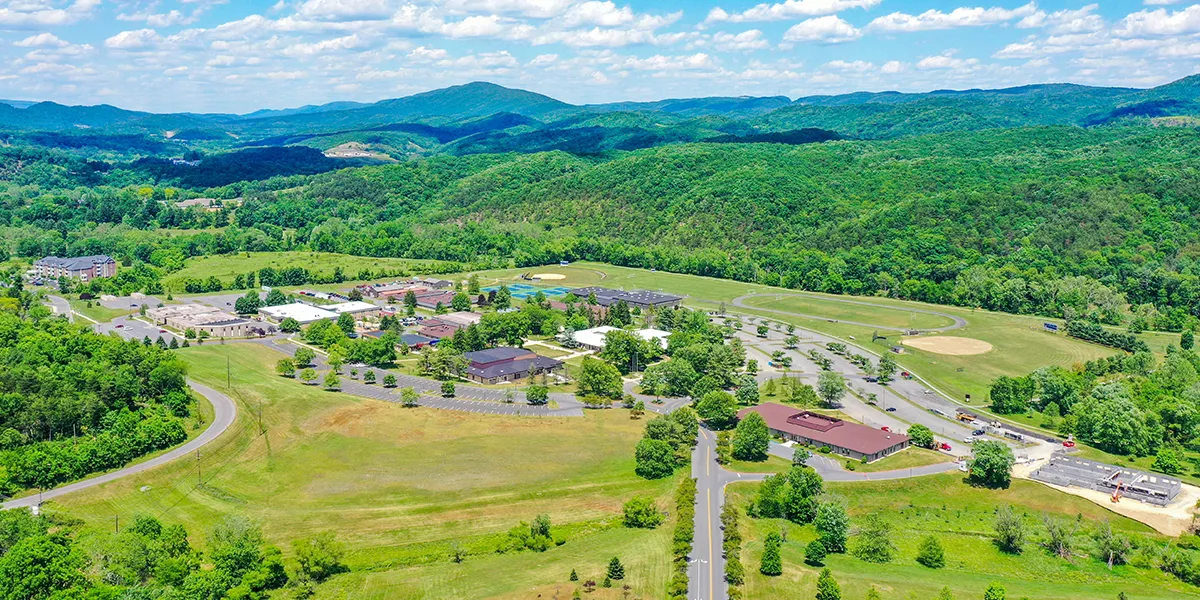
Allegany College of Maryland is a community college based in Cumberland, Maryland, serving Western Maryland and the surrounding region. It opened in 1961 under the name Allegany Community College. The institution adopted its present name in fall 1996 as its regional role developed. Its history connects local access to education with a broader commitment to students at different stages of life.
The college's mission places relevant education, student success, and a supportive community at the center of its work. Its guiding principles include geographic and financial accessibility, effective teaching, preparation for employment or transfer, and continued learning throughout adulthood. Quality, integrity, respect, opportunity, and wellness are its stated institutional values. General education also has a defined place in this approach, spanning the arts and humanities, English composition, social and behavioral sciences, mathematics, and the biological and physical sciences.
Sources: ACM History & Vision ↗
Locations and forms of study
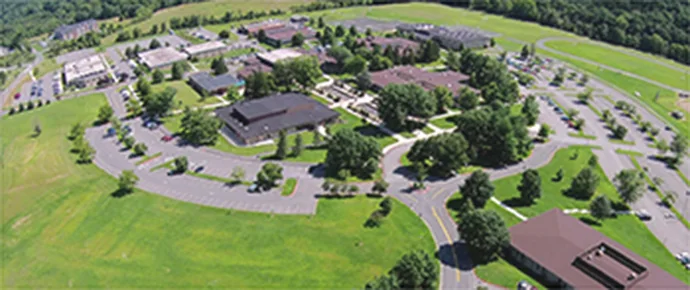
The Cumberland campus is the college's principal location, with Willowbrook Woods providing student housing. Its regional presence also includes the Bedford County Campus in Pennsylvania. Within Cumberland, the Gateway Center brings together hospitality management and culinary arts, the Culinaire Café, and adult education and literacy services. Western Maryland Works provides a further setting for technical training and practical projects.
The college offers associate degrees, certificates, and letters of recognition. Its associate qualifications include Associate of Arts, Associate of Science, Associate of Applied Science, and Associate of Arts in Teaching awards. These different formats accommodate both academic progression and focused occupational learning. College activities extend beyond classrooms: its published athletics listing includes baseball, basketball, cross country, soccer, softball, and volleyball. The college also identifies its student literary magazine, Expressions, among its publications.
Sources: ACM at a Glance ↗
Transfer study and academic planning
Transfer education is an established part of the college's academic provision. Its published options encompass arts and sciences, business administration, criminal justice transfer, general studies, computer science, and teacher education. Areas of concentration range from art and English to biology, chemistry, physics, psychology, sociology, and social work. Business-related concentrations include accounting and economics, while teacher education options cover different stages of schooling.
Academic planning accompanies this choice of subjects. The college encourages students to identify an intended major and a prospective receiving institution early, then work with an academic adviser on an individual education plan. Its transfer resources include advising, a planning checklist, and transfer events. Partnerships and agreements with four-year institutions form part of this work. This gives transfer preparation a specific academic structure, linking course selection at Allegany with the student's intended next stage of study.
Sources: Transfer Programs ↗
Library resources and local collections
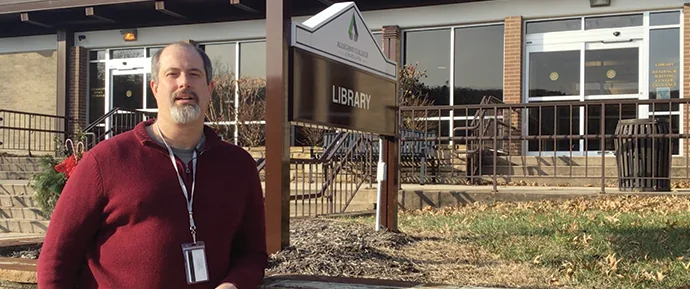
The Donald L. Alexander Library serves the Cumberland campus with books, electronic books, periodical articles, research databases, and other reference resources. Students and employees can use college credentials to reach electronic resources away from campus. Library staff provide research assistance and instructional sessions for both classes and individuals, alongside guidance on citations and avoiding plagiarism.
The building offers several ways to work: seating for informal conversation, tables and desks for projects, and quieter study rooms. A group study room can be reserved through library staff. The library's online resources also connect users with anatomy models, subject research guides, local history, and an oral history project. Its Appalachian Collection has assistance from volunteers of the Genealogical Society of Allegany County. Library cards are available to eligible local adult residents as well as college students and employees, giving the service a community role.
Sources: Library ↗
Manufacturing and making
Western Maryland Works is the college's training center and makerspace in LaVale. It connects advanced manufacturing education with regional industry through public and private collaboration. Its training areas include machining, welding, robotics, and industrial maintenance. The facility supports practical learning, research, and entrepreneurship as part of the college's regional workforce activity.
Its makerspace includes a digital fabrication laboratory and a woodshop, with classes that let participants develop individual projects in a shared workspace. Engineering and automated manufacturing technology brings together mathematics, robotics, metallurgy, tooling, programmable machinery, computer-assisted machining, and additive manufacturing. The center therefore combines instruction in particular technical processes with opportunities to design and make objects. Workforce training and makerspace activity sit alongside one another within this setting, rather than being confined to a conventional lecture room.
Sources: Western Maryland Works ↗
Hospitality in a working café
The Culinaire Café gives hospitality management and culinary arts students a practical learning setting in downtown Cumberland. Based at the Gateway Center on Baltimore Street, it operates as a teaching laboratory within an actual café. Students receive hands-on training while participating in the work of a food-service setting.
The café's offering includes weekly specials, a soup and salad bar, and desserts baked daily for dining in or taking away. Its published staff roles include restaurant operations, culinary instruction, apprenticeship coordination, café and catering production, baking, and practicum coordination. These roles reflect the different activities involved in bringing teaching and café operations together. The location also places this part of the college within Cumberland's pedestrian mall, connecting a public-facing service with the institution's hospitality education.
Sources: Culinaire Café ↗
Learning throughout adulthood
The Allegany Center of Lifelong Learning grew from local residents' interest in varied adult education and the knowledge available within their own community. Its membership program combines educational events with roundtable discussions and social activities. Local people contribute expertise across a broad range of subjects.
The published fall 2026 program illustrates that variety. Scheduled topics include Chesapeake and Ohio Canal history, county tourism, Debussy and French Impressionism, the history of buildings on Wills Mountain, and regional storytelling. Other sessions address financial awareness for older adults, landlord and tenant matters, local history, and artificial intelligence. These are community learning events rather than a single occupational curriculum. Together with the college's credit and workforce provision, this program gives adult residents another way to participate in educational life.