Visa
About Alexandria Technical and Community College
A Minnesota technical and community college
Alexandria Technical and Community College, commonly shortened to ATCC and also branded Alexandria College, is based at 1601 Jefferson Street in Alexandria, Minnesota. It belongs to the Minnesota State colleges and universities system. Founded in 1961 as Alexandria Area Vocational Technical School, it developed through several names reflecting its vocational and technical role. It became Alexandria Technical College in 1990 and adopted Alexandria Technical and Community College in 2010. Its educational scope combines practical technical training with liberal arts and transfer study. The campus is in west-central Minnesota's lake country, northwest of Minneapolis–Saint Paul, with access to the surrounding region through Interstate 94.
Technical programmes and transfer-oriented study
The college's programme directory spans business, design, education and human services, engineering technology, health and nursing, information technology, liberal arts and sciences, manufacturing and construction, police training and transportation. Awards include associate degrees, certificates and diplomas, with on-campus, online and hybrid delivery represented across the directory. Technical examples include carpentry, diesel mechanics, machine tool technology, cybersecurity and engineering technology. Communication Design covers layout, typography, branding and production, while Accounting addresses financial and managerial accounting, taxation and auditing. Liberal Arts and Sciences and several named transfer pathways sit alongside these applied programmes. Engineering Broad Field combines physics, chemistry, mathematics and introductory engineering for further study.
Sources: Program majors and award options ↗
Academic support on campus and online
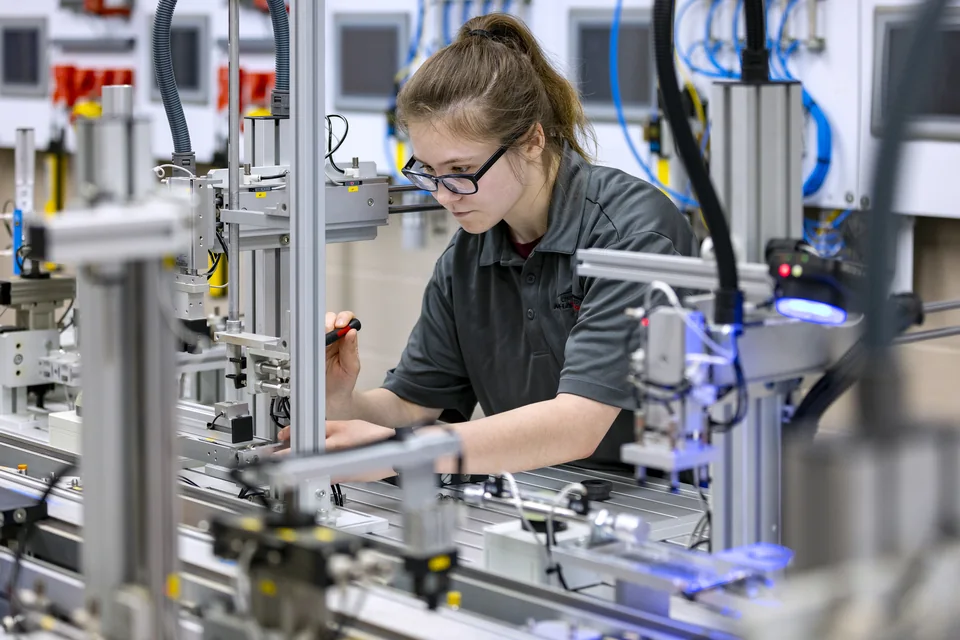
Student Success brings several forms of academic assistance together for students studying on campus or online. Tutoring addresses course content and examination preparation, with both in-person and online options. Writing specialists offer feedback throughout the writing process, including organisation, clarity and revision. English-language support is directed towards multilingual learners and covers speaking, listening, reading and writing. Success coaches help students plan their studies, develop habits and work through challenges. Accessibility Services provides a point of contact for discussing disability-related needs and beginning the accommodation process. The service directory locates support in both the main building and the 700 building, making these services identifiable parts of the campus.
Sources: Academic support and student success ↗
Library and research resources
The library is located in Room 707 of the 700 building. Its catalogue and resource guides help students locate books, electronic books, articles and videos. Electronic resources are organised by subject, including business and economics, interdisciplinary research, health and professional services, law, news, science and technology, manufacturing and transportation. The directory links to scholarly databases as well as government information, professional resources and documentary collections. Students can also use printers, copiers and scanners in the library and nearby student-lounge areas. General live-chat assistance complements direct contact with library staff for questions about ATCC resources. This combines a physical study resource with tools supporting research beyond the campus library.
Clubs, leadership and recreation
Student Life coordinates activities intended to provide recreation, cultural enrichment and opportunities for participation and leadership. The Student Senate serves as the official student voice and provides a forum for campus issues. National organisations listed by the college include Collegiate DECA, Health Occupations Students of America, Phi Theta Kappa and SkillsUSA. Other groups encompass gaming, choir, theatre, design, exercise science and law enforcement. The college also lists varsity and intramural sports, including baseball, golf, soccer, volleyball, basketball, clay target shooting and esports. Recreational activities range from crafts and movie nights to bowling and snow tubing. A student-life calendar and regular email updates communicate opportunities throughout the year.
Sources: Student life, clubs and athletics ↗
Transfer advising and educational progression
Transfer advising supports both incoming students and those planning to continue their education elsewhere. For incoming transfers, a specialist evaluates official transcripts against ATCC programme requirements. The college directs students to Minnesota Transfer and Transferology for information about courses, pathways and agreements. For students leaving ATCC, the Minnesota Transfer Curriculum provides a general-education framework within the Minnesota State system. Associate of Arts and Associate of Science degrees are also presented as routes towards further undergraduate study. Advisers help students explore receiving institutions and discuss their plans. The Degree Audit Report, available through eServices, records programme requirements and identifies transferred coursework as part of the student's academic record.
Housing and the surrounding community
The college describes several ways students can arrange accommodation in Alexandria: foundation student housing, rentals in the wider community and a college roommate-finder group. Foundation housing includes furnished studio, two-bedroom and four-bedroom options with kitchens, bathrooms, Wi-Fi and on-site laundry. J. A. Wedum Foundation Hall is on the north side of campus at 1509 Jefferson Street. Foundation Hall is on the west side at 318 Seventeenth Avenue East. A separate community housing list connects students with local rental possibilities. The roommate-finder group operates through Teams for students planning to live off campus. These arrangements link campus-adjacent accommodation with options across the surrounding city.
Sources: Student housing options ↗
A developing advanced manufacturing initiative
On 2 November 2026, ATCC announced a federal grant for the planned Runestone Advanced Manufacturing Career Pathways and Innovation Hub. The four-year initiative links the college with Runestone Area Education District schools and regional employers. Its intended activities include career exploration, dual and concurrent enrolment, stackable credentials and work-based learning in advanced manufacturing. The announcement identifies automation, robotics, mechatronics, electronic technology and industrial maintenance among the relevant fields. The proposed hub is to reuse space after Diesel Mechanics moves to a transportation facility scheduled for autumn 2027. The grant period runs from October 2026 through 2030, with planning and implementation described as underway.
Sources: Advanced manufacturing hub announcement, 2 November 2026 ↗