Visa


About Albion College
A liberal arts college in Michigan
Albion College is a liberal arts institution in the city of Albion, Michigan. Its educational approach connects critical thought with action, placing faculty mentorship and the relationship between academic study and the wider world at the centre of its institutional description. The college identifies collaboration, innovation and a sense of belonging as important features of its community.
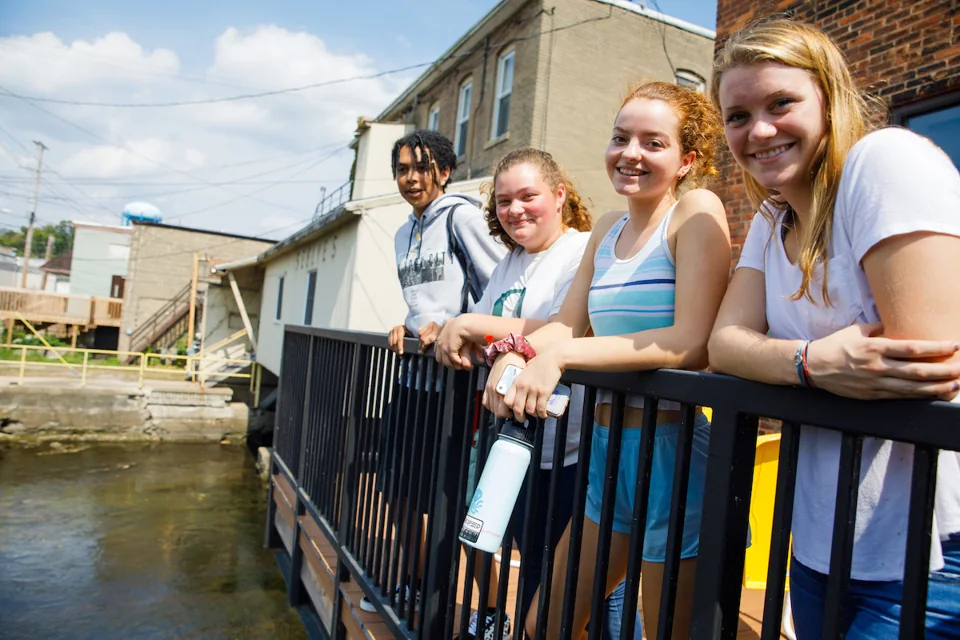
The surrounding city is part of that setting. Albion describes its campus and town as connected environments, with the Kalamazoo River, downtown activities and the college's nature centre contributing to life beyond scheduled classes. Its Office of Belonging supports conversations and institutional work around inclusion. The emphasis on a broad liberal arts foundation sits alongside opportunities for students to investigate particular subjects in depth. In its account of its educational purposes, the college links intellectual development with participation, research and engagement in the community around it.
Sources: A liberal arts college in Michigan ↗
Charter, coeducation and growth
Albion received its charter from the Michigan Territorial Legislature in 1835 through the efforts of Methodist settlers. Its early development included the Albion Female Collegiate Institute, approved in 1850, and a merger in 1857 under the name Wesleyan Seminary and Female College at Albion. On February 25, 1861, the legislature authorised the award of four-year college degrees to both women and men.
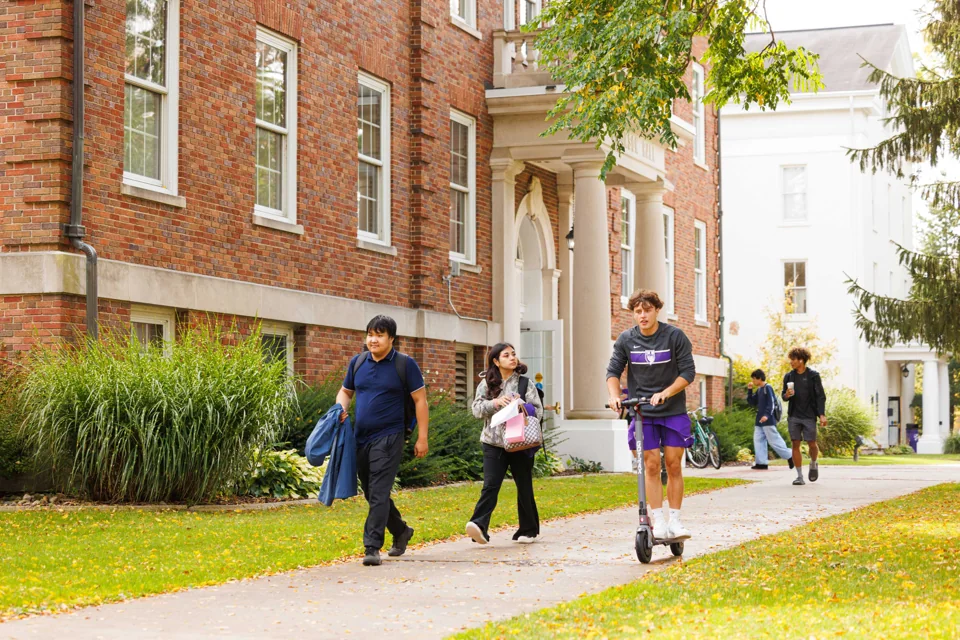
The college has remained on the same site since the cornerstone of its first permanent building was laid in 1840. The original part of the campus is now known as the Quad. By the beginning of the twentieth century, the growing campus included a chapel, observatory, gymnasium, chemistry building and library. Later development added scientific, recreational and equestrian facilities. The opening of the Ludington Center in 2017 extended the college's presence into downtown Albion and created another setting for college-community activity.
Sources: Charter, coeducation and growth ↗
Campus spaces and learning resources
Albion's campus facilities support academic work, outdoor study and recreation. The Whitehouse Nature Center includes trails and natural areas, together with a visitors' centre containing a classroom, wildlife observation space and exhibits of local reptiles and amphibians. A river runs through the centre, giving outdoor education a setting distinct from an indoor laboratory.
The Stockwell-Mudd Libraries are on the Academic Quad. They combine print and electronic collections with group, interactive and individual study spaces. The college archives, special collections, a cafe and the Cutler Center for Student Success are also located there. Other facilities include the Nancy G. Held Equestrian Center and the Dow Recreation and Wellness Center. The latter brings together tennis, aquatic, fitness and student-activity spaces. This range of places allows campus life to include research and quiet study alongside outdoor learning, riding and recreational activity.
Sources: Campus spaces and learning resources ↗
Experiential learning across subjects
Albion's registrar identifies designated courses that fulfil the college's experiential-learning graduation requirement. The published list spans several disciplines rather than concentrating practical learning in a single department. Examples include Methods in Anthropology, Professional Practices in Art, Educational Foundations, Multimedia Journalism, an ecology field-trip course and Theatre Senior Capstone.
The list also includes research methods, environmental sustainability, management and community-oriented work such as Volunteer Income Tax Assistance. Alongside designated courses, departments provide credit for internship experiences. These can take the form of a practicum class or an individual internship on or off campus. The registrar describes internships as opportunities to participate in, observe and analyse the activity of a firm, agency or organisation. This structure places applied work within academic study while allowing the form of that experience to vary according to the subject and the placement.
History as an example of academic study
The history major and minor illustrate how Albion combines subject breadth with individual interests. Courses address the United States, Europe, Latin America, East Asia and Africa across different periods. Students examine historical questions through reading, analysis and discussion, with attention to understanding issues from more than one perspective.
The programme also uses practical approaches, including role-playing and work with historical photography. Its published opportunities include internships, archival research and study away. Previous student experiences have involved the Library of Congress, Chicago's Newberry Library and learning in several other countries. Students can propose projects through the Foundation for Undergraduate Research, Scholarship and Creative Activity, working with faculty mentors when accepted. A senior thesis provides another opportunity to investigate a chosen topic. These options bring independent research and extended writing into a programme that also requires engagement with several historical regions and themes.
The Ludington Center and community partnerships
The Ludington Center is a downtown space connecting the college with civic organisations. In a 2026 report, Albion described its reopening following storm damage in 2025 that had affected the roof and interior. The reopened building brought the college's Institutional Advancement offices together with the Albion Community Foundation, Albion Economic Development Corporation and the Greater Albion Area Chamber of Commerce and Visitors Bureau.
The report described the arrangement as a way of strengthening cooperation rather than simply sharing offices. Examples included a job fair and connections among local entrepreneurs and small businesses. Further collaborative programming and student internships were identified as opportunities for development. The centre is named for John and Dorothy Lamson Ludington, members of the class of 1951 whose connection with the college continued throughout their lives. Its downtown location gives institutional engagement a physical base beyond the main campus.