Visa
About Albert Einstein Academy
A Jewish day school in Wilmington
Albert Einstein Academy is a Jewish elementary school in Wilmington, Delaware, whose founders sought to bring general education and Judaic studies together within one school. It officially opened on November 11, 1969, initially serving a small group of students. That combination of academic learning and Jewish tradition remains central to its institutional identity. The academy is overseen by a volunteer Board of Trustees drawn from its community, including current parents and parents of graduates. The board supports the head of school, provides financial oversight, and establishes long-term policies and strategic priorities. This arrangement gives families and community members a formal role in the school's governance and development.
Sources: History and trustees ↗
The elementary curriculum
The academy's academic programme extends from transitional kindergarten through fifth grade. English language arts includes explicit teaching of phonics and phonemic awareness, alongside reading across different genres. Writing activities ask children to combine ideas from texts with their own thinking and to support their work with evidence. Science lessons address subjects including energy, matter, waves, ecosystems, plants, animals, space and the Earth's systems. Social studies places cultures and human communities within their historical, geographical and social contexts. Instruction also includes Hebrew and project-based learning. Teachers adapt work to individual learning needs, communicate with families about progress, and use mixed-age groups for some subjects.
Sources: Academic programme ↗
How lessons are structured
The educational philosophy describes a combination of practical activity, individual attention and increasingly complex thinking. In mathematics, the school uses a concrete, pictorial and abstract sequence: children begin with physical materials such as counters and base-ten blocks, move to diagrams or drawings, and then work with numbers and equations. Literacy teaching identifies five connected elements: phonemic awareness, phonics, fluency, vocabulary and comprehension. Teachers also use Bloom's Taxonomy to plan a progression from understanding basic information to applying knowledge, making decisions and designing projects. Examples of multisensory work include scientific experiments, mathematical models and art connected with historical topics. Lesson plans can be adjusted to a child's strengths, interests and needs.
Sources: Educational philosophy ↗
The transitional kindergarten pathway
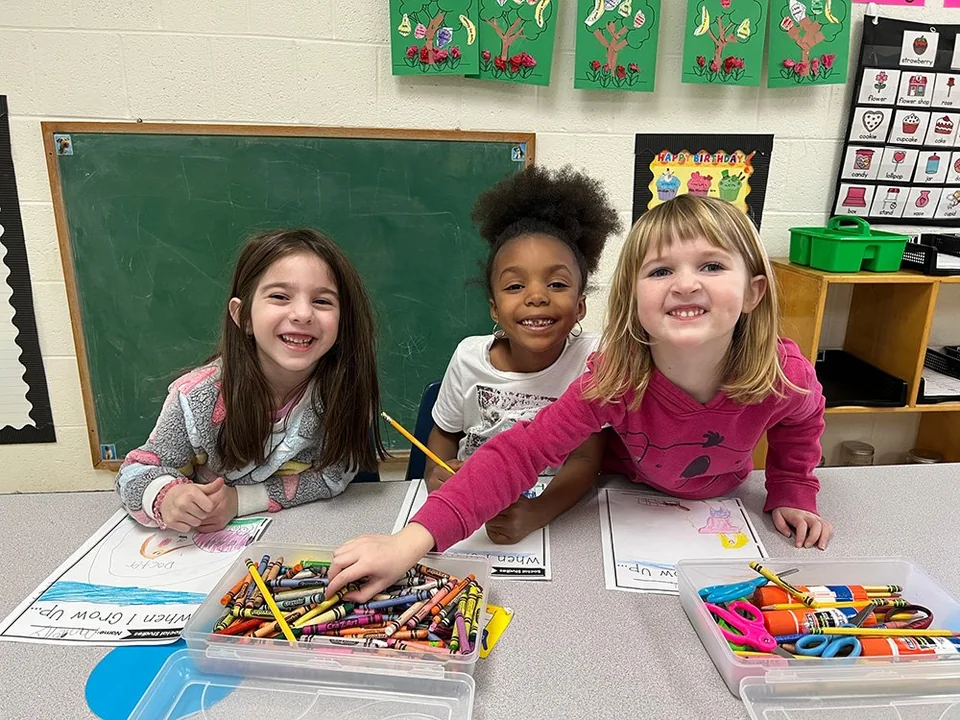
Transitional kindergarten provides an additional early-learning stage between preschool and the academy's kindergarten programme. The school describes it as intended for children whose academic and developmental needs fall between those stages. Its curriculum follows the kindergarten framework while modifying the pace and daily organisation for younger learners. Children have additional breaks and opportunities for free play, and skills practice is differentiated according to their age and development. Social and emotional learning accompanies academic work throughout this introductory stage. The distinction is therefore visible in the structure of the school day as well as in the level of classroom activities. It provides a separate pathway within the academy's broader elementary educational offering.
Sources: Transitional kindergarten ↗
STEM from design to robotics
The STEM programme is organised into successive elementary stages. Kindergarten introduces engineering through the relationship between a product's structure and its function, including examples drawn from nature. Children also encounter programming ideas such as inputs, variables and sequences, using them to create animated presentations. First- and second-grade work connects life science, growth and inherited traits with engineering design. Other investigations examine sound, light, matter, insulation and conduction. In grades three through five, projects become more complex. Students explore fossils and environmental change, stability and motion, aeronautics, simple machines and robots. Design challenges include finding ways to lift and airdrop supplies or transport large animals during a rescue scenario.
Sources: STEM curriculum ↗
Creative work and shared facilities
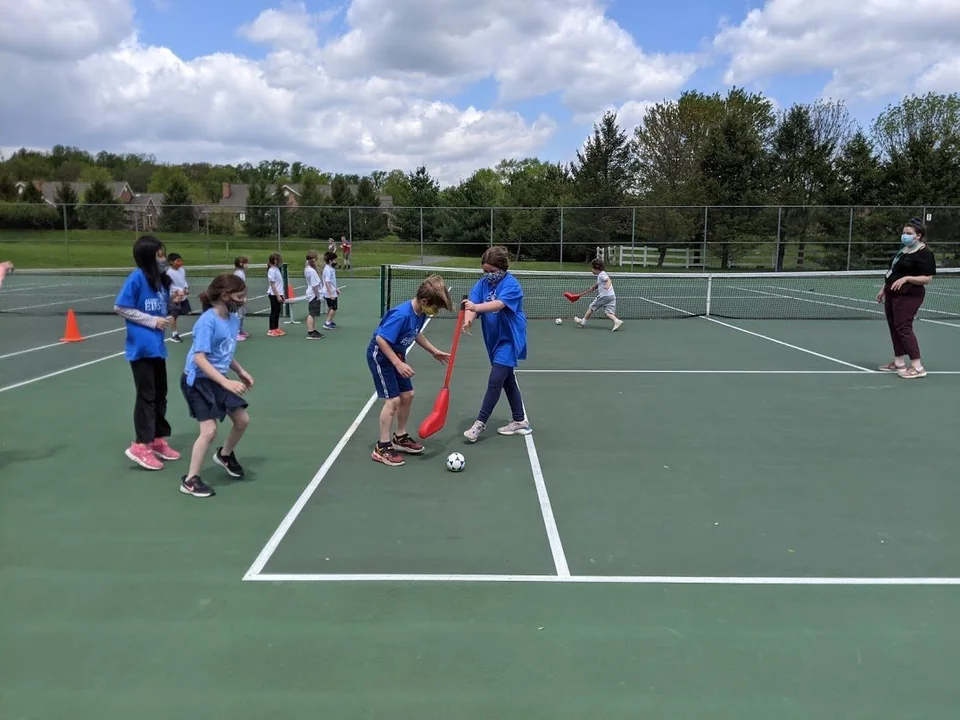
Student life includes visual art, theatre, physical education and recreation. Art instruction introduces drawing, painting, sculpture and printmaking, with materials ranging from watercolours and acrylics to pastels and paper. The after-school drama programme traditionally stages a holiday production in autumn and a musical in spring, with children participating onstage or in production roles. The school is part of the Siegel Jewish Community Center campus, where its facilities include access to an auditorium, gymnasium, pools, sports courts and open fields. The academy also has a private playground. Its proximity to Brandywine Creek State Park supports outdoor exploration, while physical education introduces activities including soccer, basketball, floor hockey, gymnastics, volleyball and tennis.
Sources: Student life ↗
Language learning and assessment
The academy welcomes families from different faith backgrounds. Hebrew instruction begins with the alphabet, introducing letters, vowels and vocabulary before developing further language skills. Music, games, songs, stories and posters are among the teaching materials. For first through fifth grades, the iTaLAM programme includes an individual online component with voice recording. Additional tutoring supports children who enter from other schools or need help with the language. The school's assessment arrangements also reflect its independent-school setting: third-, fourth- and fifth-grade pupils take ERB assessments rather than Delaware's state educational tests. Teachers use the results to follow individual progress and inform instructional adjustments. The school is located in North Wilmington, off Concord Pike, on the Siegel JCC campus.
Sources: Frequently asked questions ↗
Values within school life
The academy presents its values as educational goals rooted in Jewish tradition and an awareness of wider society. These goals include recognising other people's feelings, showing compassion, accepting personal responsibility and contributing to community life. Children are encouraged to appreciate their own strengths while recognising the value of others. The school also connects membership of the Jewish community with respect for diverse cultures and traditions. Curiosity is another stated priority: pupils are encouraged to ask questions, think critically, remain open to unfamiliar experiences and learn from mistakes. Together, these aims describe the personal and social qualities the academy seeks to develop alongside its general and Judaic academic curriculum.
Sources: Core values ↗