Visa

About Alaska Center for Energy and Power
Applied energy research at UAF
The Alaska Center for Energy and Power, known as ACEP, is an applied energy research group at the University of Alaska Fairbanks. It brings university expertise to questions arising in Alaska’s communities and industries, particularly where electricity systems operate independently of larger interconnected grids. Its remit also includes heating and transportation. ACEP describes itself as interdisciplinary and needs driven, drawing on expertise across university campuses rather than operating as a separate degree-granting college. Its mission is to develop and share practical, economical and innovative energy solutions for Alaska and beyond. Partnerships with communities, government, industry and academic organisations connect that mission with questions encountered outside the university.
Sources: About ACEP ↗
Testing an isolated power system
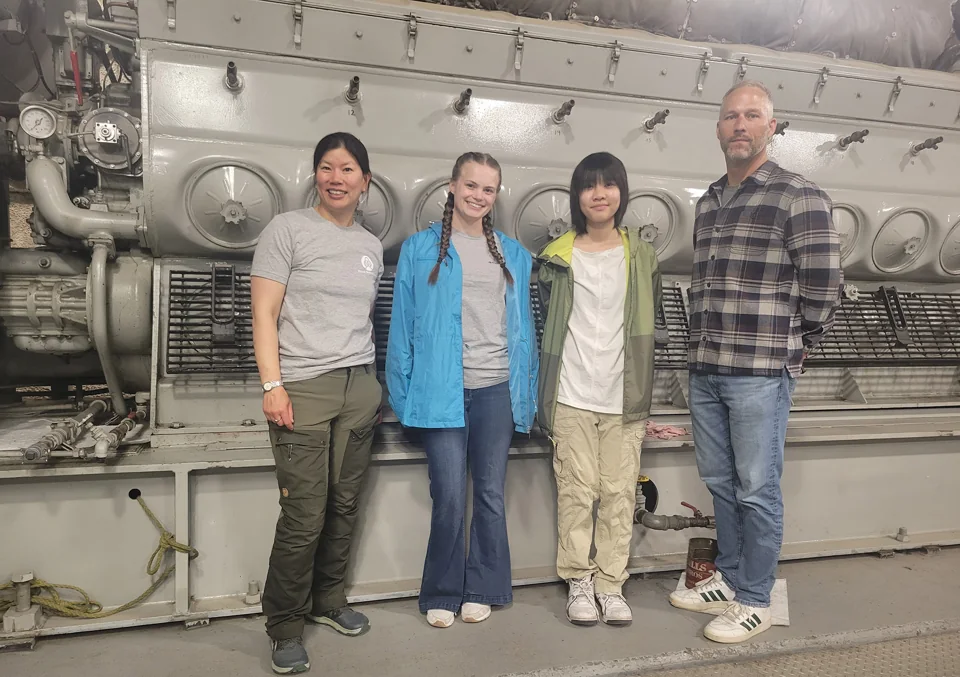
The Power Systems Integration Laboratory is housed in UAF’s Energy Technology Facility. It emulates an isolated hybrid diesel grid, enabling researchers to examine generation, energy storage, distribution and control together. Its scale and configurable architecture are intended to resemble rural Alaskan power plants while allowing individual test scenarios to be assembled in a laboratory. Listed equipment includes diesel generators, wind and photovoltaic emulators, battery storage, programmable loads and power supplies. Hardware-in-the-loop equipment and power-quality measurement tools add further ways to study interactions between components. The laboratory supports engineering analysis, design review, product testing and system research, producing evidence that researchers, communities and industrial partners can use when assessing energy technologies.
River energy under Alaskan conditions
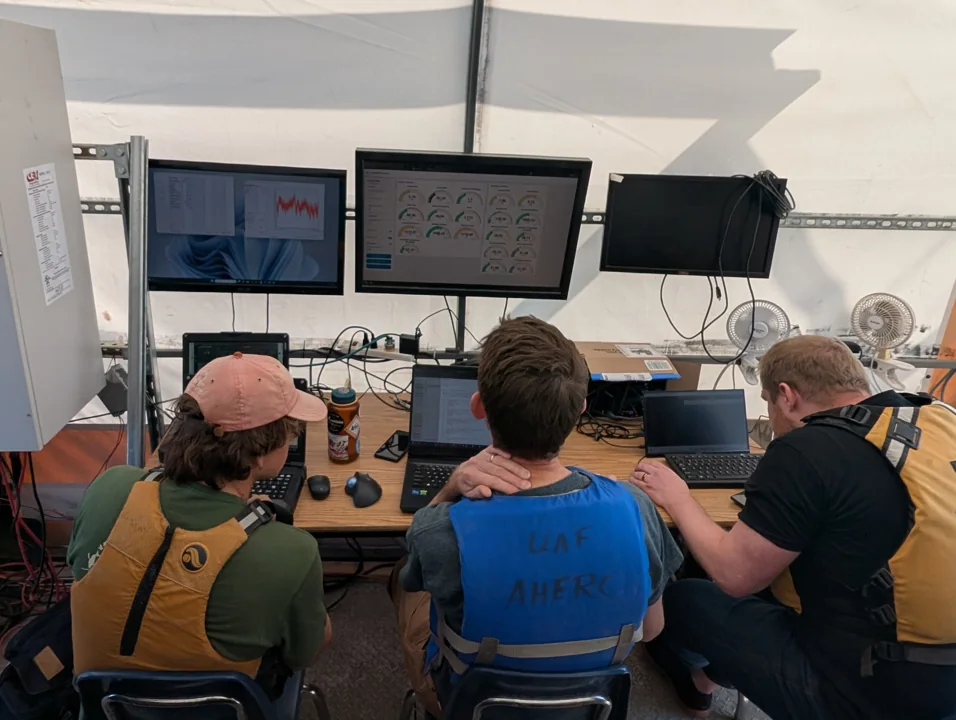
ACEP’s Tanana River Hydrokinetic Test Site is road connected and approximately 55 miles from Fairbanks. It allows researchers to investigate how energy-generating devices interact with an actual river environment. Site characterisation considers river velocity, bathymetry, sediment transport, turbulence and related conditions. A mooring system supports a floating test platform, while sonar and positioning instruments help observe the river and equipment. The wider marine energy programme also examines tidal and wave resources, wildlife interactions, debris and ice. ACEP’s hydrokinetic research began through the Alaska Hydrokinetic Energy Research Center in 2010, and the group joined the Pacific Marine Energy Center in 2014. These activities investigate environmental and engineering questions involved in emerging technologies rather than treating every test as an established community power supply.
Sources: Tanana River Hydrokinetic Test Site ↗ · Marine energy research ↗
Solar research at high latitudes
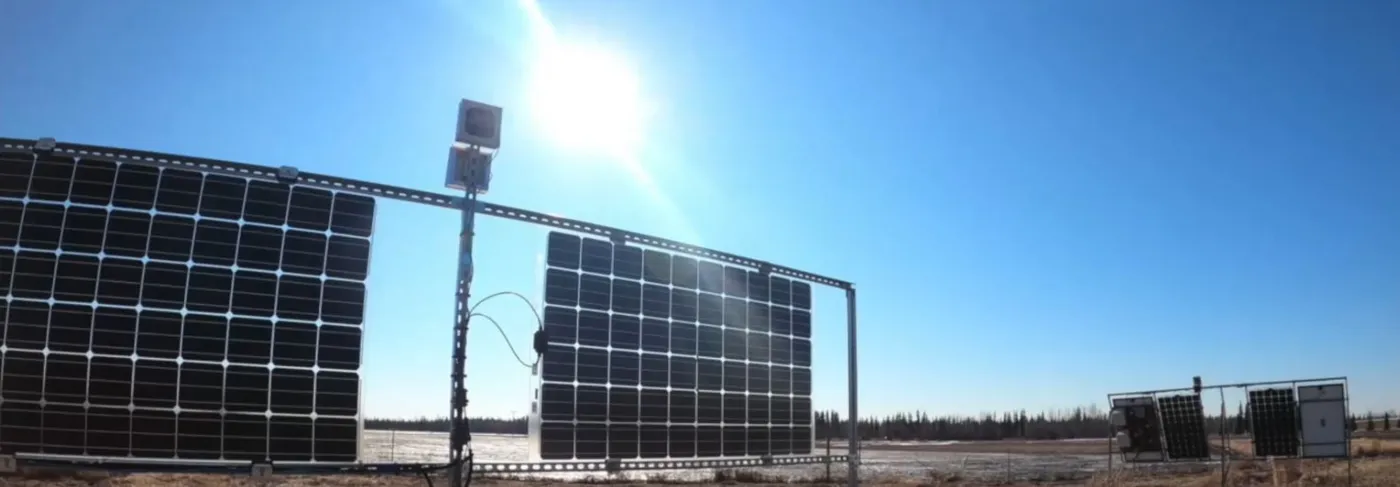
The solar photovoltaic test site on the Fairbanks campus was developed with Sandia National Laboratories in 2018. It compares different panel arrangements, including south-facing tilted modules and vertically oriented east–west bifacial modules. Bifacial panels can receive light on both sides, making their positioning and surroundings important research variables. The facility records power production alongside weather and solar-radiation measurements. Its instruments observe conditions such as temperature, wind, rainfall and irradiance, allowing researchers to relate electrical output to the surrounding environment. The resulting data supports investigation of solar technologies in northern and cold-region settings. The site therefore functions as a measured research installation rather than simply a display of solar equipment.
Sources: Solar Photovoltaic Test Site ↗
Distributed resources and the grid edge
The Grid Edge research programme studies distributed energy resources in cold regions and microgrid environments. Its scope includes smaller solar and wind installations, resources situated behind a customer’s electricity meter, electrified loads and battery storage. Researchers test and model control approaches for integrating variable energy sources, alongside investigating social, economic and regulatory factors. This combination recognises that technical performance alone does not explain whether a technology fits a community’s circumstances. Public-facing resources include an electric-vehicle calculator and an Alaska solar manual. The programme’s work on beneficial electrification considers how energy uses can be supplied differently, while its solar research examines appropriate development in Alaska and other high-latitude regions.
Sources: Grid Edge research ↗
Education and community energy leadership
ACEP’s Education and Workforce Development programme links research with learning for students, working professionals and community members. Its stated goals include connecting the energy workforce, supporting community energy leaders and developing applied energy education. Short courses provide concentrated study of particular energy topics, with some bringing university students together with industry and community participants. Town halls offer opportunities to discuss technologies and local energy questions. Other initiatives include the Arctic Remote Energy Networks Academy, which connects northern community energy practitioners through knowledge sharing and mentorship, and the Energy Leadership Accelerator, a network serving leaders in Alaska, Hawai‘i and Puerto Rico. These programmes emphasise relationships and practical learning alongside scientific knowledge.
Undergraduate research experience
The Summer Internship Program provides a ten-week research experience with ACEP mentors. Its published structure distinguishes Research Experiences for Undergraduates, intended as an exploratory introduction, from the ACEP Undergraduate Summer Internship strand, which places greater emphasis on independently developing project deliverables. Research topics include microgrid integration, northern electric vehicles and solar technologies. Activities can include presentations, discussions, community engagement and field trips as well as project work. Final presentations and other agreed outputs give students a way to communicate their findings. This is research participation within a university centre, with the mentoring and project expectations described separately for the two strands.
Sources: Summer internship programme ↗
Research in practice
Two official 2026 reports illustrate that approach. Summer interns studied options for restarting UAF’s combined heat and power plant without relying on an external grid, combining technical work with interviews and consideration of financial and regulatory issues. A separate marine energy report described field testing of a tethered turbine with BladeRunner Energy and university collaborators. It documented remote monitoring, performance measurements and damage caused by debris during the 2025 testing season. Reporting both progress and difficulties shows how ACEP uses experiments to inform further development.
Sources: Intern research on power-plant restart, September 2026 ↗ · Hydrokinetic field testing report, January 2026 ↗