Visa
About Alamo Navajo School Board
Community control and educational purpose
Alamo Navajo School Board, Inc. is a nonprofit community organisation in Alamo, New Mexico, whose responsibilities extend from school education to early childhood and other community services. It is governed by an elected board under the Navajo Nation’s election code. Its mission connects education with community empowerment, health and self-sufficiency, and explicitly emphasises Indian self-determination and local decision making. The board was created in 1979 as community leaders sought greater control over services. Its history places the school’s development within families’ efforts to have children educated locally rather than sent away to boarding arrangements or transported long distances. The organisation’s vision also recognises the relationship between tradition, cultural values and the wider environment. Education is therefore presented as part of a broader community purpose, rather than as the activity of a degree-granting college.
Sources: Community control and educational purpose ↗ · Alamo Navajo School Board overview ↗
The Alamo Navajo Community School
Alamo Navajo Community School opened on October 1, 1979, initially serving kindergarten through eighth grade in portable buildings. The contract was expanded in December 1980 to include education through twelfth grade. Planning and construction of a permanent school began in 1982. The board’s account describes the resulting building as bringing classrooms and laboratories together with a library and media centre, gymnasium, cafeteria, an agriculture and greenhouse laboratory, and industrial-arts shops. The school remains a central educational responsibility of the organisation. Its official page provides a 2026–27 calendar and student handbook and identifies student-services responsibilities such as attendance, records, registration and bus changes. The page also links an after-school learning-centre programme, illustrating the school’s place in both regular classroom education and additional learning activity within the community.
Sources: The Alamo Navajo Community School ↗
Community services and career education
The Community Services division supports learning, training and preparation for work. Its mission includes literacy, English-language communication and mathematics alongside counselling and encouragement towards self-sufficiency. The division describes programmes that connect secondary education with career and technical learning and postsecondary preparation. Its Native American Career and Technical Education Program account identifies a grant awarded in 2021 and a subsequently approved sixth-year extension. Published project objectives include counselling, educational career-action planning, outreach activities, dual-credit participation and professional development for teachers and programme staff. The division also administers Workforce Innovation and Opportunity Act activities, including assessment, case management, employability-skills training and work experience for young people. These descriptions show several stages of support, from identifying educational goals to gaining experience and continuing into further training, rather than a single classroom course.
Early childhood and family learning
Early childhood provision developed through several stages during the 1990s. The board began a Bureau of Indian Affairs Family and Child Education programme in 1993 and became a direct Head Start grantee in 1996. Its history records an expansion into Early Head Start for infants and toddlers in November 1998. The growth of services for children from birth to age five led to the creation of a separate Early Childhood division serving children and their families. Early-intervention arrangements and case-management services followed in 1999, and wrap-around childcare was added in 2000 through the Navajo Nation Child Care Development Block Grant. The Early Childhood Center was supported collaboratively through Head Start and childcare-development funding. This sequence shows how the organisation extended educational support beyond school-age children to include younger learners and family services.
Forestry as a community programme
The Forestry programme began in December 2009 following a CFRP grant. Its official account describes work on state, federal, tribal and private lands and places community employment within the programme’s purpose. The programme has undertaken projects in New Mexico and northeastern Arizona across different forest settings. Its activities include forest thinning, timber-related work and the processing of smaller-diameter wood and firewood. The board also describes forest-industry safety training and equipment-related preparation for crew members. These activities connect practical training and resource-management work with the wider organisation’s emphasis on community self-sufficiency. They also illustrate why the school board’s remit cannot be understood solely through its school classrooms: its divisions address skills and services relevant to community life and the surrounding landscape.
Sources: Forestry as a community programme ↗
Community radio and communication
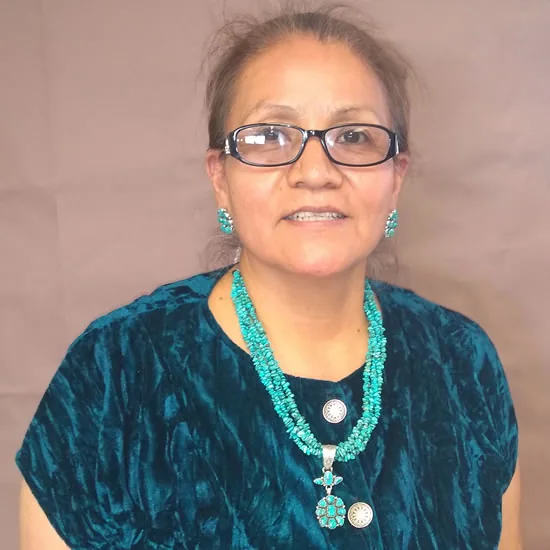
The board operates KABR as a community-based public radio service. The station was built in 1983 with construction funding from the National Telecommunications and Information Administration. Its official account describes radio as an important means of communication and education for the Alamo community and records the effort required to maintain operating support. Corporation for Public Broadcasting funding subsequently helped stabilise that work. The station page identifies staff responsibilities in management, programme direction, announcing and production, presenting radio as a continuing organisational activity with a dedicated team. Within the board’s wider structure, broadcasting provides a different setting for education: information can reach community members outside formal classrooms and across the routines of daily life.
Sources: Community radio and communication ↗
Shared space at the Wellness Center
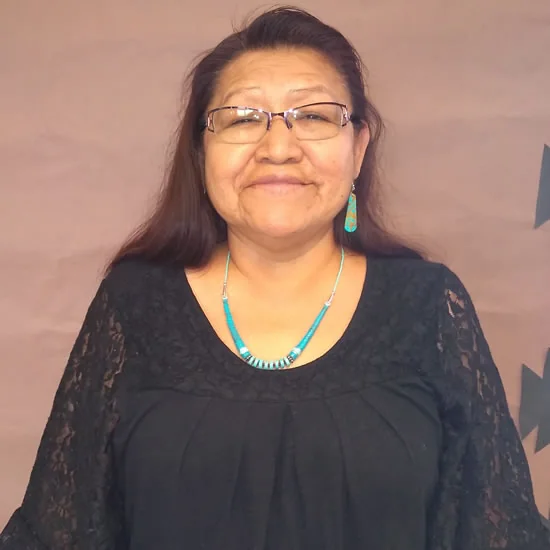
The Alamo Community Wellness Center provides spaces used for training, recreation and community gatherings. Its official facilities description includes an equipped classroom, weight room, aerobics room and full-court gymnasium. A stage allows the gymnasium to accommodate community events and plays. The centre also has an arts-and-crafts room, rock-climbing wall and outdoor fitness path. These facilities add another setting for learning and participation alongside the school, early-childhood services and community radio. The range of spaces allows different kinds of group activity to take place within the organisation’s community-service structure.