Visa
About Alamance Community College
A college shaped by its community
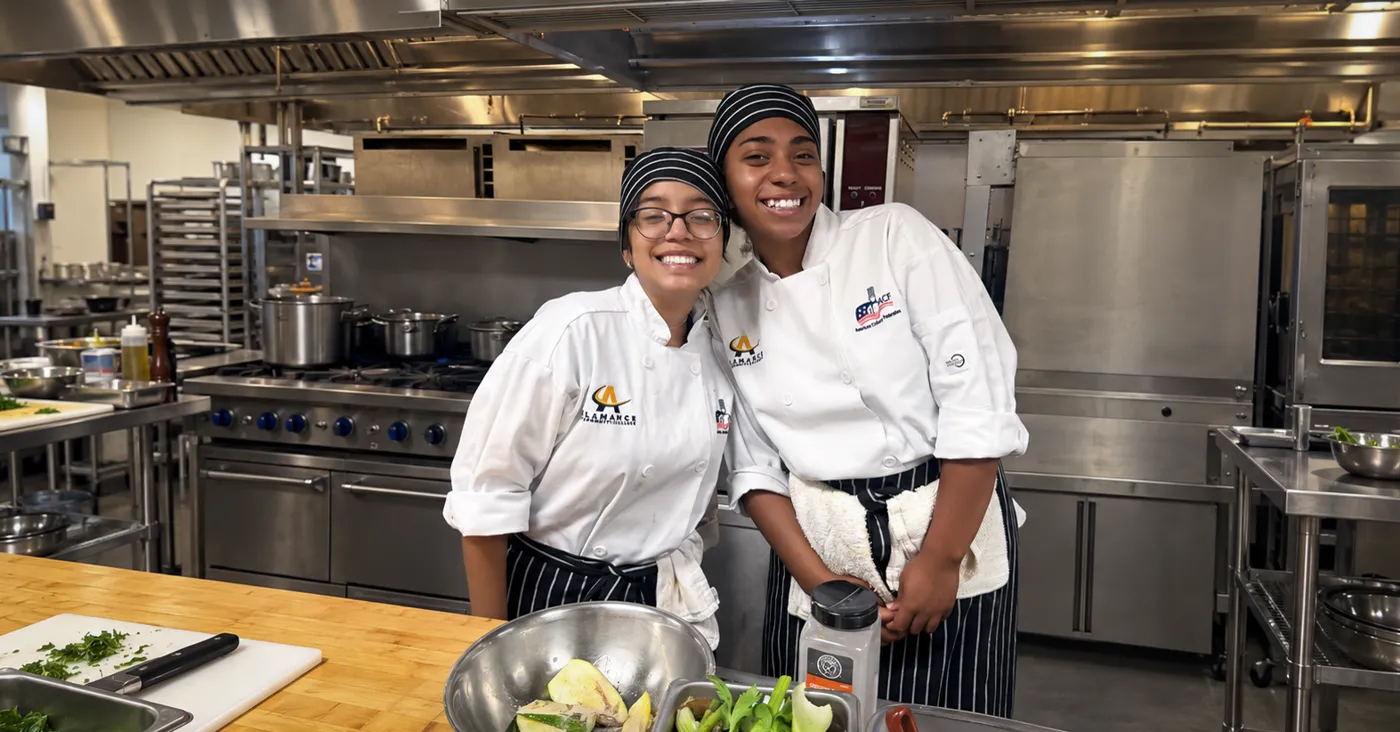
Alamance Community College serves its North Carolina community through academic, technical and continuing education. Its main-campus mailing address is in Graham, while other locations include the Dillingham Center and Public Safety Training Center in Burlington. The institution began in 1958 with an emphasis on manufacturing-based education. It developed through the names Burlington-Alamance County Industrial Education Center, Technical Institute of Alamance and Technical College of Alamance before becoming Alamance Community College in 1988. The move to its present campus took place in 1976. Later development included the Advanced Applied Technology Center in 2017 and the Biotechnology Center of Excellence and Student Services Center in 2023. These additions reflect a continuing relationship between the college’s educational provision and the changing technical and learning needs of the surrounding community.
Sources: A college shaped by its community ↗
Mission, inclusion and institutional priorities
The college’s mission is to provide educational programmes and services for the varied members of its community. Its values, revised by the Board of Trustees in August 2022, bring together learning, integrity, collaboration, inclusion and innovation. Learning is described in terms of knowledge and skills, but also behaviours and values. The college connects community with respectful partnerships and emphasises belonging and access to resources within its approach to equity and inclusion. Its ACC Forward strategic plan for 2022–27 is organised around four priorities: Engage, Learn, Equip and Grow. Those priorities concern deeper community relationships, inclusive learning experiences, professional development for faculty and staff, and access to resources that support personal growth. They describe the institution’s direction and intentions rather than a list of completed projects.
Starting a university-transfer pathway
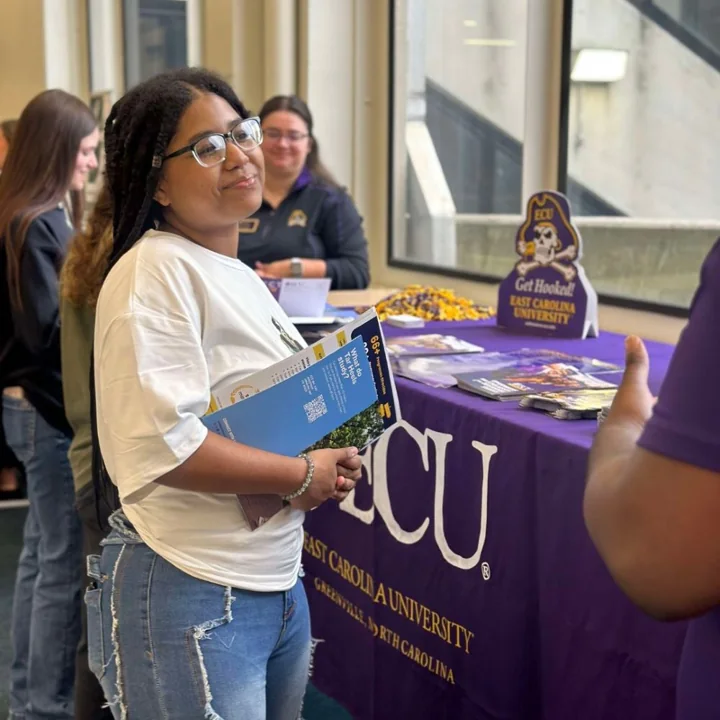
University Transfer provides coursework intended to cover general education and the first two years of bachelor’s-level study. The college’s transfer information links students to different associate-degree routes, institutional agreements, programme guides and academic advising. The emphasis is on planning how community-college study connects with later work at a four-year institution. Its reverse-transfer information explains another route: students who leave before completing an associate degree may combine their ACC coursework with remaining requirements completed at a participating North Carolina institution. The same page introduces an Honors Program that emphasises advanced study, critical thinking, academic exploration and community engagement. Together, these resources present transfer as an academic pathway involving course planning, advising and continued learning, with opportunities to deepen study while preparing for another institution.
Sources: Starting a university-transfer pathway ↗
Agriculture and business management
Agribusiness Technology brings agricultural knowledge together with the management of agricultural and related enterprises. The curriculum description includes agriculture specialisations, accounting, finance, marketing, planning, human-resources management and other managerial responsibilities. The programme’s stated approach combines entrepreneurial and technical knowledge with science and technology. It places particular emphasis on financially viable, environmentally responsible and community-centred agricultural operations. Both an Associate in Applied Science and a certificate are listed as study options. The programme’s mission connects the development of agricultural leaders and entrepreneurs with sustainable and innovative practice. This combination gives the subject a scope that extends beyond production alone: students encounter how an agricultural enterprise is planned and managed, alongside the scientific and technical context in which farming and related businesses operate.
Learning in the workplace
Work-Based Learning links academic study with a formally structured internship in the student’s declared programme. The college describes an experience planned, coordinated and supervised jointly by the college and an employer. A workplace supervisor introduces field-specific practices and processes and can provide professional guidance. Preparation before an internship and support during it are parts of the programme’s structure. Students work on both technical abilities and wider professional skills, including responsibility, independence and an understanding of their role within an organisation. The published process includes consultation with academic staff, a pre-internship orientation, required forms and the maintenance of a timesheet. In this model, workplace activity becomes an organised learning experience, connecting classroom knowledge with the routines, expectations and relationships encountered in a professional setting.
Sources: Learning in the workplace ↗
Support through the writing process
The Writing Lab provides feedback and guidance at different stages of writing, from the first exploration of ideas to final revision. Its tutors ask questions about development, organisation, grammar and mechanics, helping students examine and improve their own work. The lab is available to ACC students and includes computer space where a document can be revised during an appointment. Individual sessions allow a tutor and student to read and discuss a paper together. Online options include document submission for written feedback and live video tutoring. The lab also supplies writing-skills worksheets. Its description stresses leaving time for revision after a meeting, placing the tutoring session within a longer writing process rather than treating feedback as the final step in completing an assignment.
Sources: Support through the writing process ↗
Collaborative study in the STEM Lab
The STEM Lab offers another form of academic support, with peer collaboration and discovery supervised by mathematics instructors. Its subject list includes mathematics, chemistry, physics, computer science, engineering and geology, alongside Spanish courses. The lab describes a setting for tutoring, access to technology and quieter individual study, with walk-in participation rather than an appointment requirement. Digital resources complement the physical space. EdReady is presented as a way to review mathematical concepts and develop a study plan, while linked video materials cover topics such as precalculus, trigonometry, factoring, calculus and statistics. The emphasis is on practising concepts and building understanding with other learners. This approach adds an informal, collaborative environment to the college’s scheduled classes and other academic support services.