Visa
About Alabama College of Osteopathic Medicine
A medical college in Dothan
The Alabama College of Osteopathic Medicine, usually called ACOM, is based at 445 Health Sciences Boulevard in Dothan, Alabama. It offers the Doctor of Osteopathic Medicine degree and forms the academic arm of Southeast Health. The college’s place within that health system connects its educational work with a wider regional organisation that also includes a medical centre, medical group, foundation and population-health network. ACOM’s governance includes a board with representatives from the Houston County Health Care Authority and the Alabama Medical Education Consortium, together with public members. A separate advisory board brings community leaders into discussion of the college’s strategic direction.
Sources: Southeast Health and college governance ↗ · Accreditation and degree programme ↗
Building the scientific foundation
The first two years combine discipline-based teaching with teaching organised around body systems. Students begin with a full semester of foundational science and anatomy, including cadaver dissection. Anatomical Sciences and Molecular Medicine appear in the first autumn’s course list. The Foundations of Modern Health Care sequence introduces professionalism and ethics, while Primary Clinical Skills and Osteopathic Principles and Practice introduce physical and structural examination, clinical reasoning and practical skills. Systems-based teaching begins in the spring of the first year, with subjects including the musculoskeletal system, neuroanatomy, haematology and dermatology. The second year continues through cardiovascular, respiratory and renal subjects, followed by endocrine, reproductive and gastrointestinal study. Longitudinal teaching in osteopathic principles, patient simulation and encounters with standardised patients runs alongside this scientific progression.
Sources: First- and second-year curriculum ↗
Learning in community settings
In the third and fourth years, teaching moves into community-based hospitals, clinics and offices across the region. Medical Education Directors and supervising physician preceptors work with the college to deliver this part of the curriculum. Required clerkships have their own syllabuses setting out curricular expectations. Teaching methods can include observation, supervised participation, readings, individual discussions and presentations, as well as recorded material and computer-based resources. The clinical education model therefore combines direct involvement in workplace learning with structured academic requirements. ACOM describes a faculty approval process that considers teaching interest, qualifications, recommendations and medical licence checks. Curriculum committees and the dean’s leadership team participate in the planning and evaluation of clinical education.
Sources: Third- and fourth-year curriculum ↗
Spaces for practical and collaborative teaching
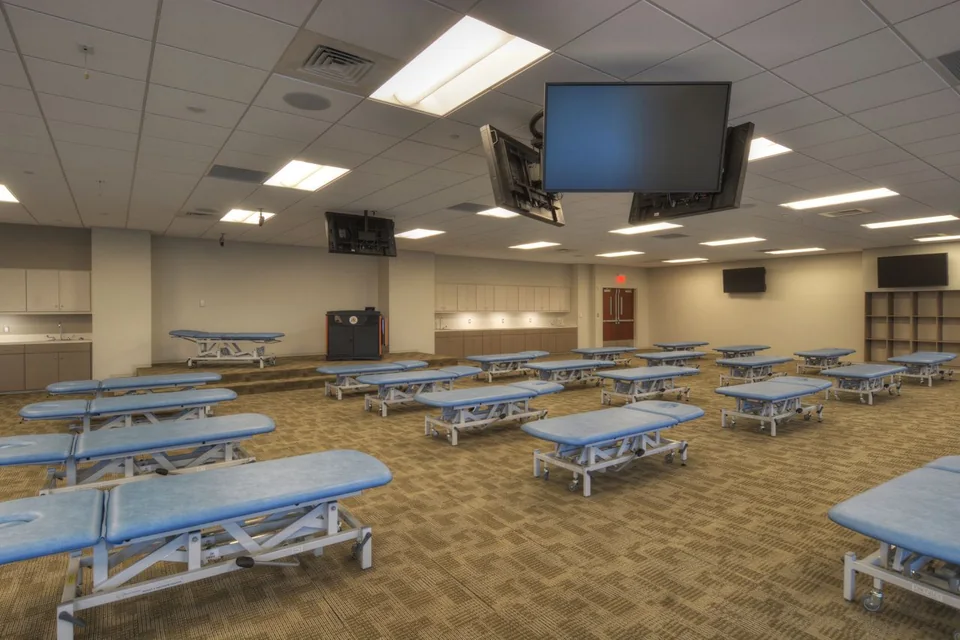
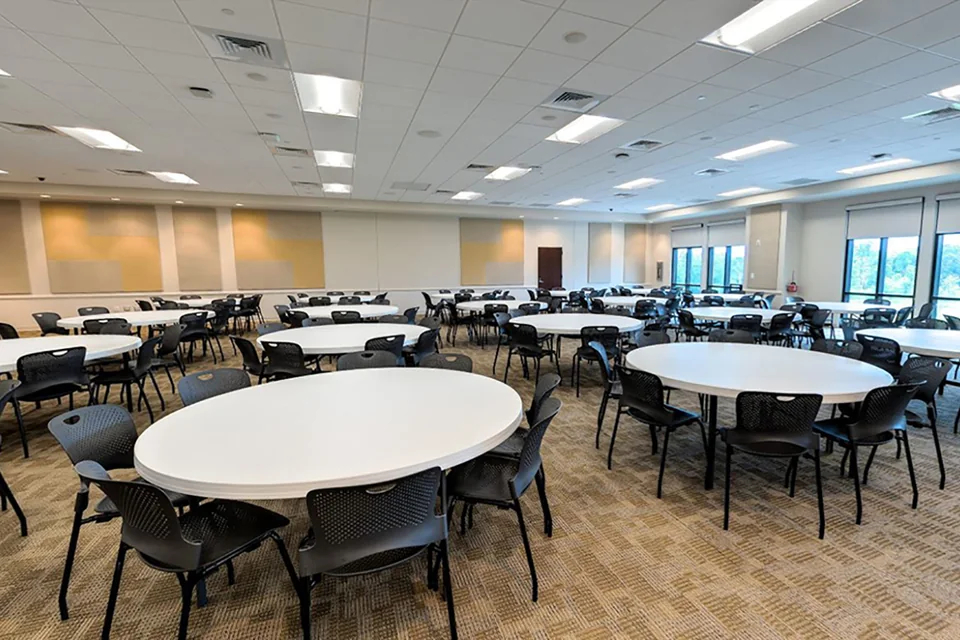
ACOM’s campus includes teaching spaces designed for different forms of medical learning. The Osteopathic Principles and Practice Laboratory occupies 5,000 square feet and contains height-adjustable tables and an overhead projection system linked to monitors around the room. The Performance Exam Suite has sixteen examination rooms, waiting areas and a central control room; cameras and microphones allow encounters to be recorded. A separate Team-Based Learning Center supports several small groups working in one classroom, using a digital video wall, projector screens and table microphones. The simulation centre completed in 2021 includes eight simulation bays, a skills laboratory and student study space. These facilities accommodate practical exercises, observation and group discussion in distinct teaching environments.
Sources: Campus and teaching facilities ↗
A library built around digital resources
The library organises much of its provision through electronic books, clinical tools, databases and subject guides. Its listed collections include Access Medicine, Books at Ovid, ClinicalKey and the R2 Digital Library. Anatomy resources include video and visual reference tools, while the database selection includes the Cochrane Library and JAMA Evidence. The library also provides links to PubMed and to osteopathic medicine resources. Guides and videos support Osteopathic Principles and Practice and Primary Clinical Skills. Students can consult board and course resources alongside general instructions for using the collections. Interlibrary loan provides a route to materials that are not available in full text within ACOM’s own holdings.
Sources: Library and learning resources ↗
Academic guidance and student support
The Center for Medical Student Success provides individual consultations, learning plans, group presentations and peer-assisted learning. Its work includes the assessment of study habits, time management, study strategies and preparation for examinations. First- and second-year students can attend individual or small-group peer tutoring, with faculty and course directors providing content guidance to the tutors. The programme is available to students across levels of academic performance. For students completing the later years away from campus, support includes telephone guidance and scheduled personal visits. Career-development work covers curriculum vitae preparation, specialty exploration, audition rotations and navigation of the residency matching process. The college also describes a student-led Wellness Club and a committee involving students, faculty and staff. Campus wellness activities described by the college include a walking trail, fitness area, intramural sports and a community garden. A dedicated room provides space for prayer and meditation.
Sources: Academic support ↗
Research and scholarly activity
Research at ACOM brings together students, faculty, clinical teaching partners and community collaborators. Its stated areas of interest include population health, clinical research, biomedical research and medical education. The Office of Research supports the development of projects and assists with publication, abstract and grant submissions, as well as procedural and compliance questions. Student resources include research registration, an elective form, guidance on informed consent and de-identification, and information about institutional review. The college also supports a summer research programme and publishes routes to poster abstracts and seminar presentations. Biomedical projects described on its research page include cardiopulmonary and vascular health, cancer, brain vasculature, and computational modelling of proteins with laboratory analysis.
Sources: Research ↗