Visa


About Akaki Tsereteli State University
From a pedagogical institute to a multidisciplinary university
Akaki Tsereteli State University is a public university in Kutaisi, Georgia, whose development brings together pedagogical, technical and agricultural education. Its pedagogical predecessor began operating in Kutaisi on 13 February 1933 after an earlier period in Tbilisi. It remained the Alexander Tsulukidze State Pedagogical Institute until 1990, when it became Kutaisi Akaki Tsereteli State University. A government reorganization in February 2006 united that university with Kutaisi Niko Muskhelishvili State Technical University under the present name. The technical institution had received official status as a polytechnic institute in 1973 and university status in 1992. In November 2010, Sokhumi State University of Subtropical Agriculture joined the institution. That agricultural school had returned to Kutaisi following displacement from Abkhazia during the 1990s. The present university therefore combines several educational histories within one institution.
Sources: University history and mission ↗
Faculties and university services
The university's academic organization covers humanities, pedagogy, exact and natural sciences, business, law and social sciences, medicine, agriculture, technical engineering, technological engineering and maritime transport. This structure brings professional and scientific subjects together with the humanities and teacher education. The university's public website also provides routes to its continuing education centre and vocational education provision. Students encounter several distinct digital services: the electronic dean's office, an electronic study portal and Moodle appear alongside the library and electronic library. An alumni network, student services, a vacancy portal and university publications are accessible through the same institutional gateway. The university's contact address is 59 Tamar Mepe Street in Kutaisi.
Language learning across faculties
The Language Learning Centre coordinates foreign-language teaching across the university's educational programmes. It began in 2011 through a reorganization within the Faculty of Humanities and became a separate university structural unit in July 2019. Its work includes teaching for academic programmes, foreign-language courses and translation. English, German, French and Russian are its principal language directions, while Italian is also described as an optional course for university students. General and profession-related language courses are incorporated according to faculty curricula. The centre supports language learning beyond ordinary classes through competitions, performances in foreign languages and seasonal schools. It also participates in international exchange activity. These responsibilities connect language education with both individual study programmes and the wider university community, rather than limiting it to one academic faculty.
Sources: Language Learning Centre ↗
International relationships and mobility
The Foreign Relations and Development Office has operated since 1994. Working under the rector, it coordinates international relationships and supports the university's strategic development in this area. Its responsibilities include establishing connections with academic and scientific institutions abroad, organizing visits by international guests and official delegations, and facilitating mobility for students and academic staff. Agreements and memorandums are part of its work, alongside coordination with university management bodies and educational units. The office also provides services for foreign students. This creates a central organizational point for relationships that involve different faculties and different types of activity, from formal institutional cooperation to the practical arrangements surrounding academic visits and exchanges.
Support for research activity
The Research Supporting and Development Center works with academic staff and students to develop research activity. Its remit includes identifying new research directions and opportunities, supporting grant applications and helping with the publication of scientific articles. Students and doctoral candidates are included in this support framework. The centre also examines the university's research potential and prepares periodic reports. Its published role therefore combines assistance with individual research work and an overview of the institution's wider research capacity. Grant development, dissemination through publication and attention to emerging research directions are connected within the same university support structure.
Advice and support for students
The Student Support and Development Office was established through a TEMPUS project in 2014. It provides advice and support to students and alumni, with responsibilities that extend from administrative processes to personal and academic support. Its listed services include handling student applications electronically, career development, an ombudsman, a psychotherapist, the ATSU tutor system and the alumni network. The office also publishes routes to internships and information connected with student employment. Students can approach it directly or send questions by email. Bringing these functions together gives learners a contact point for several different aspects of university life, while the alumni connection extends its remit beyond the period of active enrolment.
Introducing students to academic life
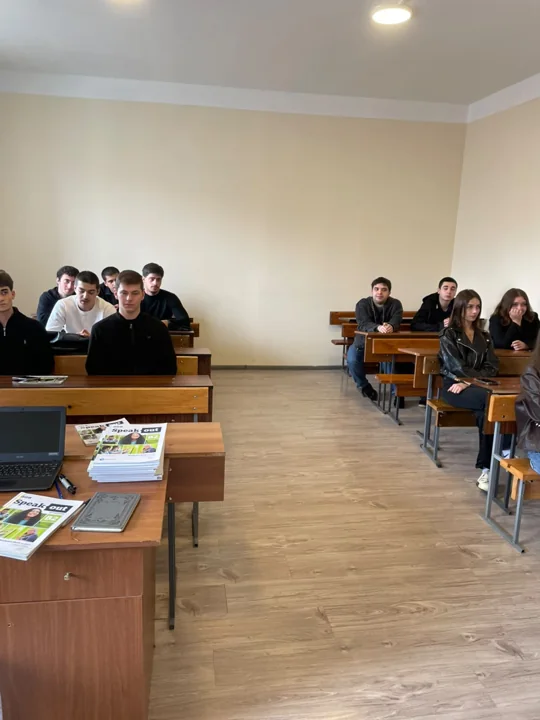
A meeting held on 8 October 2026 shows how the tutor system is used in practice. Tutors from the Faculty of Business, Law and Social Sciences met first-year economics students to explain the academic process and university environment. They discussed the credit-based higher education system, planning courses and accumulating credits. Midterm and final examinations, assessment procedures and study planning were also part of the session. Students were introduced to support services, winter and summer schools, and other educational activities. The meeting brought together practical information about academic requirements with an introduction to opportunities elsewhere in the university, helping new students understand how different parts of their studies fit together.
Sources: Tutors meeting with first-year economics students, October 2026 ↗
Erasmus information for new entrants
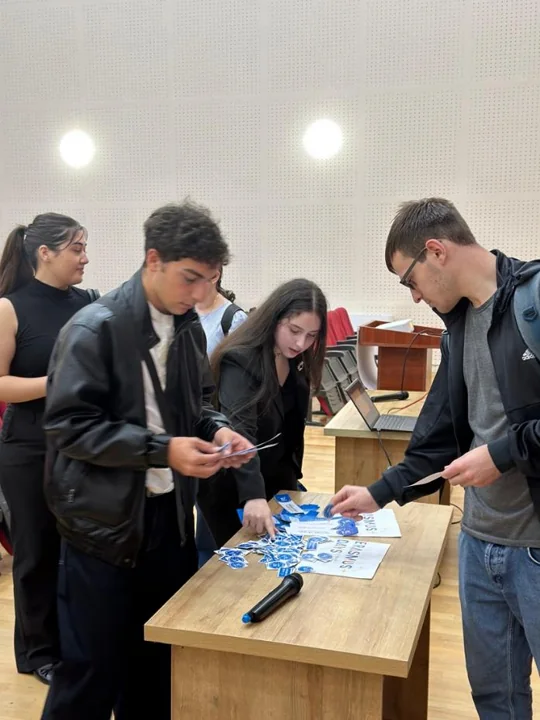
The university also participated in Erasmus Days 2026. In a report published on 19 October, it described information sessions organized by the Foreign Affairs and Development Office for first-year students. These meetings introduced the Erasmus+ programme and international mobility opportunities available through the university. Participants received information about exchange eligibility and international educational projects. The sessions were connected to the wider Erasmus Days celebration, whose 2026 theme emphasized learning and the development of skills for the future. Within the university, the event provided a setting where new students could ask about international study opportunities early in their academic careers and become familiar with the office responsible for coordinating them.
Sources: Erasmus Days 2026 ↗