Visa
About Agricultural University of Georgia
A university of agriculture, science, and technology
The Agricultural University of Georgia is a higher education and research institution in Tbilisi. Its academic scope extends from agronomy, forestry, and veterinary medicine to natural sciences, biotechnology, engineering, and business. Undergraduate, master’s, doctoral, and vocational education form parts of its provision. The university presents liberal and classical education as foundations for developing practical ability alongside creative and critical thinking.
Its mission identifies students as the direct beneficiaries of its work and society as a wider beneficiary through education and research. It emphasises quantitative reasoning, clear professional and academic communication, ethical judgement, and the ability to understand different social and intellectual environments. Georgian-language teaching is also an explicit part of the mission, including the development of Georgian as a language for scientific discussion and communication.
Sources: Institutional history and academic schools ↗ · Mission ↗
The Knowledge Fund and the university’s development
A major stage in the institution’s recent history began in 2011, when management was entrusted to the Knowledge Fund established by Kakha Bendukidze. Privatisation followed in 2012. The university’s account describes reforms involving new educational programmes, a stronger place for practical and laboratory courses, recruitment of professors and researchers, and substantial renewal of campus infrastructure and laboratory equipment.
The academic organisation reflects the breadth developed around this agricultural foundation. Agronomy and Landscape Management covers agronomy as well as landscape management, parks, and forestry. Natural Sciences and Biotechnology encompasses biology, chemistry, food technology, and viticulture and winemaking. Veterinary Medicine provides an integrated master’s route and a veterinarian training programme. Business and Engineering Technology add subjects including business administration, electronic and computer engineering, mechanical engineering, and construction engineering. Some postgraduate natural science programmes are offered jointly with Free University of Tbilisi.
A shared campus in Tbilisi
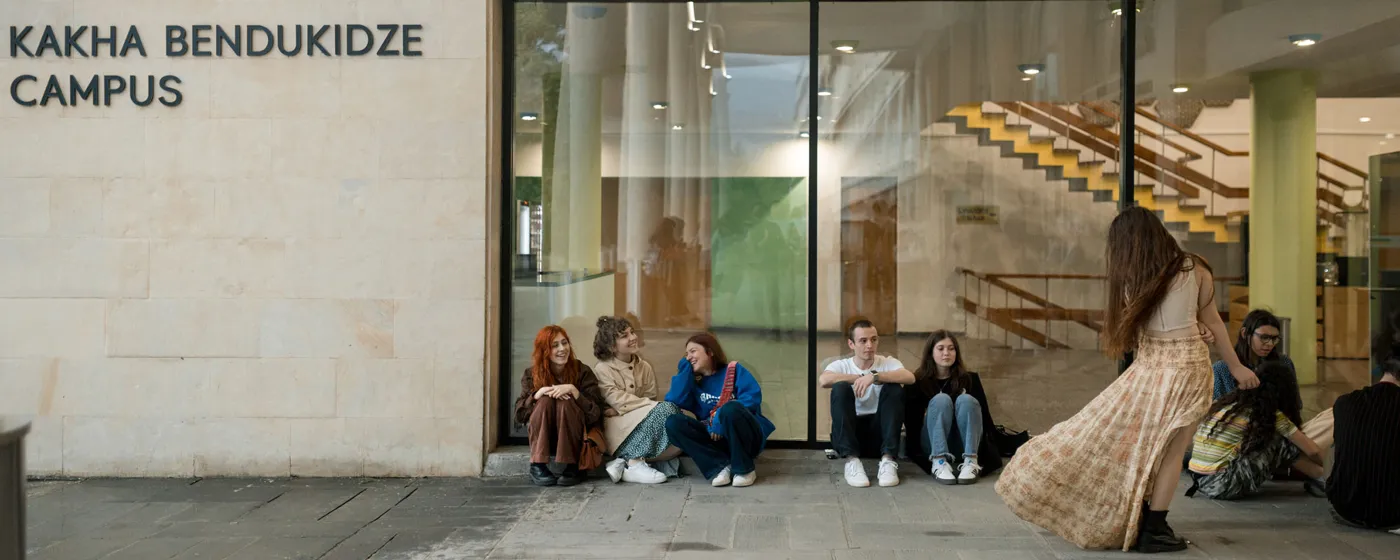
The university operates on the Kakha Bendukidze Campus at 240 Davit Aghmashenebeli Alley. This is a shared campus with Free University of Tbilisi. Its infrastructure includes lecture rooms, amphitheatres, conference halls, computer classrooms, laboratories, exhibition spaces, an examination centre, a library, and a museum. Recreation areas include courtyards, a dendrological park, sporting facilities, and a cafeteria.
The campus building complex has developed over several decades. Its first building began operating in 1967, followed by an ampelography building in 1970 and another building completed in the late 1970s. Architects Lado Alexi-Meskhishvili and Guram Gabashvili are associated with the complex. The museum brings together collections in subjects such as soils, mineralogy, dendrology, entomology, mycology, zoology, and animal pathology. It supports university teaching and introduces visiting school groups to natural sciences. A further part of the shared educational infrastructure is the Bazaleti Training Center near Lake Bazaleti. Operating since 2011, it provides teaching rooms, a conference hall, accommodation, dining facilities, sporting space, and outdoor recreation areas. The two universities use it for training, seasonal schools, and other educational activities.
Sources: Kakha Bendukidze Campus ↗

Practical learning and research facilities
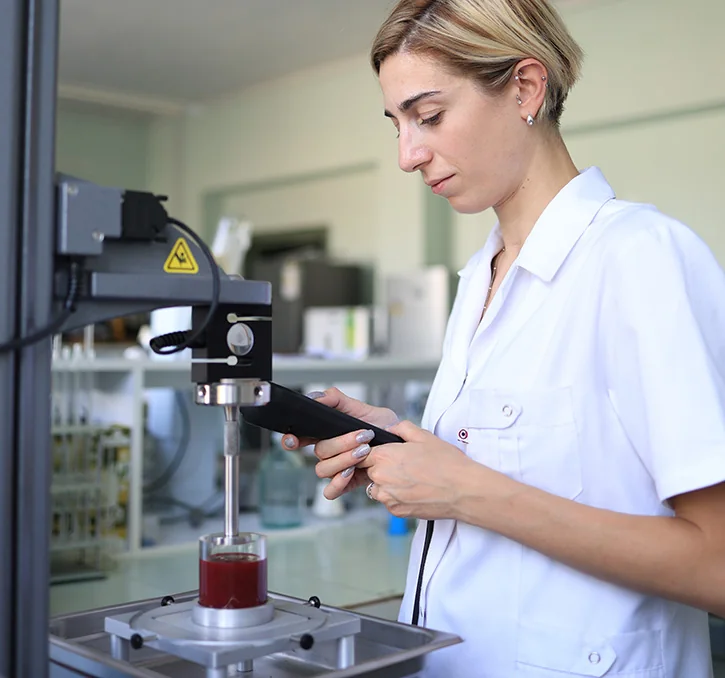
Laboratory teaching uses a learning-by-doing approach. The university describes students undertaking testing, analysis, and experiments individually, with their own workspaces for practical tasks. Teaching laboratories support agricultural and natural sciences, biotechnology, veterinary medicine, and engineering. This emphasis gives laboratory sessions an established place alongside classroom instruction.
The scientific laboratory network covers a wide range of agricultural and biological subjects. Published examples include plant biochemistry and biotechnology, agrochemistry and soil science, viticulture and winemaking, biocontrol, forestry, plant and animal genomics, food technology, and engineering polymers. Other laboratories are associated with entomology, sericulture, beekeeping, and cellular and molecular biology. These facilities connect the university’s research organisation with the scientific disciplines represented in its educational programmes.
Sources: Teaching and scientific laboratories ↗
Library support and agricultural analysis
The library supports teaching and scientific work through printed and electronic materials. Its collection includes textbooks, theses, scientific publications, and periodicals. It also provides introductions to resources such as Scopus, ScienceDirect, AGRIS, and open-access collections. Training covers library services, use of the electronic catalogue, and navigation of research databases; sessions can be organised individually, in groups, or online.
The Heinz Fehr Laboratory of Ecological Agriculture and Nature Conservation was established in 2006. Its work combines research, education, and services for farmers and other organisations. Published analytical services cover soil, organic fertilisers, and plant leaves. Soil investigations include properties such as acidity, texture, organic matter, salts, nutrients, and heavy metals. The laboratory uses analytical findings to prepare soil-fertility assessments and recommendations concerning cultivation, connecting university expertise with agricultural land management.
Sources: University library ↗ · Heinz Fehr Laboratory of Ecological Agriculture and Nature Conservation ↗
Specialist professional teaching
The Culinary Academy of Georgia contributes practical professional education in cooking, pastry, and restaurant management. Its cooking curriculum includes Georgian and international cuisine, desserts, food safety, chemistry, microbiology, wine tasting, and practical experience in food establishments. Students prepare dishes individually at dedicated workstations. Pastry education similarly combines dessert preparation with hygiene, food safety, calculation, and practical assessment. The restaurant management programme, developed with Free University of Tbilisi’s ESM business school, combines management and finance with culinary studies and food safety.
The campus also houses Veterinarium, the Agricultural University’s veterinary clinic. Alongside its animal-care services, it serves as a teaching setting for integrated master’s and certificate students in veterinary medicine. Practical training takes place in small groups under clinic staff who coordinate and supervise student activities. This arrangement adds an authentic professional setting to the university’s laboratory and classroom education in animal health.
Sources: Culinary Academy of Georgia ↗ · Veterinarium teaching clinic ↗