Visa
About AGSB University
From AGSB to the current AUS institution
The AGSB University directory entry concerns the business education institution in La Tour-de-Peilz, in the Swiss canton of Vaud, whose current website presents it as AUS and the American Institute of Applied Sciences in Switzerland. Its official history identifies the American Graduate School of Business, or AGSB, as the institution founded in 1991 by four teachers from the American College of Switzerland. The reference to that earlier college is part of the background to AGSB’s creation, rather than a claim that AGSB itself was founded in 1963.
The school’s timeline records the establishment of a permanent campus in La Tour-de-Peilz in 1992 and the inauguration of expanded campus premises in 2016. In 2019, it adopted the AUS Business School identity. The history page’s account of successive names connects the historical AGSB directory label with the current institution. This continuity provides the context for describing its present business-focused education and student services.
Sources: Institutional history ↗
Purpose and educational approach
The institution’s mission emphasises international business education and the development of knowledge, skills and tools that can be applied within organisations. Its stated approach is practice-oriented, connecting scientific methods, research and development with business study. Its vision concerns developing a private higher education institution with an international community of students and faculty.
The values published by AUS are respect, excellence, accountability and leadership. Respect is connected with professional communication and conduct, while accountability is associated with integrity and ethical standards. Its account of leadership focuses on developing students’ knowledge and abilities. Together, these principles describe the educational culture the institution seeks to cultivate. They complement its emphasis on applying business knowledge to organisational questions, rather than identifying teaching solely with the transmission of theory.
Sources: About AUS: mission and values ↗
Business fields across levels of study
The programme overview presents business education at bachelor’s, master’s and doctoral levels, alongside a professional diploma route. Bachelor’s themes include aviation business and airport operations, business analytics and artificial intelligence applications, finance and financial technology, international business and supply chains, entrepreneurship and family business, and hospitality management.
Master’s themes extend those areas towards strategy, leadership and organisational change. The published list includes aviation strategy and sustainability, artificial intelligence strategy and digital transformation, investment and financial strategy, global strategy and risk, and innovation and family enterprise leadership. The Doctorate in Business Administration is described in terms of applied investigation into organisational challenges and the production of knowledge relevant to management practice. Across the overview, projects and real organisational problems are presented as important elements of the learning method. The academic scope therefore combines general management with specialisation in particular sectors and contemporary business technologies.
Sources: Programmes overview ↗
Campus facilities and the Swiss Riviera setting
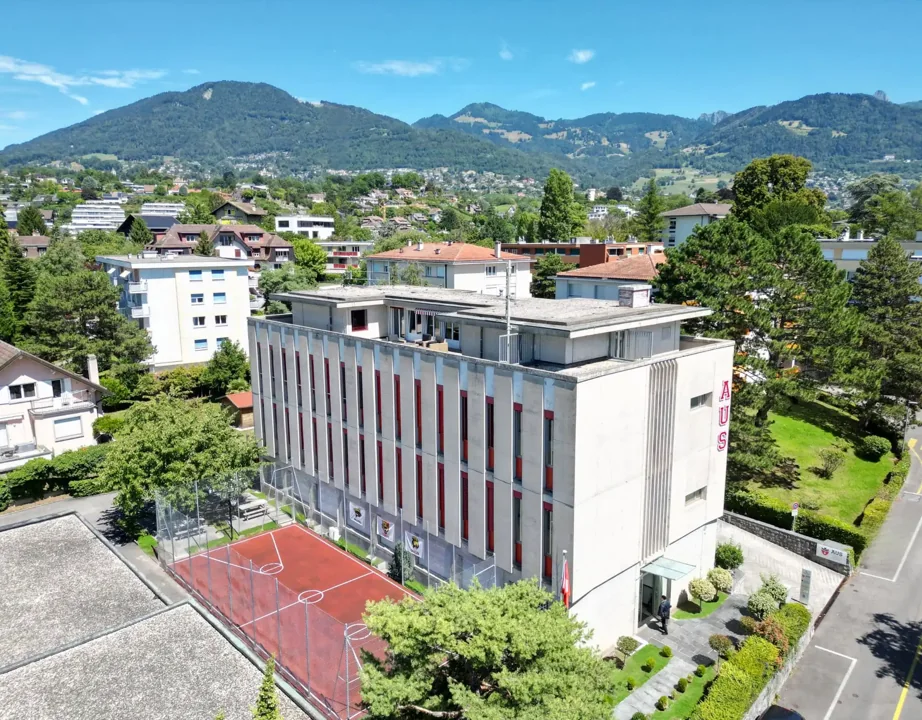
The institution is located at Chemin du Levant 5 in La Tour-de-Peilz, near Lake Geneva. Its campus description identifies teaching rooms, conference rooms, shared workspaces and a cafeteria. The classrooms support discussion and presentations, while the meeting and collaborative spaces provide settings for group work and preparation outside scheduled lessons.
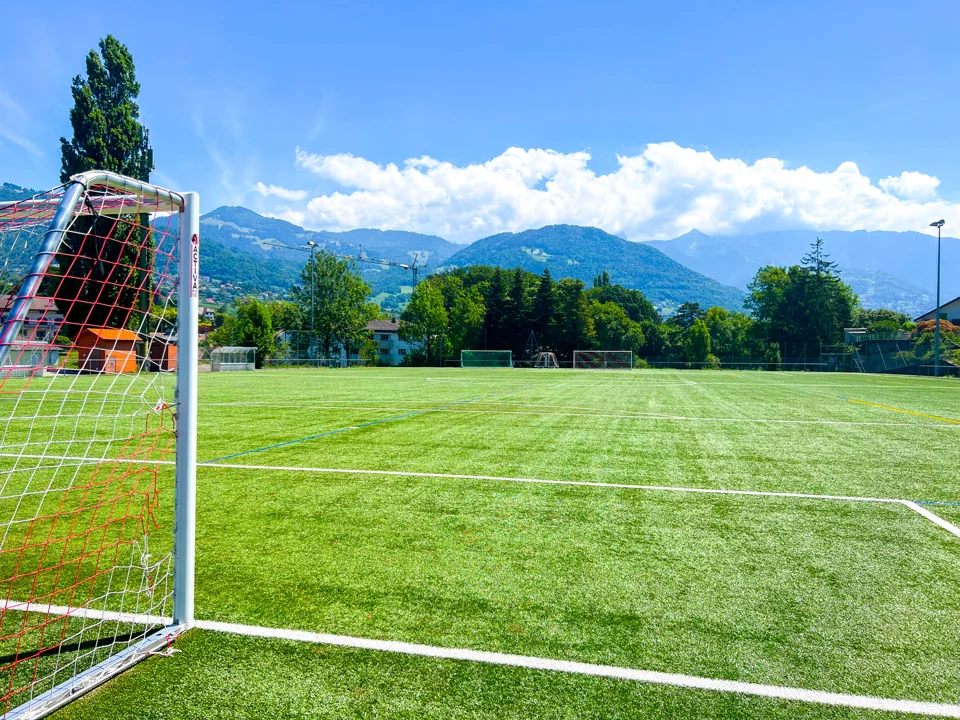
The campus facilities page also describes access to outdoor sports opportunities and nearby recreation infrastructure, identifying Stade de Bel Air in La Tour-de-Peilz. The campus life account connects the location with regional visits, cultural activities and social events. This situates the school within the surrounding Swiss Riviera community as well as within its own teaching building. The facilities described support a mix of individual study, collaboration, informal contact and recreation.
Sources: Campus facilities ↗ · Campus life ↗
Student participation and academic guidance
The student activities page describes clubs organised around business, culture, creativity, technology and shared interests. Sports, cultural celebrations and regional experiences provide other ways to participate beyond coursework. Welcome activities introduce new students to services, classmates and the practical organisation of study. Opportunities are described as varying with the intake, season and students’ interests. The published activity framework also includes peer connections across programmes and engagement with the local community, giving students ways to share traditions, propose ideas and contribute to the social life of the school.
The Academics Office supports curriculum planning, course registration, academic pathways and exchanges. Its remit also includes guidance concerning deadlines, time management, changes to classes and academic progress. Students can discuss educational and professional goals and the steps involved in working towards them. This combines practical academic administration with support for personal development. Campus engagement is another part of the service, helping students connect with activities within the institution and the surrounding community.
Career preparation and professional contact
AUS describes career services as a combination of workshops and individual coaching. The work includes identifying goals, understanding potential pathways, preparing applications and practising interviews. Support also covers CVs, cover letters, professional presentation and skills such as communication, teamwork, time management and confidence with technology.
The institution’s account identifies company visits, guest speakers, alumni events and applied projects as ways to connect academic learning with professional settings. Internships are encouraged where they align with a student’s programme and objectives, with career services assisting preparation and access to opportunities. These activities create opportunities to examine how organisations operate and relate classroom work to practical experience. The emphasis is on preparation, contact and the development of skills through study and participation.