Visa

About Agenla Academy
A bilingual institute in Yaoundé
Agenla Academy is a private bilingual university institute in Yaoundé, Cameroon. Its institutional profile describes a subregional role extending towards Central and West Africa. The main campus is identified as Nsa Zomo, between Biteng and Nkoabang, while another location is listed in Bastos. The academy’s published identity is that of an Institut Universitaire Sous-Régional Bilingue, rather than a campus of a single overseas university.
Its profile cites a September 2013 ministerial creation order. The educational portfolio spans engineering, agriculture and fisheries, veterinary subjects, health sciences, business and management, audiovisual studies and extractive industries. Its mission emphasises professional education, practical capability and close relationships with the sectors connected to its teaching.
The academy describes academic supervision arrangements involving Cameroonian public universities. These arrangements depend on the programme and level of study. Its educational model therefore combines teaching within the institute with programme-specific academic relationships, alongside its own administrative structure.
Sources: Institutional profile ↗

Engineering and technical education
The engineering school presents an education linking scientific and technical study with practical work and contact with industry. Its published pathways include engineering, professional master’s and professional bachelor’s study, as well as higher technical qualifications. Entry routes differ according to the level, with secondary-school and prior higher-education qualifications serving different purposes.
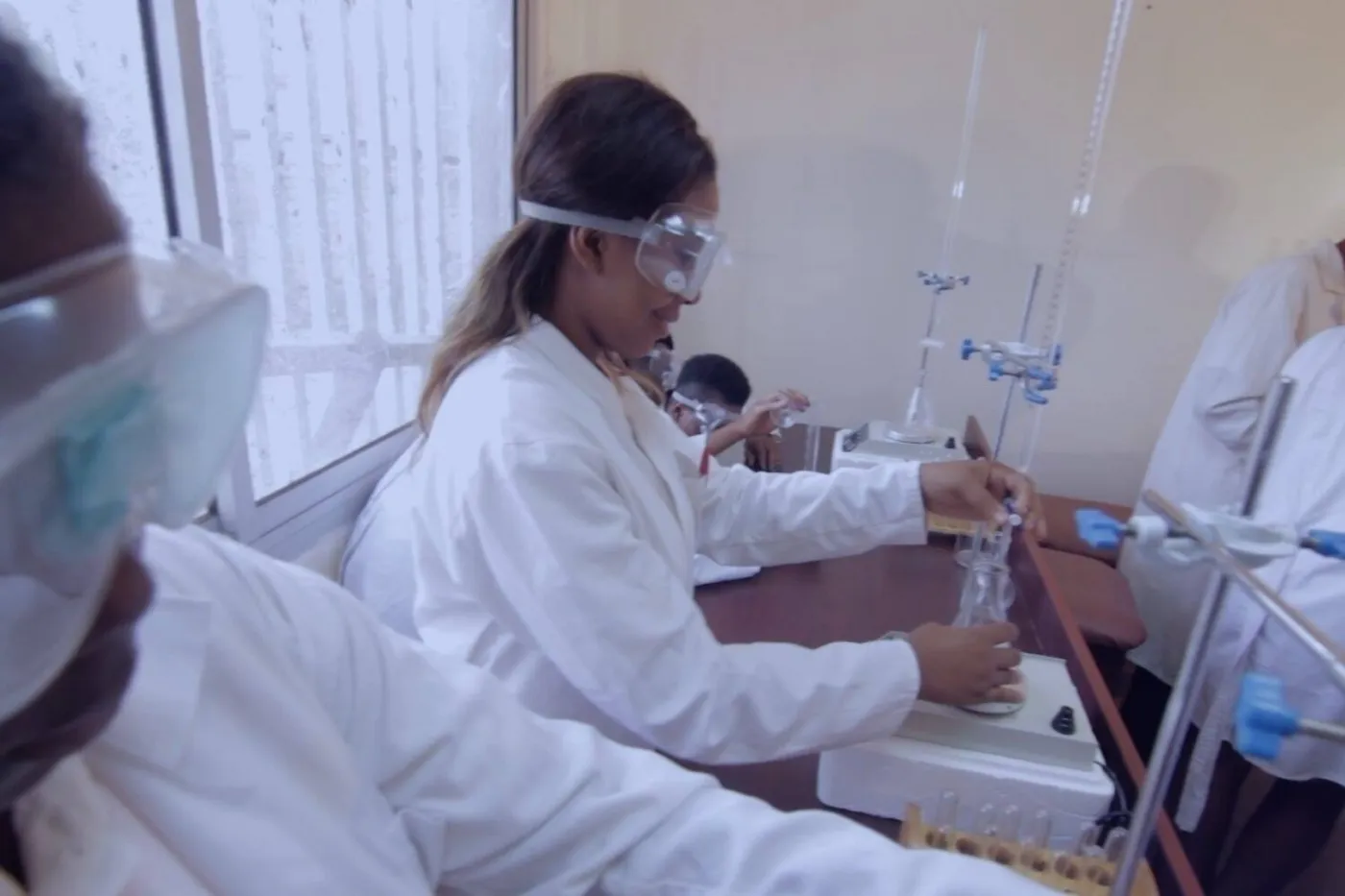
The school identifies interests across electrical and renewable-energy systems, automation, mechanical and civil engineering, computing, networks and telecommunications. Its description places laboratory experience, research activity and practical projects alongside classroom learning. Industry connections are presented as a way to relate academic work to professional settings.
Agenla also emphasises the role of a diverse student community within technical education. Its engineering account connects innovation and collaboration with the ability to approach problems from different perspectives. This practical orientation is consistent with the academy’s wider emphasis on professionally focused learning.
Sources: Engineering school ↗
Agriculture, aquatic systems and animal health
The school covering agronomy, fisheries and veterinary subjects brings together land-based agriculture, aquatic ecosystems and animal health. Its educational description identifies practical learning in agricultural environments, veterinary settings and fish-production facilities. Sustainable agriculture, animal nutrition and aquatic ecology are among the areas it highlights.
The school also describes field experience, research opportunities and engagement with industry partners. Its subject range relates crop production, livestock, fisheries and food systems to the management of natural and biological resources. Community engagement is presented through awareness activities, volunteering and research addressing local questions. This places agricultural and veterinary education within a wider concern for production, environmental conditions and the communities connected to them.
Business, management and communication
The social sciences, commerce and management school focuses on business administration and communication. Its teaching model combines academic staff with professionals who have operational or consultancy responsibilities in organisations. The school describes computer facilities and management software as part of its learning environment.
Its published study pathway connects higher technical education with professional bachelor’s and master’s study. Work placements are an important part of its description, with faculty supervision continuing through the preparation and presentation of placement reports. Students can also engage with the academy’s application enterprises, bringing academic learning into contact with organisational activity.
The school emphasises management qualities and an entrepreneurial outlook alongside technical knowledge. It encourages students to consider enterprise creation, supported by the academy’s incubator. These elements connect business education with practical experience and the development of ideas for new activities.
Sources: Social sciences, commerce and management ↗

Health-sciences learning
Agenla’s health-sciences school identifies biomedical sciences, medical and health-related sciences, and human nutrition among its areas of study. Its published teaching approach combines academic instruction, laboratory work and practical experience in health organisations. The school describes cooperation with institutions in Yaoundé to provide settings for internships and clinical learning.
The educational account includes supervision by a permanent teacher during placements and the preparation of an internship report. It also connects health education with management and entrepreneurship, reflecting the academy’s wider professional orientation. The school’s programme descriptions distinguish several qualification pathways and academic-supervision arrangements. The emphasis is on developing practical knowledge through study and supervised experience within the relevant field.
Sources: Health sciences school ↗
Entrepreneurship and preparation for study
The academy’s incubator offers support for developing business ideas, refining projects and moving towards enterprise creation. Its programme description sets out three broad phases: pre-incubation, incubation and acceleration. Early work concerns developing an idea and a minimum viable product; later stages concern establishing and stabilising the business model and considering further growth.
Mentoring, networking, pitch activities and collaboration are described as part of this support. The incubator is intended to connect students’ specialist knowledge with the practical work of creating and managing an enterprise. It also provides a setting in which ideas can be discussed, tested and improved.
The incubator’s description also distinguishes the needs of early-stage projects from those of businesses preparing to expand. This staged approach gives entrepreneurship a place within the educational model, connecting experimentation and feedback with the gradual development of a workable organisation.
Prospective students can obtain an application form on campus or download it online. The application-document page directs applicants towards the academy’s admissions services for information about required records and submission. These arrangements provide a practical route into the institute’s different professional study pathways.
Sources: Entrepreneurship incubator ↗ · Application documents ↗