Visa
About Advanced Barber College & Hair Design
A barber college in Weslaco
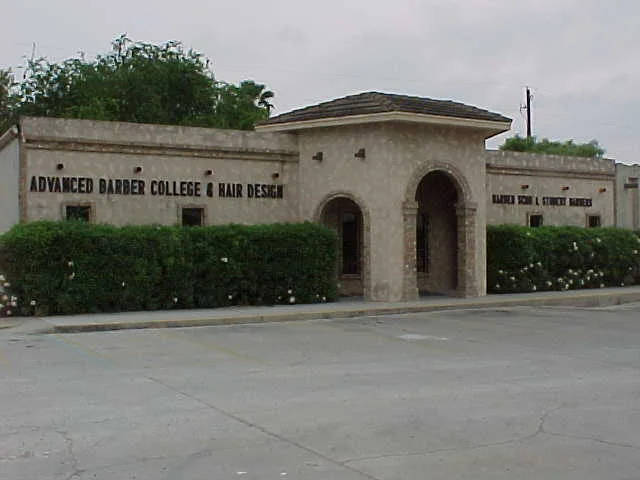
Advanced Barber College & Hair Design is a specialist vocational school in Weslaco, Texas, at 2818 South International Boulevard. Its institutional history dates its founding to April 1988 and the opening of its doors to 5 July that year. The school developed from a barbering business partnership between Angie L. Moreno and Janie Garza Reyes. Its educational focus remains the barber and beauty industry, combining knowledge of the trade with opportunities to practise technical skills in an environment serving members of the public.
The college's mission places professional training at the centre of its work. Its published approach combines textbook study, practical experience with clients and opportunities to attend trade shows. The school describes individualised instruction and small, focused groups as ways to address different educational needs. Its philosophy also emphasises familiarity with industry equipment and supervised public-facing work. This makes the institution's identity closely connected with the everyday craft, equipment and service responsibilities of barbering rather than a broad academic degree curriculum.
Sources: About, mission and school history ↗ · Student catalogue, 24 June 2022 ↗ · Contact and student information submission ↗
The current training format
The current courses page describes a 1,000-hour barber programme, with an approximate duration of nine months for students attending at least 30 hours per week. The admissions page confirms that teaching takes place in person at a physical school. Training is conducted on a continuing basis, allowing the institution to organise vocational instruction around accumulated hours of study and practice. The programme is presented as preparation for barbering examinations and professional work; completing the school programme and obtaining an occupational licence are separate stages.
The courses page also explains the school's present emphasis on the barber programme rather than taking its manicurist course alone. Earlier publications discuss both courses in greater detail, reflecting the school's historical range of offerings. For the barber programme, the current fee schedule separates tuition, tools, books, registration and required clothing or identification items. This breakdown shows that preparation involves a practical kit and study materials as well as classroom attendance. Applicants can discuss the current programme structure and required materials with the college during their interview.
Sources: Current barber course information ↗ · Admissions and transfer policy ↗
Subjects and practical learning
The school's catalogue dated June 2022 provides a detailed picture of the subjects around which its training has been organised. Its barber curriculum includes anatomy and physiology, hair and skin, sanitation, professional ethics, barber implements and the scientific foundations of the trade. It also lists barber laws, salesmanship and shop management. These topics place practical technique alongside the cleanliness, communication and business responsibilities involved in working with customers. The catalogue is a historical description of the programme, while the current courses page supplies the more recent programme overview.
Practical subjects in that catalogue include haircutting, shaving, styling, shampooing, rinsing, hair colouring and work with beards and moustaches. The institutional mission describes practical work with clients as an important counterpart to textbook learning. Its 2022 facilities description identifies a clinic floor with barber stations, shampoo facilities, a practical and theory classroom, a student library and a larger presentation classroom. It also describes offices, a lounge and other support areas. Together, these spaces illustrate the combination of demonstration, individual practice and customer service used in the school's training model.
Sources: About, mission and school history ↗ · Student catalogue, 24 June 2022 ↗
The student clinic and its services
The college's public clinic menu gives a concrete view of the kinds of services associated with its learning environment. Hair services include tapered cuts, fades, children's cuts, flat tops, hair design and cut-and-blow-dry appointments. Beard and moustache services sit alongside shampooing, styling, braids and updos. The menu also lists colour retouching, highlights, perms and selected facial or eyebrow services. The school describes both students and instructors as participating in its service environment, connecting the clinic with the wider educational work of the institution.
The variety of services introduces different forms of client interaction and presentation. A haircut, a shampoo and set, and a colour appointment involve different processes and expectations, while each belongs to the same public-facing setting. The college's emphasis on supervised work with the public gives this clinic a role within its practical educational philosophy. Its published menu is therefore useful for understanding the scope of the school's service environment, beyond the general label of barber training.
Sources: Student clinic services ↗
Admissions, transfers and access
The admissions process includes a personal interview with school officials and an enrolment application. The school requests supporting educational records and other documentation before classes begin. Its transfer policy describes an administrative review of previous schooling and the hours still needed, rather than treating a transfer as an automatic continuation without assessment. The contact page also provides a route for submitting the downloadable student information form. Prospective students can visit during normal business hours or contact the administration to discuss their circumstances and the training they wish to undertake.
The published disability policy addresses access to programmes, activities and services. It describes reasonable accommodations, academic adjustments, auxiliary aids and confidentiality of disability information. Students are asked to inform the college when an accommodation is needed and provide appropriate supporting documentation. The institution states that it will work with students to identify feasible arrangements while maintaining essential programme requirements. This policy establishes a process for discussing individual access needs alongside the practical and academic expectations of vocational training.
Sources: Admissions and transfer policy ↗ · Students with disabilities policy ↗ · Contact and student information submission ↗