Visa
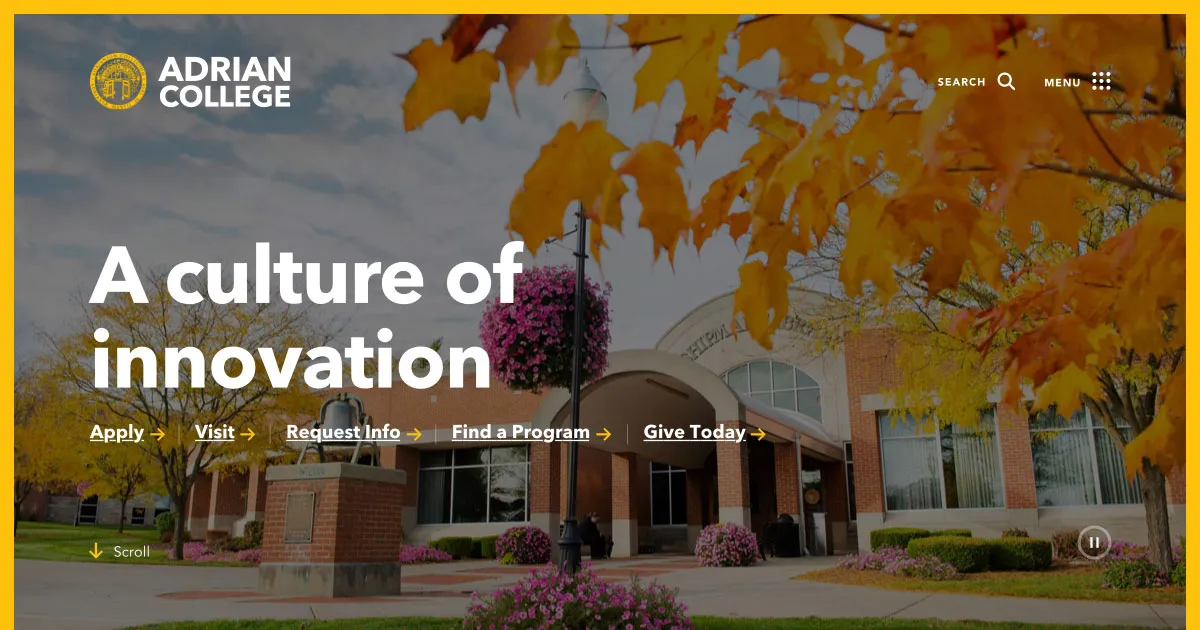

About Adrian College
A liberal arts college in Michigan
Adrian College is a liberal arts institution in Adrian, Michigan, with an educational identity rooted in the United Methodist tradition. It offers undergraduate and graduate study and describes its mission in terms of active learning, respect for human dignity and participation in a more socially just society. Its campus address on South Madison Street places the college within the city whose residents helped establish it. The institution combines a long historical connection with its local community with academic programmes that extend into professional, scientific, creative and interdisciplinary fields.
The college's current academic catalogue traces its predecessor to a Wesleyan Methodist theological institute established at Leoni, Michigan, in 1845. That institute joined with Leoni Seminary in 1855 to form Michigan Union College. Adrian College itself was chartered by the Michigan legislature as a degree-granting institution on 28 March 1859, with Asa Mahan as its first president. Mahan had previously served as Oberlin College's first president. The catalogue explains that supporters of the earlier institution joined the new college in Adrian, carrying its educational work into a new location. A major building programme in the mid-twentieth century subsequently helped shape the modern campus.
Sources: About Adrian College ↗ · 2026–2027 catalogue: history of the college ↗
Ribbons of Excellence
One of Adrian's distinctive traditions links its graduation history with its educational priorities. In 1885, graduating seniors presented a shepherd's-crook cane to the junior class officers. Successive graduating classes added ribbons carrying their graduates' names. In 2007 the academic community adapted that tradition into the Ribbons of Excellence, a set of standards supporting the college's mission. Their themes encompass responsibility toward humanity and the world, lifelong learning, critical thinking, connections across disciplines and the development of creativity.
The Ribbons of Excellence Conference gives these themes a practical setting. Students from different disciplines can present research and creative work developed with a faculty mentor and extending beyond ordinary classroom assignments. Formats include oral presentations, posters and creative demonstrations such as exhibits, recitals, films and other visual work. The conference brings students, faculty and the surrounding community together to discuss student scholarship. Its combination of scientific investigation and creative expression reflects the college's intention to treat learning as something that crosses departmental boundaries.
Sources: Ribbons of Excellence ↗
Academic support and career exploration
Academic support is coordinated through several offices, including the Jane McCloskey Office of Academic Services. The 2026–2027 catalogue describes trained tutors for most courses, with individual or small-group arrangements, alongside consultations on time management, reading comprehension and examination preparation. Accessibility services coordinate adjustments such as test proctoring, adaptive software, readers and mobility support. The federally funded TRIO Excel programme provides additional academic, cultural and educational support for students who meet its eligibility conditions. These services sit alongside the registrar and graduate studies offices within the wider academic affairs structure.
The Institute for Career Planning offers another set of resources. Students can explore their interests through career assessments and individual coaching, obtain feedback on résumés and cover letters, prepare for interviews and seek assistance with internships or graduate school planning. Handshake provides access to opportunities and career information. The catalogue also describes college-approved internships in which faculty sponsors help students connect academic ideas with experience in a workplace. These arrangements make career exploration part of the educational process while allowing students to test how their interests relate to different professional settings.
Combining campus learning with online collaboration
Innovation Adrian is the college's framework for a selection of career-oriented programmes combining campus study with some online courses. The college identifies Rize Education as the technology platform supporting collaboration among participating private colleges. Its model retains the majority of coursework in person while using online provision for selected elements. This approach allows a residential liberal arts institution to offer specialised areas alongside its established campus experience.
The published programme descriptions cover subjects including computer science, cybersecurity management, business analytics, game development, public administration, supply chain management and web development. Artificial intelligence offerings address several different interests: applied AI and data science emphasises programming and machine learning, while AI and ethical leadership addresses governance, bias, privacy and responsible decisions. Business analytics introduces tools such as SQL, Tableau and Excel for analysing information and presenting findings. These examples show how the programme portfolio connects technical methods with business questions and ethical considerations.
Sources: Innovation Adrian ↗
Campus places and student participation
Student organisations provide settings for academic interests, creative work, service and social life. The official directory includes Biology Club, Chemistry Club, Computer Science Club, Art and Design Club, Aspiring Educators of Michigan and Women in STEM. Media opportunities include Adrian College Television, the College World newspaper and WVAC Bulldog Radio. Other groups include the Multi-Cultural Student Union, Student Government Association, faith communities and fraternities and sororities. The Financial Committee gives students a role in allocating resources for organisations and events, adding a practical form of participation to campus life.
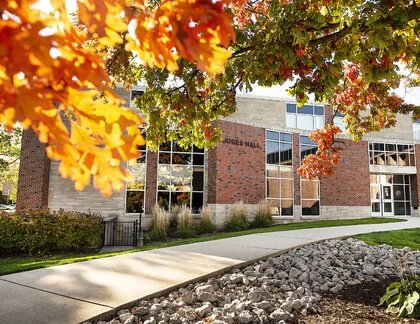
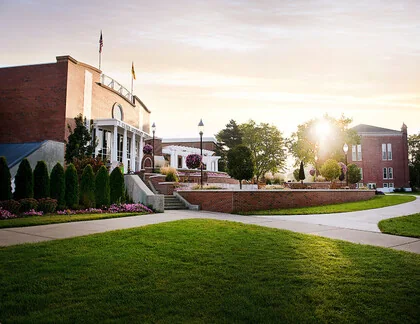
The physical environment includes academic buildings, residence halls, student facilities and athletic spaces, with the Bell Tower among its campus landmarks. Beyond the main campus, the college identifies a boathouse at Devil's Lake and Walden West near Tipton. Walden West is described as a protected wetland property containing rare fen habitats, a pond, a lake and a glacial moraine, used as a living nature classroom. Together, these settings connect the institution's daily residential experience with opportunities for learning and activity beyond conventional classrooms.
Sources: Clubs and organisations ↗ · Campus and facilities ↗