Visa


About Ackerman Institute for the Family
A New York institute for professional learning
The Ackerman Institute for the Family is a nonprofit institution in New York City combining professional training, clinical services and the development of ideas in family therapy. Founded in 1960, it serves mental health professionals and other practitioners through courses, supervised learning, workshops and partnerships. Its current address is 936 Broadway in Manhattan’s Flatiron District.
The institute’s mission links service, training and innovation. Education takes place at the institute, in community settings and internationally, while its projects investigate ways of organising clinical work and training. Equity, cultural context and the relationships between individuals, families and their wider environments are recurring elements of its institutional approach. These activities give Ackerman a specialist professional education role centred on relational and systemic practice.
Sources: About the institute ↗
Origins and the development of a training institution
Nathan W. Ackerman founded the institute in 1960, with support from families who wanted to expand his educational work. His experimentation with seeing family members together was accompanied by teaching, writing and films demonstrating clinical practice. Audiovisual documentation consequently became part of the institute’s training history.
In 1962, the institute helped establish the journal Family Process. Under Donald Bloch, who became director in 1972, clinical training expanded and a substantial family therapy clinic developed within the institution. Subsequent projects focused on particular communities and questions, including schools, foster care, health and family relationships. The institute later organised several projects into thematic centres. After more than five decades on the Upper East Side, it moved to its present Flatiron premises during Lois Braverman’s presidency.
Sources: History ↗

The Ackerman Core and different training routes
The current Ackerman Core offers several routes through relational, couples and family therapy training. Seminar courses provide an online, fourteen-week format for developing conceptual frameworks. Live clinical training involves observing sessions, discussing clinical material and receiving supervision. A clinical fellowship provides a further setting for advanced study and professional development.
The Core’s educational description emphasises small cohorts, feedback and a multicultural relational framework. It connects the examination of actual clinical material with reflection and discussion among trainees and faculty. Its intended audiences include emerging professionals, licensed clinicians and practitioners seeking to extend existing experience. The separate routes allow the institute to distinguish foundational enquiry, supervised engagement with cases and more advanced professional learning within a common educational approach.
Sources: Ackerman Core ↗
Graduate practicum and supervision
Ackerman also offers a practicum for advanced graduate students enrolled in marriage and family therapy programmes. The published description expects foundational clinical coursework, including ethics, and interest in systemic and context-informed work. The practicum combines professional development with attention to cultural context, identity, power and accountability.
Learning may involve direct clinical work, individual or group supervision, recorded or live material and case-based discussion. The institute coordinates with the trainee’s university or programme on affiliation agreements, evaluations and academic documentation. The structure of a placement depends on the student’s preparation, course requirements and available supervision. This relationship between the institute and academic partners connects specialist practical learning with the student’s wider graduate education.
Sources: Practicum ↗
Workshops and learning with organisations
Workshops provide another form of professional education, with live online, in-person and on-demand formats. They sit alongside short courses and longer programmes, giving participants different ways to engage with particular subjects. The institute’s workshop listings identify individual topics, presenters and the structure of each learning event.
Community training is designed with agencies, clinics, schools, hospitals and other organisations. Options include single sessions, multi-session series and programmes developed jointly with organisational leaders. The published format uses discussion, video demonstrations and case material. Sample educational topics include cultural humility, family engagement in foster care, staff resilience, immigration and intergenerational experience. The emphasis is on adapting the training format and subject matter to the context in which participating professionals work.
Sources: Workshops ↗ · Community training ↗
International partnerships and exchange
The institute’s international programme brings family therapy theory and practice into partnerships with organisations abroad. Its documented history includes a nine-year collaboration with the Yang Methodist Memorial Social Service Agency in Hong Kong, a five-year programme with the Association of Counselors in Japan, and work with the Shinui Institute in Israel.
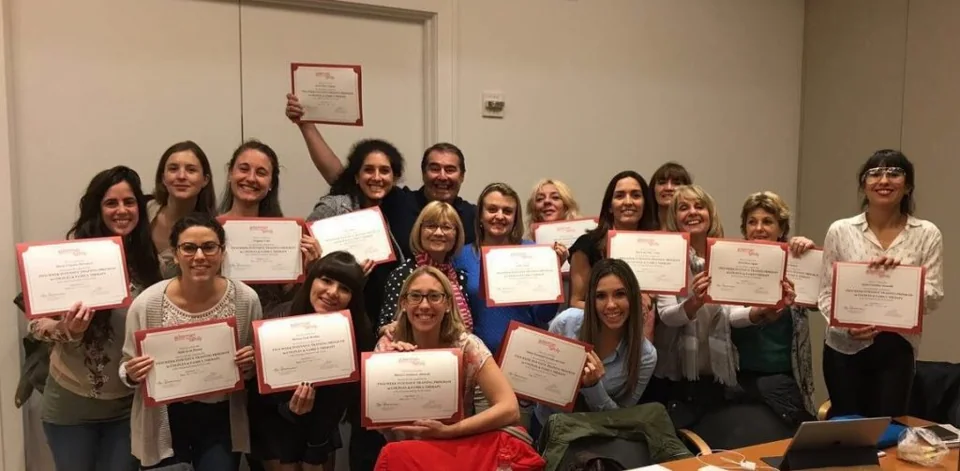
A longstanding partnership with Fundación AIGLÉ has involved training in New York and Buenos Aires, with participants from several Latin American countries. Ackerman faculty have also contributed to conferences and clinical presentations in Argentina, Chile and Mexico. These activities connect teaching in New York with exchange across different professional and cultural settings, allowing the institute’s educational work to extend through partner organisations rather than through a conventional overseas campus system.
Sources: International training ↗
Projects, centres and the circulation of ideas
Ackerman’s Projects and Centers division organises specialist initiatives around particular communities and areas of enquiry. Its published list includes the Center for the Developing Child and Family, the Foster Care and Adoption Project, the Gender and Family Project, the Latino Youth and Family Immigration Project, Money and Family Life, and work concerning serious mental illness and families.
The division brings training together with other institute activities, including workshops and community engagement. Its page also links to faculty publications, showing how ideas developed through specialist work circulate beyond individual training groups. The distinction between current and past initiatives records changes in the institute’s focus over time while maintaining its connection between professional learning, reflective practice and the development of relational approaches.
Sources: Projects and centres ↗