Visa
About Academy of Vocal Arts
A Philadelphia school for opera singers
The Academy of Vocal Arts, commonly known as AVA, is a specialist institution for the professional preparation of opera singers in Philadelphia, Pennsylvania. Its history begins in 1933, when Helen Corning Warden, encouraged by voice teacher Edgar Milton Cooke, worked with friends to establish a school offering tuition-free training to talented singers. The project emerged during the Great Depression, when the length and cost of operatic preparation placed significant barriers in the way of aspiring performers.
That founding purpose remains central to the academy’s identity. Its resident artists pursue an intensive four-year programme centred on performance and the detailed study of vocal repertoire. The institution’s educational model brings together singers, voice teachers, coaches, conductors and creative artists, with preparation for professional singing as its principal aim. Its home is at 1920 Spruce Street in Philadelphia.
Sources: Academy history ↗
Professional training and the Artist Diploma
AVA describes its goal as developing independent musical and dramatic artists who understand opera and voice and are prepared in foreign languages. Opera, art song and oratorio performances give resident artists opportunities to study substantial works with faculty guidance and present them to the public. The assignment of roles is part of this educational process, with ability and diligence considered alongside the needs of the overall programme.
The academy is a non-degree-granting institution and awards an Artist Diploma. Its programme page identifies accreditation by the National Association of Schools of Music in that non-degree capacity. The full course is directed towards singing careers rather than a conventional academic degree or teacher-preparation qualification. Training is measured in clock hours, and AVA explains that its coursework does not accumulate transferable college credit hours. This distinguishes its intensive conservatory-style preparation from a credit-based university programme.
Sources: About the programme ↗
Voice, repertoire and stage studies
Voice instruction includes a weekly lesson, or its equivalent, with a singer’s principal teacher. Conductors and coaches work individually and in ensembles on operatic roles, arias, songs and oratorio. Coaching addresses pitch, rhythm, language, musical style, harmony and expression. Language provision covers French, German and Italian, alongside Spanish and Russian diction and repertoire work. English-language support is available for international resident artists who need it for coursework and performance-related communication. The first-year French, German and Italian courses introduce pronunciation, vocabulary and grammar; subsequent study develops more sophisticated language use. Translation and stage diction connect language learning directly with the material singers perform.
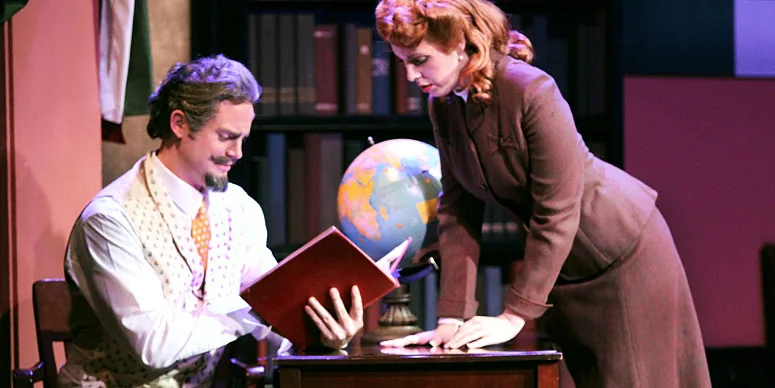
Performance studies include acting, movement and dance, and stage combat. Acting connects the interpretation of text and music with communication, while movement classes explore character, emotion and dance styles found in operatic repertoire. Related studies address opera history, notable singers and oratorio performance. Professional development seminars bring singers into contact with artists and managers. The course descriptions also include lectures about the professional voice and opportunities to attend performances by Philadelphia’s musical organizations, linking classroom preparation with a wider performing-arts environment.
Sources: Course descriptions ↗
Assessment through study and performance
The Artist Diploma requirements organize training into vocal studies, performance studies and related subjects. The published minimums include voice lessons, coaching, languages, performance classes, movement and dance, stage combat and opera performance. Other areas include opera history, the history of singers, oratorio, professional development and voice science. The academy uses clock hours to document this work.
An entrance assessment considers piano, solfège, theory and harmony, music history, opera and important singers. Faculty use the results to identify areas for further development. During study, resident artists receive continuing feedback on musical accuracy, language, interpretation, communication and vocal technique. Semiannual reviews consider progress, role assignments and career questions; broader evaluations take place at the end of the school year. Graduating artists prepare a full-length recital spanning major periods and styles of vocal literature, with excerpts selected for a final public graduation performance.
The Spruce Street home and theatre
The academy occupies a historically certified building on the Philadelphia Register of Historic Places. Its institutional history dates the French Second Empire-style house to approximately 1868–69 and connects it with the development of the Rittenhouse Square neighbourhood. The interior includes carved woodwork, leaded glass and decorative architectural features associated with successive alterations to the house.
The former dining room retains elaborate mahogany carving and water-lily glass panels authenticated as work of the Frank Furness studio. A music room added during alterations in 1902–03 became the academy’s theatre. Its decorative features include reliefs inspired by A Midsummer Night’s Dream, a mosaic fireplace, wooden beams and paintings by Ellen Day Hale and Gabrielle de Veaux Clements. Theatre renovations in 1982–83 created a professional chamber performance space named for founder Helen Corning Warden. Further restoration work in 1996 addressed the entrance hall, offices and Furness Lounge.
Sources: Our home ↗

Introducing young audiences to opera
The Rebecca Carr Opera Outreach Program connects AVA’s performance activity with middle and high school education. Students prepare through comprehensive study guides before attending a live performance of the opera they have studied. Afterward, question-and-answer sessions give them an opportunity to speak with the performers. The programme brings musical preparation, theatrical experience and direct discussion together, extending the academy’s educational activity from the training of singers to the development of future opera audiences.