Visa
About Academy of Public Administration under the President of the Kyrgyz Republic
Public administration in Bishkek
The Academy of Public Administration under the President of the Kyrgyz Republic is a state educational institution in Bishkek whose work centres on government and municipal administration. Its institutional account dates its establishment to 1994 and identifies the President of the Kyrgyz Republic as its founder. In 2022 the academy received the name of Zhusup Abdrakhmanov. Its present identity combines the preparation of public servants with research, analysis and expert support for public administration.
The academy describes its responsibilities as extending beyond academic instruction. Continuing professional development, applied investigation, innovation and international cooperation form parts of its mission. Its stated educational priorities connect leadership with sustainable development and national interests. This combination gives the institution a particular focus: developing people who can work with the responsibilities, decisions and organizational problems of public service.
Degree programmes and applied projects
The published programme list includes bachelor’s study in state and municipal administration, economics, management and jurisprudence. Economics profiles encompass accounting, analysis and audit; economics and business management; and public finance and financial security. The management profile concerns project management, while the law profile addresses legal work in public service. These subjects bring administrative study together with the financial, organizational and legal functions encountered in government.
Master’s provision includes state and municipal administration with women’s leadership, a two-year programme, and a one-year Public Management programme identified as MPM. Public Policy, or MPP, and Public Administration, or MPA, are listed with durations of one and a half years. The programmes have different participant groups and funding arrangements, including provision aimed at serving officials and personnel reserves. An important feature of the academy’s master’s model is the applied final project: learners address a practical problem connected with the organization where they work. The programme description also emphasizes strategic administration, policy informed by evidence, ethical leadership and the use of data in public-sector development.
Sources: Educational programmes ↗
Continuing education for public servants
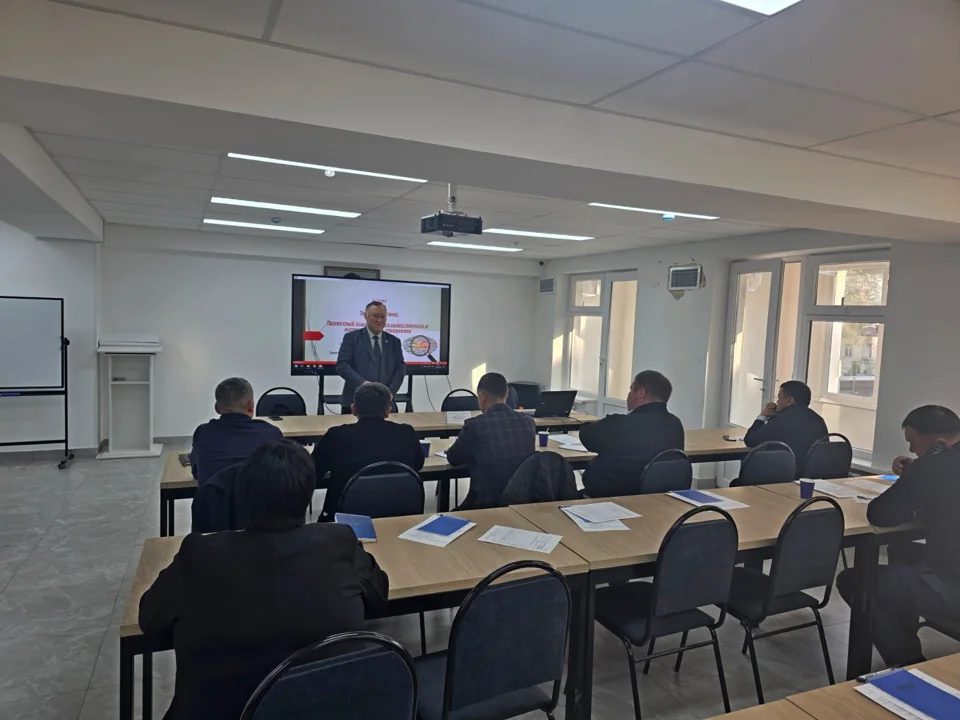
Professional development and retraining operate through several channels. The academy delivers training under an annually approved state order, responds to requests from government bodies and local authorities, and participates in joint projects with international organizations. Its description distinguishes professional development, which updates existing knowledge and skills, from retraining associated with new duties or entry into public service. Published course lengths are 36 to 72 academic hours for professional development and 100 academic hours for retraining.
Teaching methods include cases, simulated official situations, role playing, small-group work and brainstorming. The academy sets an expectation that interactive methods account for at least half of teaching, connecting course material with decisions participants may encounter at work. Distance and hybrid formats, supported by electronic platforms, also feature in delivery. Regional provision uses venues at regional state universities and local trainers, alongside provision in Bishkek for the capital and Chuy region. Continuous and final assessment form part of the training process, with certificates recording the resulting assessment.
Sources: Retraining and professional development ↗
Research on the operation of government
A 2026 call for state-commissioned research illustrates the academy’s applied research agenda. One topic concerned the effectiveness of digital technologies in state and municipal bodies. Another examined planning and budgeting for the training of public servants. A further topic linked the evaluation of individual personnel performance with the effectiveness of the agencies employing them. Together these questions address how administrative systems organize resources, use information and judge their own work.
The same call included social guarantees and incentives in the civil service, implementation of presidential and Cabinet decisions at local level, and decentralization of social services. The last topic considered access, targeting and service quality. These were advertised research topics for a selection process, rather than a list of completed findings. They show how the academy frames research around specific administrative mechanisms, from staff development and organizational accountability to the relationship between central decisions and local delivery.
Sources: Research activity and 2026 research call ↗
Library and study resources
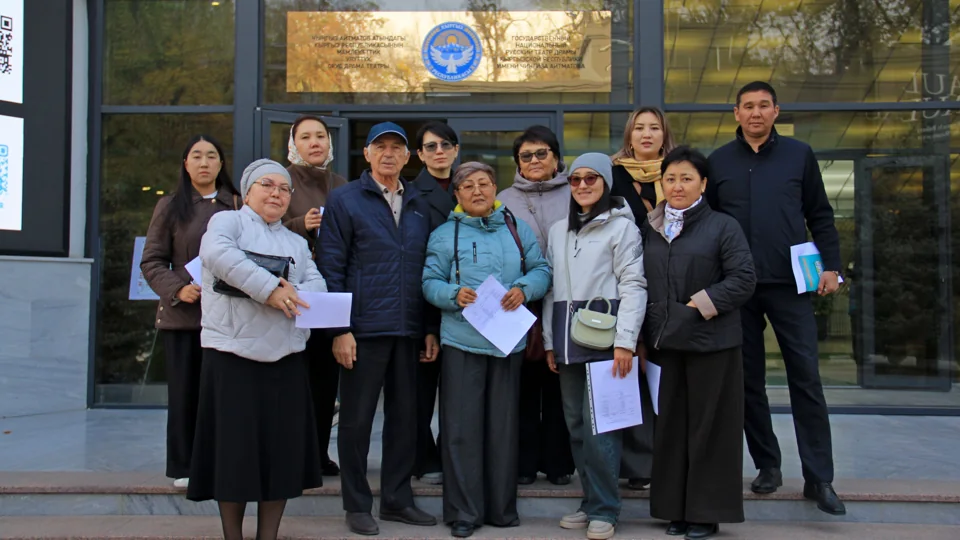
The academy’s library traces its own establishment to 1992, when it was formed on the basis of the library of the Bishkek International School of Management. This library history predates the academy’s stated 1994 foundation. Its present services support bachelor’s and master’s programmes through a lending department and a reading room. The reading room provides subject literature and current publications, together with access to an electronic library.
The collection includes textbooks, teaching materials, monographs, reference works and dissertation abstracts in Russian, Kyrgyz and foreign languages. Students, postgraduate researchers, teaching staff and academy employees are among the groups entitled to use it. The published rules distinguish materials available for home borrowing from reference publications and unique or last copies retained for consultation. Readers may borrow up to five books, with a fourteen-day loan period stated for multiple-copy textbooks and scientific literature. The library lists its address at 237 Panfilov Street in Bishkek, giving academic study a defined base for reading, consultation and access to learning materials.
Sources: Academy library ↗
International cooperation
The academy’s cooperation page identifies several distinct international connections. These include Finland’s Connectivity for Central Asia pilot programme, the Hanns Seidel Foundation, Japan International Cooperation Agency and the Republic of Korea’s Local Government Officials Development Institute, known as LOGODI. It also lists Italy’s BRIDGE educational programme for Central Asia, an academic forum within the cooperation network of Chinese and Central Asian public-administration institutes, and cooperation involving UNITAR and the NDC Partnership. The range of partners reflects links with public-service training, development cooperation and international exchange.
Sources: International cooperation ↗