Visa
About Academy of Music Theatre and Fine Arts
An academy spanning Moldova’s artistic disciplines
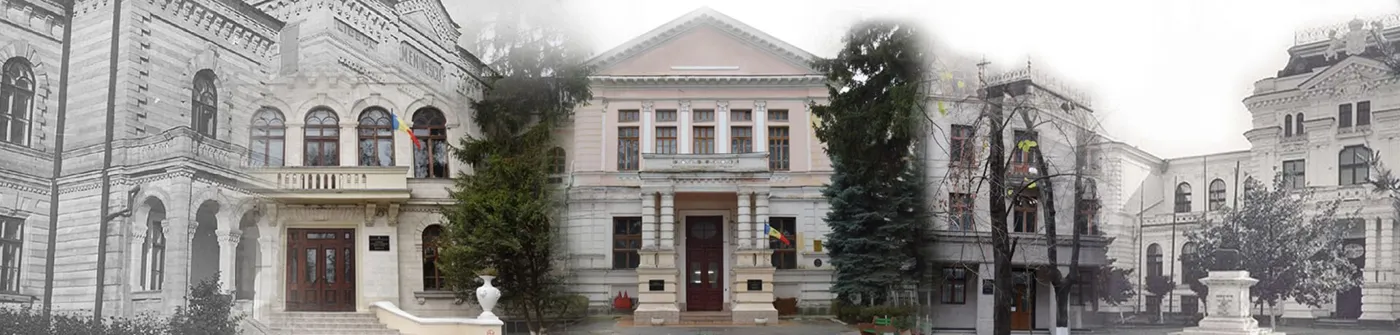
The Academy of Music Theatre and Fine Arts is based in Chișinău, the capital of the Republic of Moldova. Known as Academia de Muzică, Teatru și Arte Plastice, or AMTAP, it brings together music, theatre, choreography, multimedia, visual arts, design and cultural studies. Its present form was established on 1 September 2002 through the reorganization of the State University of the Arts, which had itself resulted from the 1999 merger of the G. Musicescu Music Academy and the Institute of the Arts.
The academy is the successor to the State Conservatory founded in Chișinău in 1940 and to earlier musical education institutions in the city. Its development gradually extended beyond music. Acting groups appeared in the late 1950s, a directing and acting department was established in 1965, and visual arts teaching developed in the 1980s. Today the institution offers bachelor's and master's education, alongside doctoral activity in musical and theatrical arts. Three faculties organize the main areas of artistic study.
Sources: Institutional presentation ↗
Musical training and performance traditions
The Faculty of Musical Arts continues the city's traditions of instrumental interpretation, composition and music education. Its academic organization includes piano, orchestral instruments, academic singing and conducting, music pedagogy, popular music, and musicology, composition and jazz. This range places performance and creative work alongside the analysis and teaching of music. The faculty is located in the academy's second teaching building at 87 Alexei Mateevici Street.
The faculty's account of its graduates connects musical education with the wider professional cultural community. It identifies alumni working in symphony and chamber orchestras, opera, choral organizations and folk performance groups in Moldova and abroad. Named Moldovan institutions include the National Opera and Ballet Theatre, the National Philharmonic Symphony Orchestra, the National Chamber Orchestra and Sala cu Orgă. These connections place the faculty within a living network of organizations involved in performing and presenting music.
Sources: Faculty of Musical Arts ↗
Theatre, choreography and multimedia
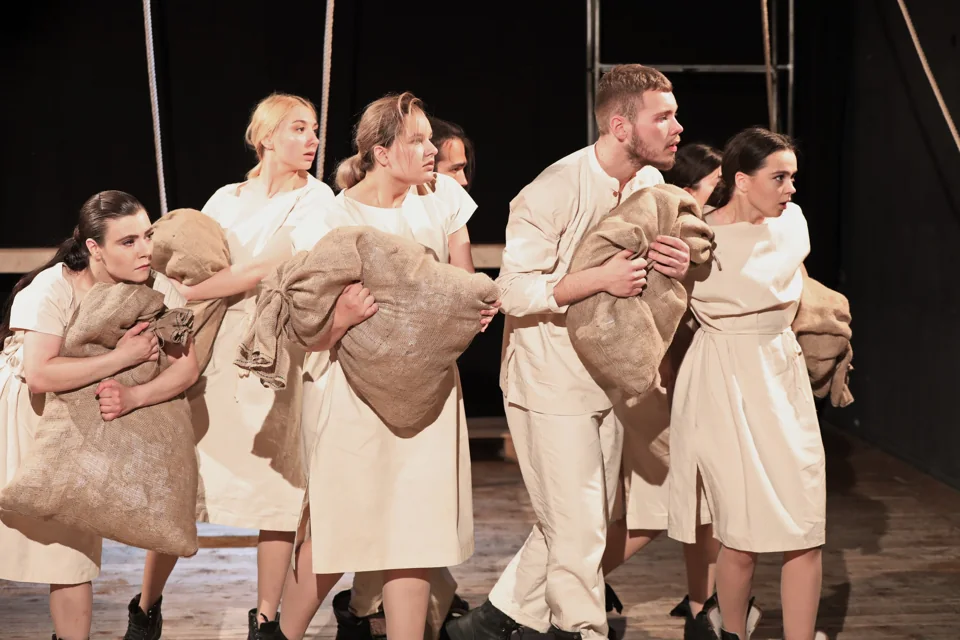
The Faculty of Theatre, Choreography and Multimedia Arts draws its history from the acting groups formed at the conservatory and the subsequent directing and acting department. A separate performing arts faculty was established in 1988. Its present academic structure brings together theatre arts, multimedia, choreographic art and movement, theatre studies, artistic management and culturology. Teaching therefore covers both the creation of performances and the interpretation and organization of cultural activity.
Creative production is part of the faculty's instructional process. Students and staff participate in performances, workshops, scientific conferences and meetings with people working in theatre, choreography and cinema. The faculty organizes ClassFest, the International Festival of Theatre and Film Schools, as a setting for young creators and intercultural exchange. Its account also identifies a gala of performances as part of academy cultural life. The faculty operates in the first teaching building at 111 Alexei Mateevici Street.
Sources: Faculty of Theatre, Choreography and Multimedia Arts ↗
Visual arts, decorative practice and design
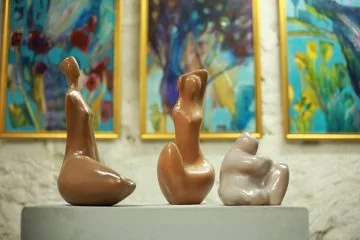
Visual arts teaching began as a department in 1984 and developed into an independent faculty in 1990. The institution's account names early teachers including Alexei Colîbneac, Ilie Bogdesco and Ion Serbinov. The addition of painting in 1989 and mural painting in 2002 illustrates the progressive expansion of this area of study. Today the Faculty of Fine Arts, Decorative Arts and Design occupies the academy's third building at 137, 31 August 1989 Street.
Its teaching areas bring together painting, sculpture, graphic design, decorative arts, fashion and interior design, with theoretical and technical disciplines in visual arts. The faculty describes practices including ceramics, artistic metalwork, tapestry and the restoration of artworks. This combination links work with materials and objects to visual communication and the design of spaces. Historical and theoretical study accompanies practical artistic production within the faculty's wider academic setting.
Sources: Faculty of Fine, Decorative Arts and Design ↗
A library shaped by artistic education
The academy library was founded with the State Conservatory in 1940. Its beginnings drew on books inherited from earlier Chișinău conservatories and on printed music from Sicora's music shop, including works by classical composers. Pianist T. Iurcovscaia was the library's first director. As the educational institution changed, its library also developed, expanding beyond the needs of a music conservatory to support several artistic disciplines. The library's history describes reading facilities in all three teaching buildings.
The electronic library provides another route to teaching and research material. It distinguishes full-text publications available internally with controlled access from open publications available through the institutional repository. Its subject divisions follow the academy's principal fields: musical arts; theatre, choreography and multimedia; fine and decorative arts and design; and social sciences, humanities and modern languages. Printed music and books are included alongside access to the academy's scholarly journal, which addresses the study of arts and culturology through history, theory and practice.
Sources: Library history ↗ · Electronic library ↗
International cooperation and academic exchange
The Section for European Integration and Academic Mobility coordinates support for international relations across the academy's faculties and departments. Its responsibilities include developing academic cooperation agreements, supporting visits and exchanges, providing information about funding opportunities and assisting the organization of academic mobility. International work can involve other higher education institutions, cultural organizations, foundations and professional associations.
The section also supports the invitation of foreign lecturers, artists and specialists, and participation in conferences, festivals and artistic competitions. Its description places practical preparation and monitoring alongside the academic purposes of exchange, including consultation before departure, contact with host institutions and support when participants return. Through these activities, international cooperation connects teaching, scholarship, artistic creation and administration rather than operating as a separate strand of campus life.