Visa


About Academy of Economic Studies of Moldova
An economic university rooted in Chișinău
The Academy of Economic Studies of Moldova is a university in Chișinău, known in Romanian as Academia de Studii Economice din Moldova and commonly abbreviated ASEM. It was established on 25 September 1991 through government decision number 537. Its foundation brought together two economic faculties of Moldova State University and the Institute of National Economy of the Ministry of Economy.
Those predecessor institutions give ASEM a history extending beyond its own founding. The economics faculty began in 1953, initially teaching national economic planning and finance. Between 1964 and 1977 it formed part of the Chișinău Polytechnic Institute. A second economic faculty, concerned with trade economics and commodity science, opened at the State University in 1977. These strands established the academic background from which ASEM developed its wider provision in economics, business and related disciplines.
Paul Bran served as the academy’s first rector from 1991 to 1994, followed by Eugeniu Hrișcev from 1994 to 2001. The official history credits these founding leaders and the teaching, administrative and support staff with developing the new institution.
Sources: Institutional history ↗
Education, research and public engagement
ASEM's mission connects the creation of knowledge with the preparation of specialists in economics and adjacent fields. It describes students as future entrepreneurs, professionals and participants in a democratic society. Teaching is intended to interact with scientific research, encouraging the exchange of ideas, creativity and initiative within a student-centred learning environment.
The same mission identifies lifelong learning and relationships with public institutions, businesses and the wider academic community as institutional responsibilities. It also seeks participation by students from Moldova and abroad through undergraduate, master's, doctoral and continuing education. Its vision places traditional academic achievement alongside entrepreneurial approaches and the transfer of knowledge into society. These are stated educational aims that help explain the combination of university study, research and practical business activity found in the academy's structure.
Sources: Mission and vision ↗
A broad undergraduate curriculum
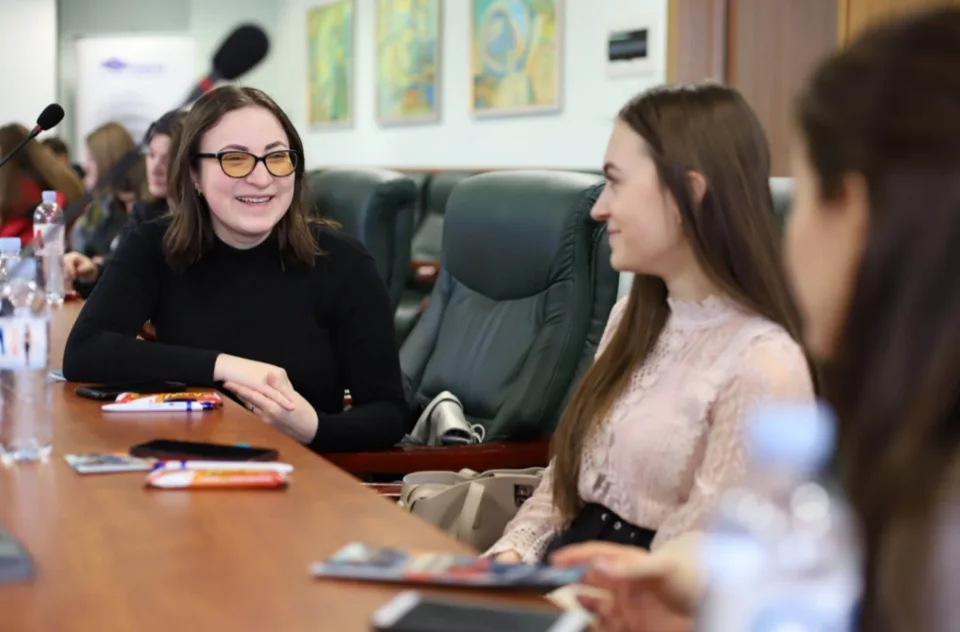
ASEM's published study plans for the 2026 entering cohort cover a broad selection of economic and professional subjects. Business and Administration, Accounting, Finance and Banking, Economics, and World Economy and International Economic Relations form part of the core offering. Public Administration and Law extend the subject range into public institutions and legal study.
The catalogue also includes Marketing and Logistics, Human Resources Management, wholesale and retail trade, hotel services, tourism and leisure, and the technology and management of public catering. Computing and quantitative study appear through Information Technology, Applied Informatics, economic informatics and cybernetics, and Data Analysis and Econometrics. The study-plan website separates full-time, reduced-attendance, distance and dual formats, publishing plans by year of admission. This arrangement makes the curriculum attached to a particular entering cohort visible, rather than presenting one undifferentiated list of programmes.
Specialised study at master’s level
The 2026–27 master's catalogue develops the academy's subjects into more specialised fields. Economic programmes include International Transactions and Economic Diplomacy, European Economy and Economic Governance, Sustainable Economy and Competitiveness, Accounting and Audit, and Corporate Finance and Insurance. Other options address banking, public finance, investments, business administration and project management.
The list also includes Digital Business Management, strategic procurement, marketing management, public administration, information management, information systems security and tourism development. Some law and information-security programmes are available in both 90-credit and 120-credit versions. Full-time 120-credit programmes last two years, while 90-credit programmes last a year and a half. Teaching languages are specified programme by programme; the catalogue includes Romanian, Russian and English provision, including English-taught international business and law and financial-banking administration. This provides a detailed continuation of ASEM's undergraduate fields.
Sources: Master’s programmes, 2026–27 ↗
Research and practical learning facilities
The academy's institutional overview describes teaching through faculties, a master's school, doctoral schools and the National College of Commerce. It also identifies business incubators, a business centre and continuing education as settings where practical abilities can be developed. These activities connect degree study with opportunities to explore the organisation of enterprises and professional work.
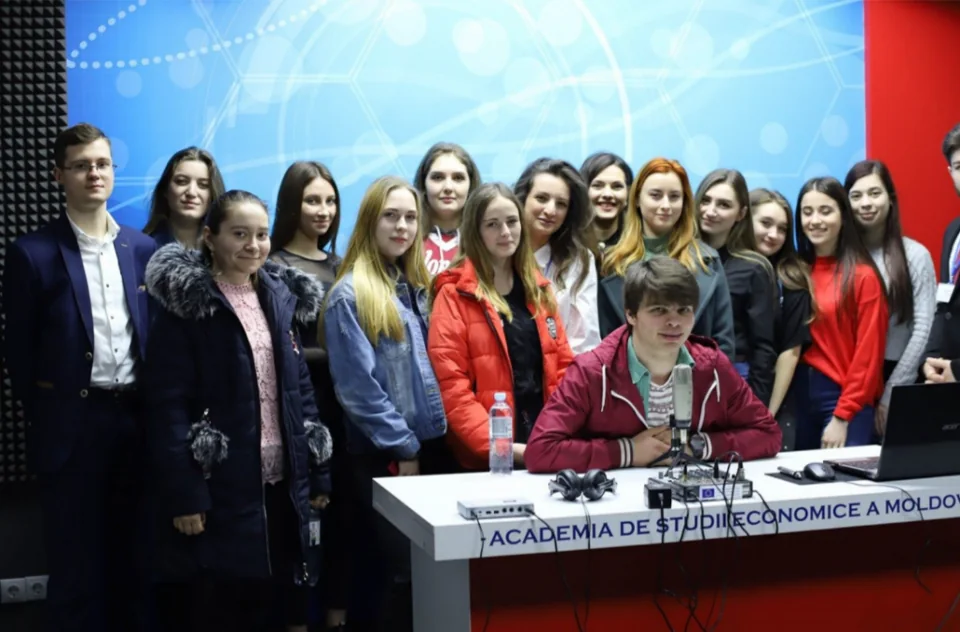
Research is organised through academic departments, research centres and laboratories, and the Institute of Economic Research and European Studies. The overview names Economica, the Eastern European Journal of Regional Studies and CSIE Working Papers among its scientific publications. Teaching and research support includes the scientific library, multimedia facilities, a teaching restaurant and a television studio. Student facilities also include accommodation, canteens, sports spaces and a consultative health centre. These resources reflect the institution's combination of economic scholarship, professional education and campus services.
Sources: Academy institutional overview ↗
Library collections and scholarly resources
ASEM's Scientific Library supports students, teachers and researchers through collections in economics, law, philosophy, computing, mathematics and other subjects. Its user guide describes books, periodicals, doctoral theses and electronic documents in Romanian, Russian and other languages. Services include home borrowing, consultation in reading rooms, reference assistance, bibliographic instruction and interlibrary loans.
The PRIMO search platform provides an electronic catalogue, alongside subscribed databases and other digital resources. The Paul Bran reading room holds foreign-language publications and collections associated with the World Bank, International Monetary Fund and European Commission. A researchers' space provides access to doctoral and master's work, while the multimedia centre supports access to digital collections and the institutional repository. Library staff also help readers search for information and learn bibliographic skills. These services give students resources for both ordinary coursework and more independent research.
Sources: Scientific library user guide ↗