Visa

About Academy Of Finance
A public academy with roots in financial education
The Academy of Finance, known in Vietnamese as Học viện Tài chính and abbreviated AOF, is a public higher education institution under Vietnam's Ministry of Finance. Its main address is 58 Lê Văn Hiến Street in Đông Ngạc, Hanoi. The present academy was established by a prime ministerial decision on 17 August 2001, combining Hanoi's University of Finance and Accounting, the Institute of Financial Science Research and a Ministry of Finance staff-training centre. The new structure began operating in January 2002.
Its educational roots go back to the Central School for Finance and Accounting Cadres, founded on 31 July 1963. Banking training was added in 1964, and the institution became a finance and accounting university in 1976. Postgraduate education followed in 1991. This history explains the academy's continuing combination of degree education, financial research and professional development for people working in public and organisational finance.
Sources: Academy formation and development ↗
Academic fields and educational approach
The academy's general introduction describes an institution connecting teaching with research and responding to professional learning needs. Its programme range extends across finance and banking, accounting, auditing, business administration, economics, management information systems and English. Listed specialisms include corporate and public finance, taxation, customs and foreign trade, financial analysis, investment and insurance finance.
Accounting study includes business accounting, public accounting, auditing and management accounting. Other named areas include human-resource and enterprise management, marketing, tourism business, financial-accounting informatics and English for finance and accounting. The academy also lists newer fields involving data science, information technology, international business, law and financial mathematics. Its published educational philosophy emphasises professional ethics, specialist knowledge, foreign-language ability, adaptability and continuing personal development. Undergraduate and postgraduate provision is accompanied by different study modes, including full-time education, study alongside employment and distance education. This combination reflects a remit covering initial professional preparation and further learning.
A platform for scholarly publication
The academy publishes the open-access Journal of Contemporary Accounting and Finance. Its predecessor, the Journal of Financial Accounting Research, was established in 2003, with the first issue appearing that August. The journal's current account identifies six issues per year and the introduction of an English electronic edition in 2026 to support international academic exchange.
Its subject scope includes economics, public and corporate finance, banking, insurance, taxation, public financial management, customs, accounting, auditing, governance and financial technology. It accepts original research, review articles and scholarly discussion. The journal describes an initial editorial assessment followed by double-blind peer review, with anonymous authors and reviewers. This publication provides a defined channel for communicating research beyond the classroom, bringing the academy's financial and accounting specialisms into discussion with scholars, practitioners and policymakers.
Sources: Journal of Contemporary Accounting and Finance: about ↗
Financial information resources in practice
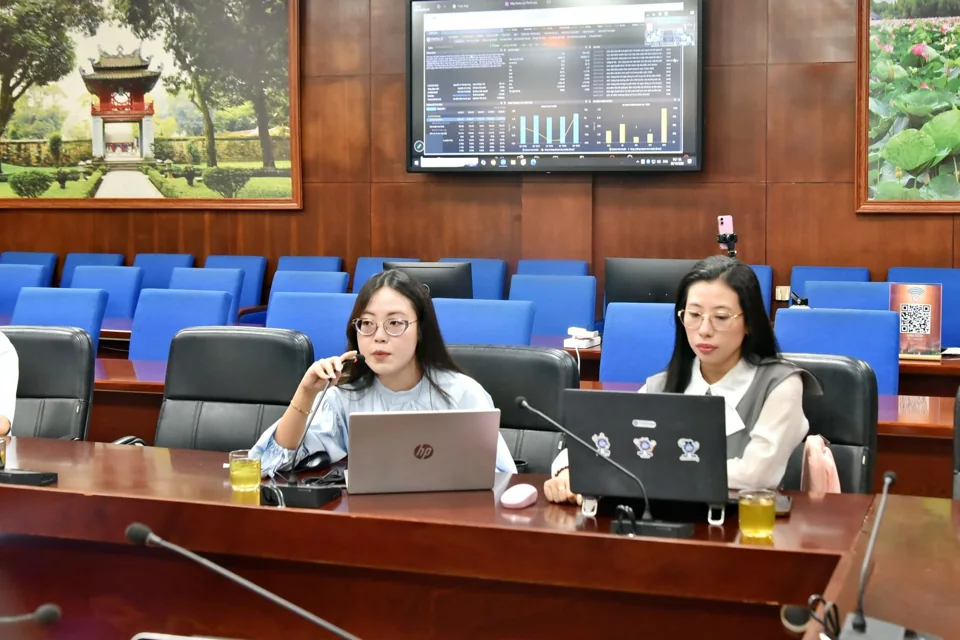
A library workshop in October 2026 offers a concrete example of research support at the academy. Organised with FiinGroup, the session introduced FiinPro-X and a corporate bond information portal. Staff and students participated both in person at the main Hanoi premises and online. The event focused on finding and using financial information for teaching, study and research.
The demonstrations covered company data, financial statements, market information, quantitative indicators and information about corporate bond issuers. Participants practised searching, selecting and analysing data for their academic needs. Library representatives also explained access arrangements at the academy. The session illustrates the library's role in connecting specialist information services with users' research questions. It places financial datasets and their interpretation alongside the books, teaching materials and other resources supporting the academy's programmes.
Sources: Library financial-data workshop, October 2026 ↗
International cooperation through programme development
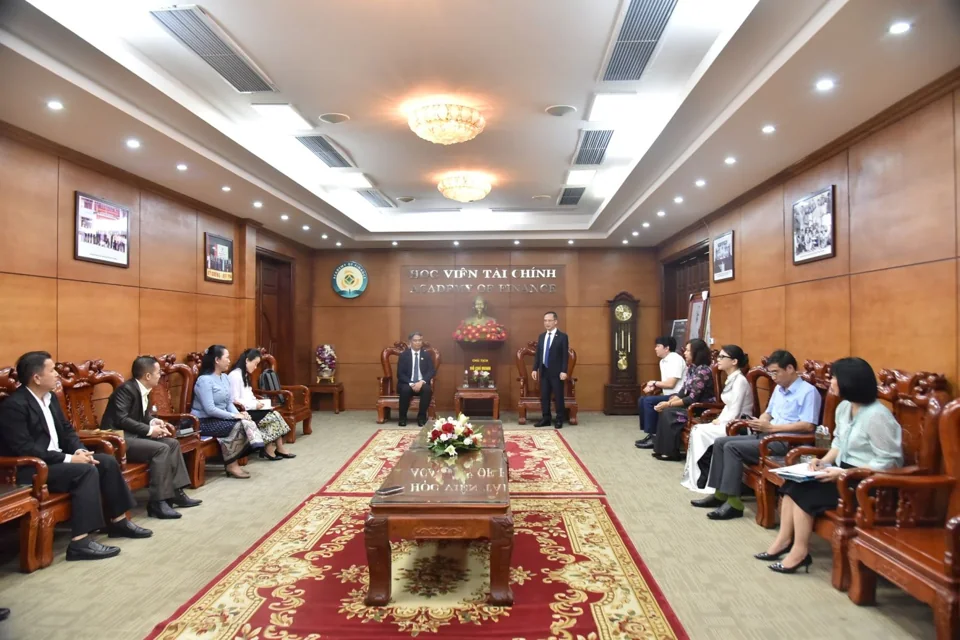
In late October 2026, the academy hosted a working visit from the Lao Academy of Economics and Finance. The discussions addressed the design of a master's programme in accounting for the Lao partner, the organisation of public-finance master's education in Laos and possible cooperation during 2027. The academy's postgraduate and accounting specialists contributed to the meetings.
The work on accounting considered curriculum structure, demand for trained personnel, teaching capacity and implementation conditions. Separate discussions addressed staff development, professional training and research cooperation. Proposed future activities included specialist and teaching-method courses, academic seminars and participation by Lao lecturers in international conferences. The report distinguishes these plans from existing cooperation. This example shows international activity taking the form of detailed educational work, with attention to the practical capacity and needs of a partner institution.
Sources: Academic cooperation with Laos, October 2026 ↗
Finance and accounting research networks
The academy also connects with external scholars through international conferences. The official FASPS 2026 site presents the eighth International Conference on Finance and Accounting for the Promotion of Sustainable Development in the Private Sector. The academy organised it with Kasetsart University in Thailand, the Academy of Policy and Development, the University of Finance and Marketing and the National Institute for Economics and Finance.
The programme was designed to connect researchers, practitioners and policymakers concerned with finance, accounting, auditing and economics. Its published schedule identified September 2026 conference dates and Hanoi as the venue. Alongside research presentation and discussion, the event provided a setting for professional and academic exchange. This conference activity complements the academy's teaching, journal publication and institutional partnerships, extending its specialist financial education into wider research networks.