Visa


About Academy of Christian Humanism University
Origins and educational identity
The Academy of Christian Humanism University, known in Spanish as Universidad Academia de Humanismo Cristiano and commonly presented as UAcademia, is a university in Santiago, Chile. Its origins lie in a study centre founded by Cardinal Raúl Silva Henríquez on 15 November 1975. The centre was created to defend pluralism and academic freedom during a period of serious human rights violations, providing intellectuals with a place to develop and share knowledge about Chile’s political, economic, social and cultural life.
The present university describes itself as autonomous, independent and pluralist. Despite the historical reference to Christian humanism in its name, its declared principles identify a secular, nonprofit educational project independent of political, religious and economic interests. Its educational model emphasises critical thought, human rights, democracy, equity and participation. The institution also describes participation by academics, students and staff in the democratic election of its individual university authorities.
Sources: About the university ↗
Arts, social sciences and professional education
The daytime undergraduate catalogue groups programmes across four faculties. The Faculty of Arts includes film and audiovisual arts, theatre, dance, musical composition, musical performance, music production, stage design, and arts and crafts. These subjects place artistic creation and performance within a broader university setting. Digital Animation is also presented among the catalogue’s new offerings.
The Faculty of Social Sciences and Education lists anthropology, political science and international relations, law, psychology and social work. The Faculty of Engineering, Architecture and Technologies for Society includes architecture, industrial civil engineering, and computing engineering and data science. The Faculty of Health and Buen Vivir lists nursing, kinesiology, veterinary medicine, midwifery, chemistry and pharmacy, medical technology, occupational therapy and medicine. This range extends the university’s social and cultural foundations into technological and health-related professional fields.
Sources: Daytime undergraduate programmes ↗
Research and artistic creation
The Vice-Rectorate for Research and Postgraduate Studies coordinates institutional activity in research, artistic creation, knowledge transfer and dissemination. It also oversees postgraduate academic development and works with faculties and other university units. Its stated responsibilities include supporting scientific and artistic work, organising quality processes and strengthening the visibility of scholarly production through publications.
Institutional mechanisms include research and creation funds, publication incentives and financial support for academic mobility. The mobility scheme supports students and academics who present scientific research or artistic work at events in Chile or abroad on the university’s behalf. The research area also publishes information about international research connections and access to the academic researcher profile. These arrangements show how the university links project development, dissemination and collaboration rather than treating research solely as an individual activity.
Sources: Research ↗
Libraries and digital resources
The university’s library system provides a shared route into its catalogue, journals, databases and other learning materials. Its online discovery service offers both a general search and an advanced search option. The library website separates guidance for thesis writers, teachers, researchers and students on the Advance study pathway, recognising that these groups use information resources for different academic purposes.
Highlighted resources include course bibliographies, the digital library, electronic books through Digitalia and research databases. The system also offers assistance with information searching and publishes guidance on artificial intelligence for students. Links to open science resources, the university’s journal portal and its publishing activities connect the library with the production and circulation of knowledge. The library therefore supports both everyday coursework and more extended investigation.
Sources: Library system ↗
Student participation and university life
The Directorate of Student Affairs was restructured in 2025 to support the university experience and complement institutional work on student retention. Its remit includes culture, sport, student participation and wellbeing. The culture and sport area lists volleyball, football and basketball workshops, outdoor recreation, cultural events and activities outside the formal curriculum.
The student participation area supports the design and implementation of student projects, the formation of student organisations and training for representative roles. It also manages the CREA ACADEMIA competitive fund and student representation spaces. Other units address mental wellbeing and physical health through support, referral, educational workshops and first-aid arrangements. These services sit alongside the university’s teaching provision and provide organised channels for participation and support during study.
Sources: Student affairs ↗
Community relationships and Santiago campuses
The university describes community engagement as a two-way relationship in which academic staff and communities learn from each other. Its approach connects teaching, research and management with participatory local assessment, interdisciplinary activity and continuing feedback. Five community services are managed jointly by the engagement directorate and their respective academic schools. Student mobility agreements also provide opportunities to undertake part of a course at partner universities abroad.
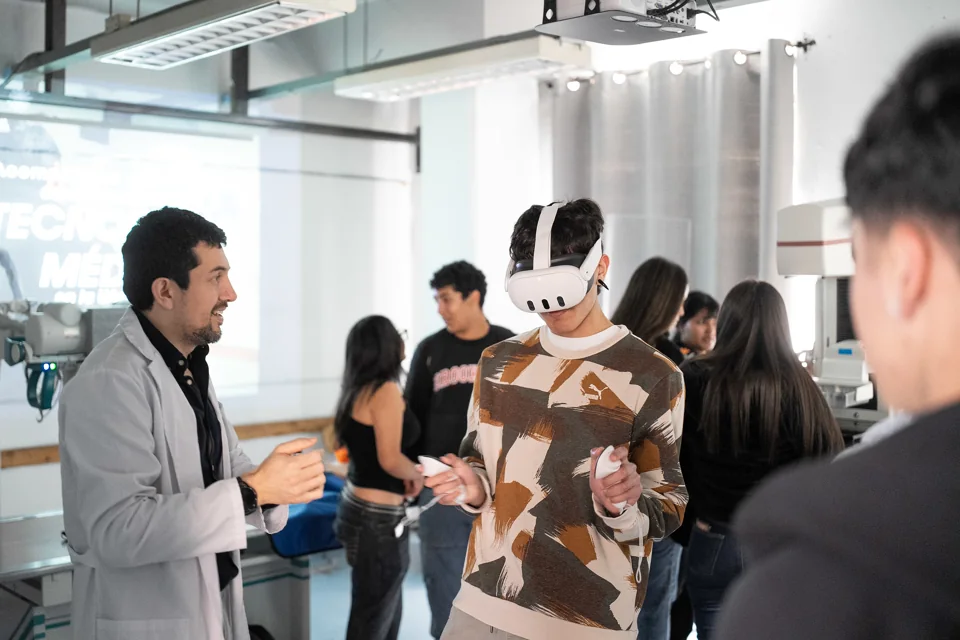
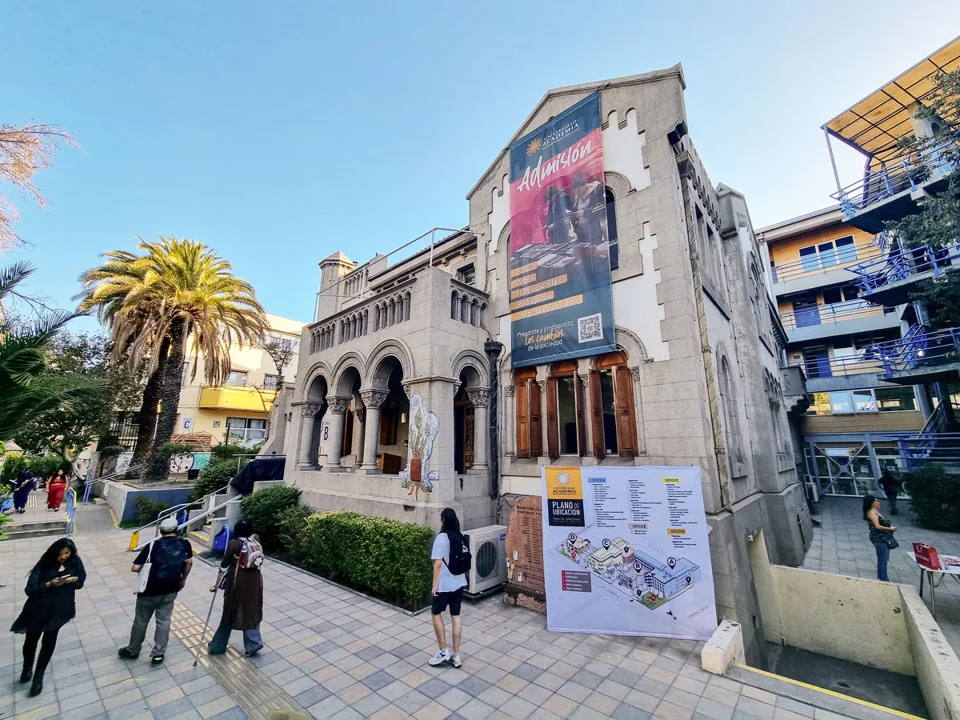
The university operates across several Santiago and Providencia addresses, including Campus José Bengoa on Avenida Condell, the Salvador Sanfuentes buildings, Casa Arrau and Alameda. Campus José Bengoa hosted La Previa in October 2026, an event where school leavers explored courses through academic guidance and practical activities. Nursing demonstrations used training mannequins, while Digital Animation visitors created characters that could be animated on screen. The event combined academic exploration with recreation and live music, offering a concrete example of interaction between the campus community and future students.
The university’s institutional logo uses a sun as a symbol of knowledge and critical thought. Its twelve rays are associated with unity, solidarity and harmony, connecting the visual identity with the participatory values described in its educational mission.
Sources: Community engagement ↗ · University overview ↗ · La Previa campus event ↗