Visa
About Academy for Science and Design
A public STEM school in Nashua
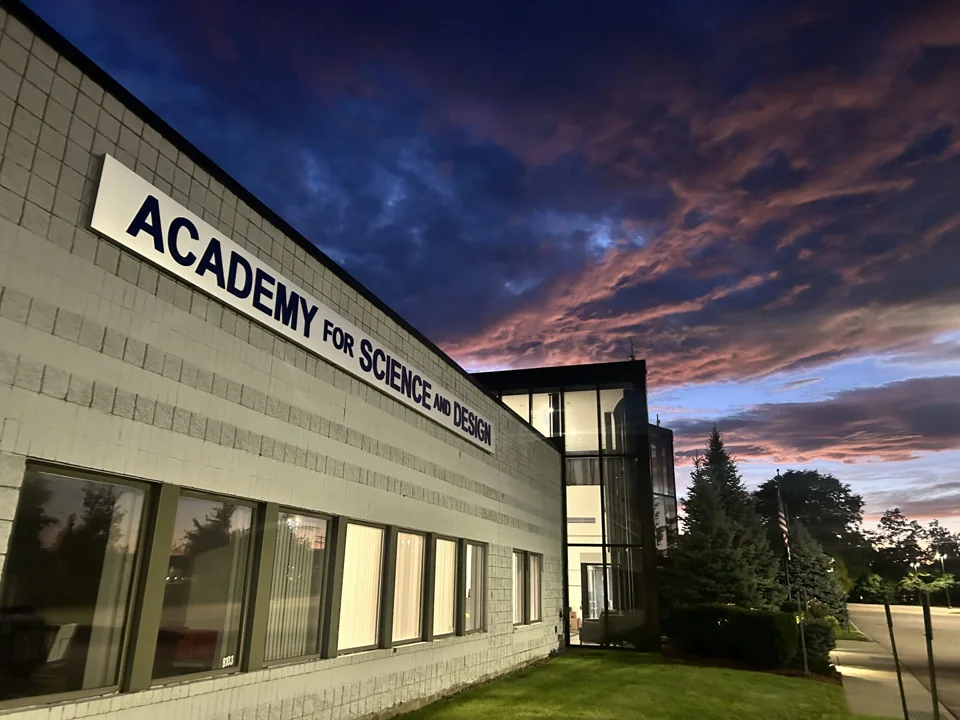
The Academy for Science and Design, usually called ASD, is a public charter school in Nashua, New Hampshire, United States. It serves grades five through twelve with a particular emphasis on science, technology, engineering and mathematics. Its educational mission connects technical knowledge with curiosity, problem solving and participation in community life. Students come from communities across New Hampshire, giving the school a regional role within public education.
ASD was founded in 2007 through the efforts of educators, business leaders and community members. Its earliest classes met in a hotel conference room in Merrimack before it moved through leased premises as the school developed. In summer 2023 it purchased a permanent home at 9 Townsend West in Nashua. The history links this development with the growth of middle-school exploration, high-school subject specialisation and student research. Its SPARK conferences were introduced to connect learners with professionals and contemporary work in STEM fields.
Sources: About the Academy ↗ · School history ↗
From exploration to specialist study
The middle-school curriculum combines mathematics, science, English and history with introductory experiences in specialised fields. Published examples include aerospace, environmental science, experimental physics and technology design. This exploratory approach allows students to encounter a range of subjects before selecting more concentrated interests in high school. The school also describes opportunities to begin earning high-school credit during the middle-school years.
High-school study includes honours biology, chemistry and physics, with mathematics progressing toward calculus or statistics. Foundations of Computer Science and Foundations of Engineering are part of the shared academic preparation. English, world languages, history, government, economics, and visual and performing arts retain a place alongside STEM subjects. Specialist electives extend into civil, electrical and mechanical engineering, artificial intelligence, life sciences, environmental science and advanced mathematics. The curriculum therefore combines depth in technical fields with communication, cultural study and creative activity, providing a broader academic setting for later independent work.
Sources: Curriculum overview ↗
Research and the capstone project
ASD introduces research skills through projects in middle school and develops them across high-school coursework. Students learn to frame questions, gather evidence and communicate findings before undertaking a year-long independent capstone. The school describes the final project as a sustained investigation that students must explain and defend publicly. Industry professionals with relevant expertise participate in the assessment panel, connecting academic work with perspectives from outside school.
The AP Capstone route includes AP Seminar and AP Research, alongside the rest of a student’s studies. All students complete a capstone defence regardless of their particular research pathway. Mentors can help connect investigations with professional interests and experience, including work developed through internships. This gives research a visible place in the school’s educational sequence: skills practised in ordinary classes build toward an individual project, written or practical evidence, and the ability to answer questions about the reasoning behind it.
Sources: Student research ↗
Robotics through teams and practical engineering
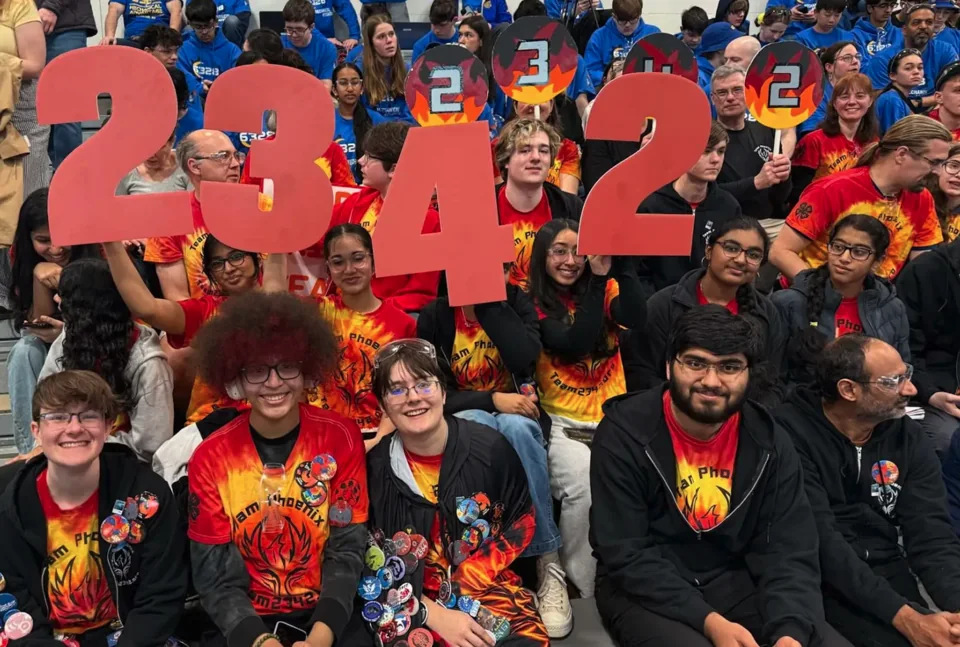
The school hosts Team Phoenix, FIRST Robotics Competition Team 2342. Team Phoenix is an independent team partnering with ASD, with a dedicated workshop and practice field on campus. Its presence gives students access to a setting where engineering, programming and teamwork are brought together through competitive robotics. The school emphasises solving problems, leadership and working under pressure as parts of that experience.
ASD students also participate in FIRST LEGO League and FIRST Tech Challenge. The school has hosted regional FTC tournaments, extending its robotics activity beyond its own classes. Another initiative uses the Experiential Robotics Platform, a small robot through which learners can practise programming with tools associated with full-size competition machines. ASD describes hosting teacher-training sessions and producing 3D-printed kits for other schools. These activities connect student participation with a wider interest in making practical robotics education accessible to teachers and learners elsewhere in New Hampshire.
Sources: FIRST Robotics ↗
Academic support and student wellbeing
Counselling and student services support learners from fifth grade through the end of high school. Counsellors meet individually with students and work through classroom teaching, advisory sessions and focused groups. Topics include peer relationships, transitions, study-related stress and planning for college. Staff also help families find resources beyond the school when additional assistance is needed.
The Student Services Coordinator works with sending school districts on individual education plans and accommodation arrangements. Support also includes provision for English-language learners and students experiencing homelessness. Directed Study periods, peer tutoring and high-school teaching assistants offer additional academic structure. Positive Connections, known as +Conn, provides a lower-stress community space for students in grades seven through twelve. The school describes it as supporting emotional regulation, peer connection and strategies for managing difficult circumstances. Together, these services connect progress in a demanding academic programme with attention to individual learning needs and day-to-day participation.
Sources: Student supports and services ↗
Clubs, creative participation and sport
Clubs and activities extend the school’s interests beyond classroom subjects. Students can take part in Science Quiz Bowl, MathCounts, Mock Trial, aviation and aerospace, astronomy, design and theatre. The activity description also includes musical productions, community service and Red Cross blood drives. Many groups are student-led, and learners can develop new clubs with a faculty adviser. These settings provide ways to form friendships across year groups and shared interests.
Physical activity is represented through a middle-school cross-country team and clubs for skiing, hiking, sport and recreation. The school also describes students participating in home-district athletic teams. This allows sport to remain part of student life alongside a specialised STEM education. Academic projects, performance, service and athletics consequently offer several forms of involvement, giving students opportunities to contribute their different abilities within the school community and beyond it.
Sources: Clubs and activities ↗ · Athletics ↗