Visa


About Aalto University
Science, art, technology, and business in Espoo
Aalto University is a foundation-based university in Finland whose academic identity brings together science, art, technology, and business. Its campus is in Espoo, in the Greater Helsinki area. The university’s official introduction connects research across disciplines with education, innovation, and the development of solutions to global challenges. This combination of fields is central to how Aalto describes both its community and its contribution to society.
The university is organized into six schools, with departments and units carrying out scientific research, artistic activity, and teaching. Its governance includes a board, a president, and a university academic affairs committee. The institutional website provides an Aalto Handbook explaining its organization, operating principles, and management processes. Alongside formal structures, the university presents its Otaniemi campus as a community intended to support innovation and interaction. These features establish Aalto as a multidisciplinary institution with a shared organizational and physical setting.
Sources: About Aalto University ↗
A merger building on three educational traditions
Aalto University began operating on 1 January 2010 through the merger of the Helsinki School of Economics, Helsinki University of Technology, and the University of Art and Design Helsinki. The official history describes the intention to create an institution connecting science and technology, design and art, and business and economics. The merger idea had been publicly proposed in 2005, followed by preparations, a charter, and selection of the first president before the new university opened.
The predecessor institutions gave Aalto a history extending well beyond 2010. Technical teaching in Helsinki began in 1849, the arts and design institution traces its origins to a craft school founded in 1871, and the business school was established in 1911. In 2011, the university’s science and technology school was divided into four technology schools. These developments explain the combination of older disciplinary traditions and a more recent multidisciplinary university structure.
Sources: History of Aalto University ↗
Six schools and a wide departmental range
Aalto’s six schools are the School of Engineering, School of Business, School of Chemical Engineering, School of Science, School of Electrical Engineering, and School of Arts, Design and Architecture. The official directory identifies scientific research, artistic activity, and education as responsibilities carried out through these schools and their departments. The structure makes room for both specialized subject communities and connections across broad academic areas.
The engineering departments include energy and mechanical engineering, the built environment, and civil engineering. Business subjects include management, accounting and business law, marketing, finance, economics, and information and service management. Chemical engineering includes bioproducts and biosystems, chemistry and materials science, and chemical and metallurgical engineering. Other departments cover areas such as applied physics, computer science, mathematics, neuroscience and biomedical engineering, design, architecture, and film. This departmental range illustrates how Aalto’s three broad traditions translate into distinct areas of study and investigation.
Sources: Schools, departments and units ↗
Research and artistic activity across disciplines
The university’s research and art overview organizes its work around seven key areas: digitalisation and artificial intelligence, materials and natural resources, arts and design, business and economics, energy solutions, living environments, and health and wellbeing. These areas connect disciplinary expertise with challenges that require different kinds of knowledge. The overview describes innovation and wider social and economic contribution as purposes supported by this research activity.
Materials research, for example, extends from physics and nanotechnology to mechanics, design, biomaterials, and resource use. Work on living environments connects planning, engineering, architecture, and design. Health and wellbeing brings scientific and technological expertise together with management and economics. The university also provides a research portal, information on doctoral education, and resources concerning academic career development. Together, these elements show scientific and artistic inquiry as organized parts of the university’s activity, with opportunities for specialized work and collaboration between fields.
Sources: Research and art ↗
Otaniemi as a setting for university life
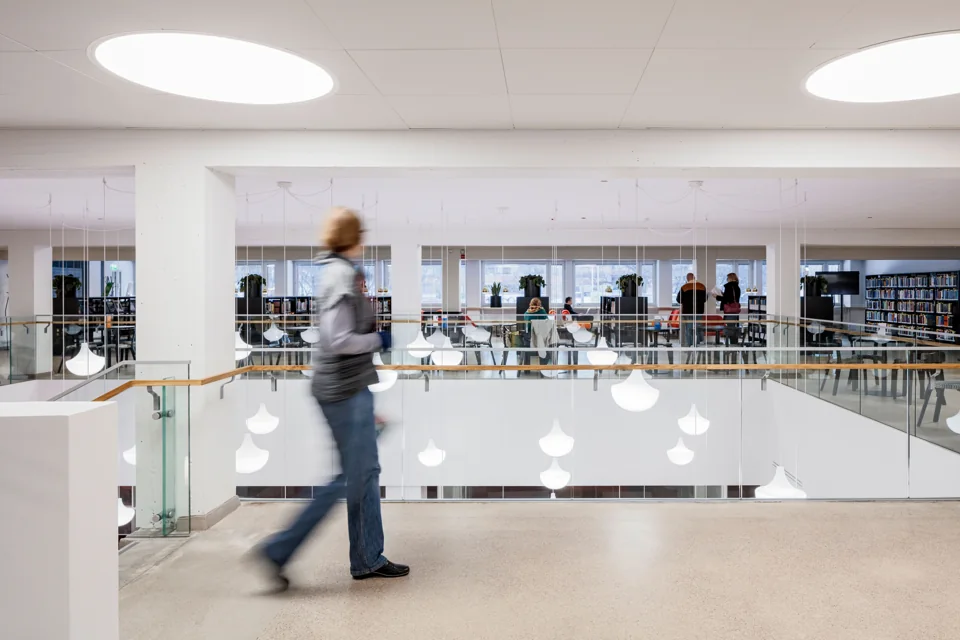
The Otaniemi campus combines educational and research facilities with architecture, art, nature, and services for the university community. Aalto’s campus website presents information on maps, opening hours, restaurants, accommodation, visits, and venue booking. It also offers virtual exploration and guided architectural and thematic tours, providing several ways for prospective students and visitors to understand the setting in which the university operates.
The campus account emphasizes the combination of older architecture and new development as the area changes with its community. It identifies public art as part of building projects through a principle allocating approximately one percent of project expenditure to art purchases. Campus programming includes events, exhibitions, and film at Marsio, while other information addresses campus nature and sustainability. This mix gives Otaniemi a role extending beyond individual teaching buildings, linking academic activity with shared spaces, cultural experiences, and the everyday life of students and staff.
Sources: Otaniemi campus ↗
International exchange and multidisciplinary learning
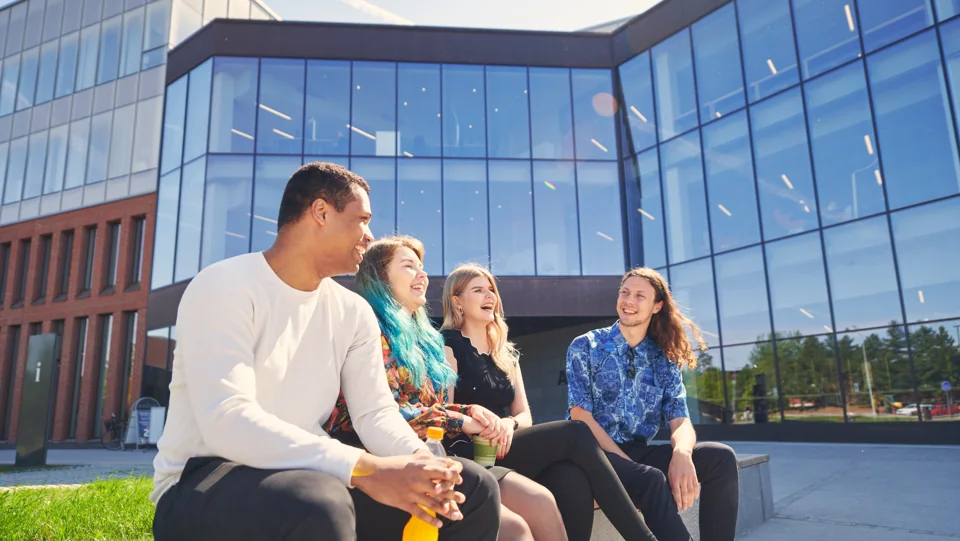
Aalto’s international student information describes exchange study as based on agreements with partner institutions. It presents the combination of science, technology, business, and art as a defining feature of the learning environment. Cross-school courses and interdisciplinary projects are identified as opportunities to encounter different approaches, develop design thinking, and gain experience of working in teams drawn from more than one academic field.
The same account emphasizes student learning and support for student initiatives. It also describes accessibility as an ongoing responsibility, aiming for an equal and enabling environment for study, research, and artistic activity. Information on accessible services, campus arrangements, and individual study arrangements provides routes for students to investigate the support relevant to them. These elements connect international participation with the university’s broader educational approach: specialized study takes place within a community that encourages collaboration, cross-disciplinary activity, and access to the learning environment.
Sources: Welcome to Aalto University: international students ↗