Visa
A coastal break with a working city behind it
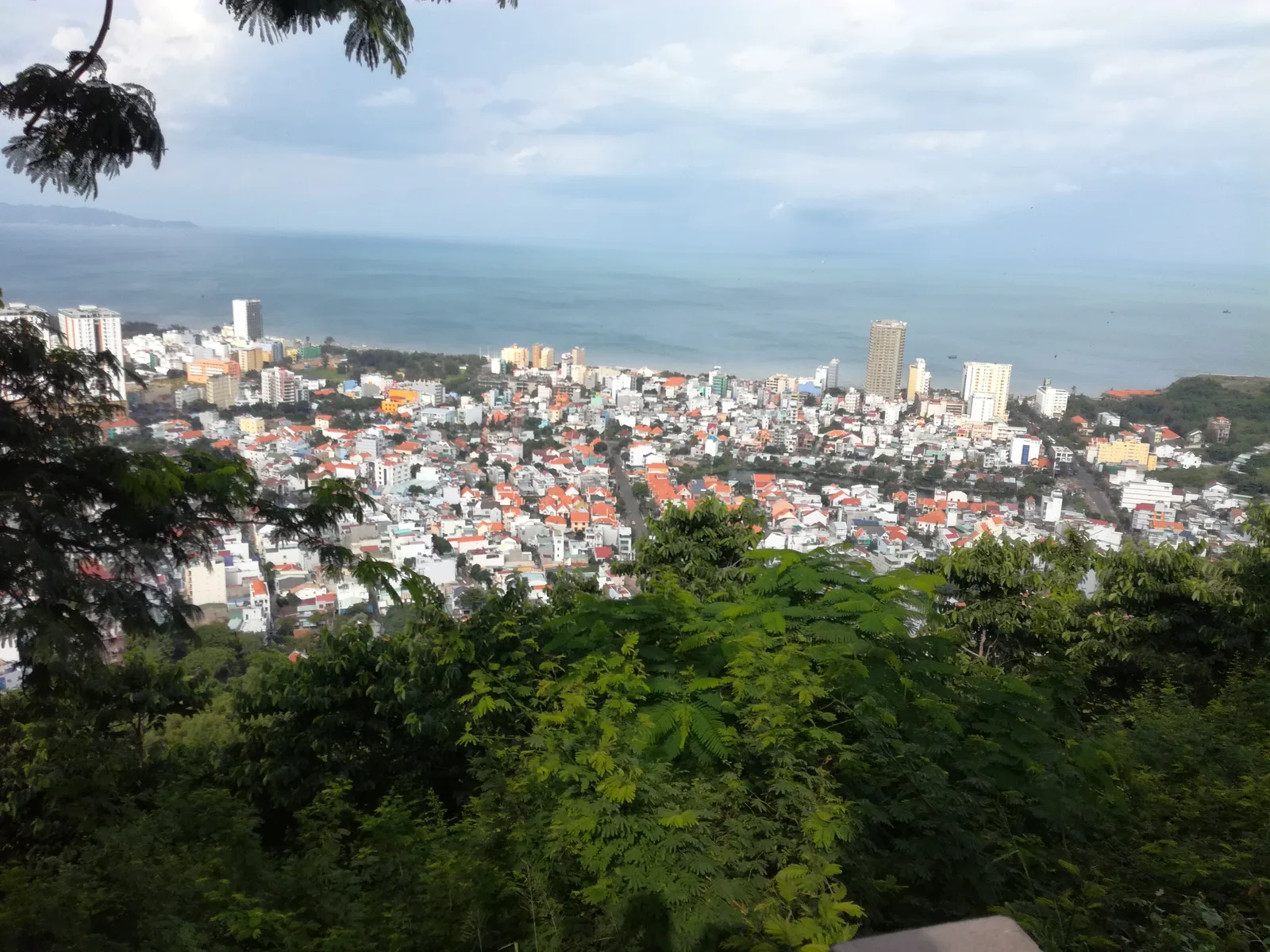
Vung Tau rewards a visit organised around the sea, a hilltop view and an unhurried meal. It also rewards realistic expectations. This is an urban coastal destination, with roads, apartment buildings and everyday commerce behind its beaches. Choose it for a short seaside change of pace, rather than expecting an isolated island resort. Two nights allow time to experience different waterfronts without spending every daylight hour in transit.
For a longer stay, assess school transport, internet and the journey to an employer alongside the sea view. Use VisaWand’s Vietnam country page for broader context.
Understand the destination and its new administrative map
The name Vung Tau now needs a little explanation. Following the 2025 administrative changes, the former Ba Ria–Vung Tau province became part of the enlarged Ho Chi Minh City. That does not make the coastal peninsula a central Saigon neighbourhood. The city council’s account of the merger explains the wider change; distances between coastal homes and inland workplaces still matter.
There is also a new administrative Vung Tau ward, formed from several former wards. Other parts of the familiar coastal urban area fall within different wards, including Tam Thang. Check the government’s official ward list against the full address when arranging accommodation or paperwork. An older property listing may retain a former district or province name. This guide covers the coastal destination, rather than treating one new ward as its complete boundary.
Read its history through the waterfront and hills
Vung Tau’s character comes from the meeting of coastal life, religious landmarks and the architecture of an earlier resort town. The White Palace offers a visible connection with French colonial administration, while the lighthouse and the hills help explain why viewpoints feature so prominently in a visit. The national tourism overview of Vung Tau’s landmarks provides a useful introduction to that landscape.
Avoid reducing the place to a collection of photo stops. Look at how streets meet the water, where boats gather offshore and how worshippers use religious sites. These observations make the different shores more interesting than a checklist does. They also help a prospective resident distinguish a lively visitor frontage from a neighbourhood suited to ordinary weekday routines.
Choose between Front Beach and Back Beach
Front Beach, or Bai Truoc, is the western waterfront to consider for a promenade outing and an urban base. Back Beach, or Bai Sau, is the main sandy beach strip on the other side of the peninsula. The Vietnam Tourism destination guide is useful for orienting these separate areas before choosing a hotel.
Decide what you want to reach on foot. A booking described only as “near the beach” leaves too much unanswered: which beach, which entrance and which road must you cross? Check the walking route from the actual building. If swimming is central to the holiday, ask about current beach conditions and supervision, rather than assuming that a sea view establishes safe water access. Keep a pool or indoor alternative available for unsuitable conditions.
Visit White Palace for a measured dose of history
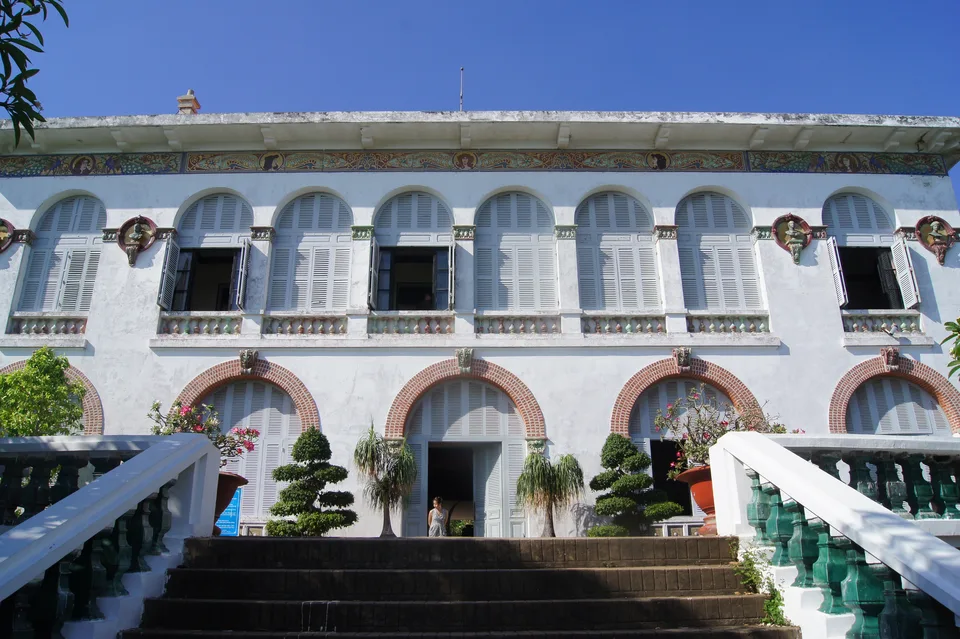
Bach Dinh, usually translated as White Palace, is a sensible cultural stop between time outdoors and a meal. Go to look closely at the building and its setting, rather than expecting a large museum complex. Leave room in the visit for the approach and for any access arrangements needed by your group.
The museum operator’s admission page lists Bach Dinh at VND15,000 per person, with children under 14 admitted free. This is separate from the operator’s main museum ticket, which has a different price. Confirm the palace’s own opening arrangements before setting out: a general museum footer is insufficient evidence that every associated site follows identical hours. Photographs in this guide are dated, so they should not be used to establish current displays or access conditions.
Treat the Christ statue as a pilgrimage site
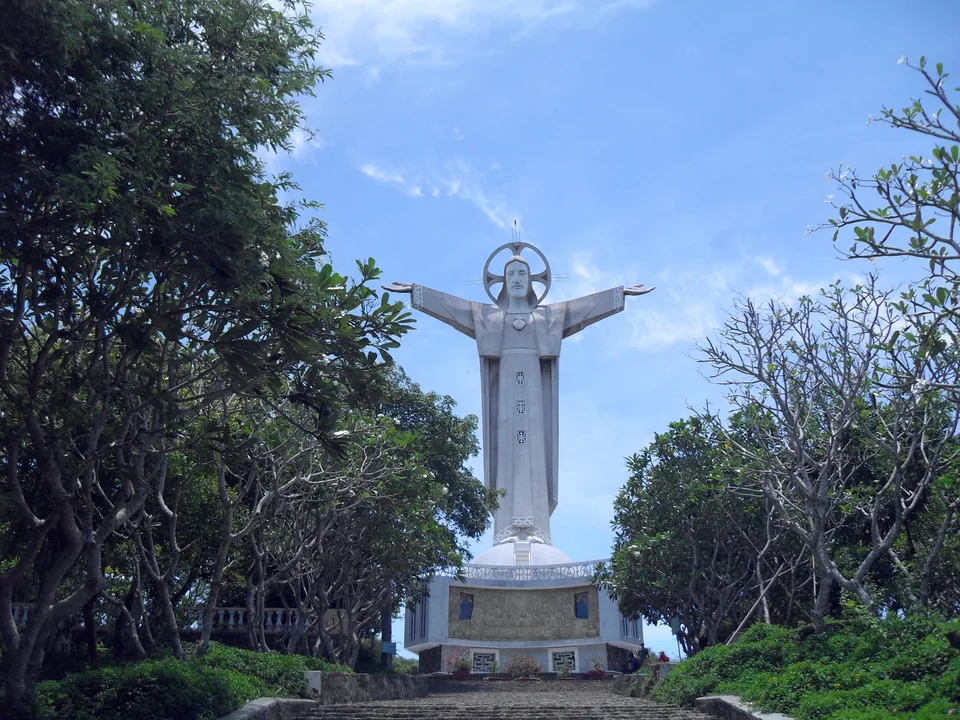
The Christ statue on Tao Phung hill is both a landmark and a Catholic pilgrimage destination. The Ba Ria Diocese’s pilgrimage centre information records a height of 32 metres and inauguration on 2 December 1994. Inside the statue, the stairway has 133 steps; the approach up the hill adds a substantial outdoor climb.
Make the decision around mobility, heat and your group’s willingness to tackle stairs. Carry what you need for the climb and avoid scheduling another demanding ascent immediately afterwards. Follow the site’s dress and conduct instructions, and allow worshippers space. A published Mass timetable is a religious service schedule, not confirmation of sightseeing hours or access to the statue’s interior. Check visitor arrangements directly and accept that part of the visit may be unavailable.
Make the lighthouse a separate outing
The lighthouse offers another way to appreciate the peninsula’s shape. Treat it as an alternative hill outing if the group has already made a strenuous climb, rather than assuming every viewpoint belongs in the same morning. A clear view depends on weather, and access arrangements can change.
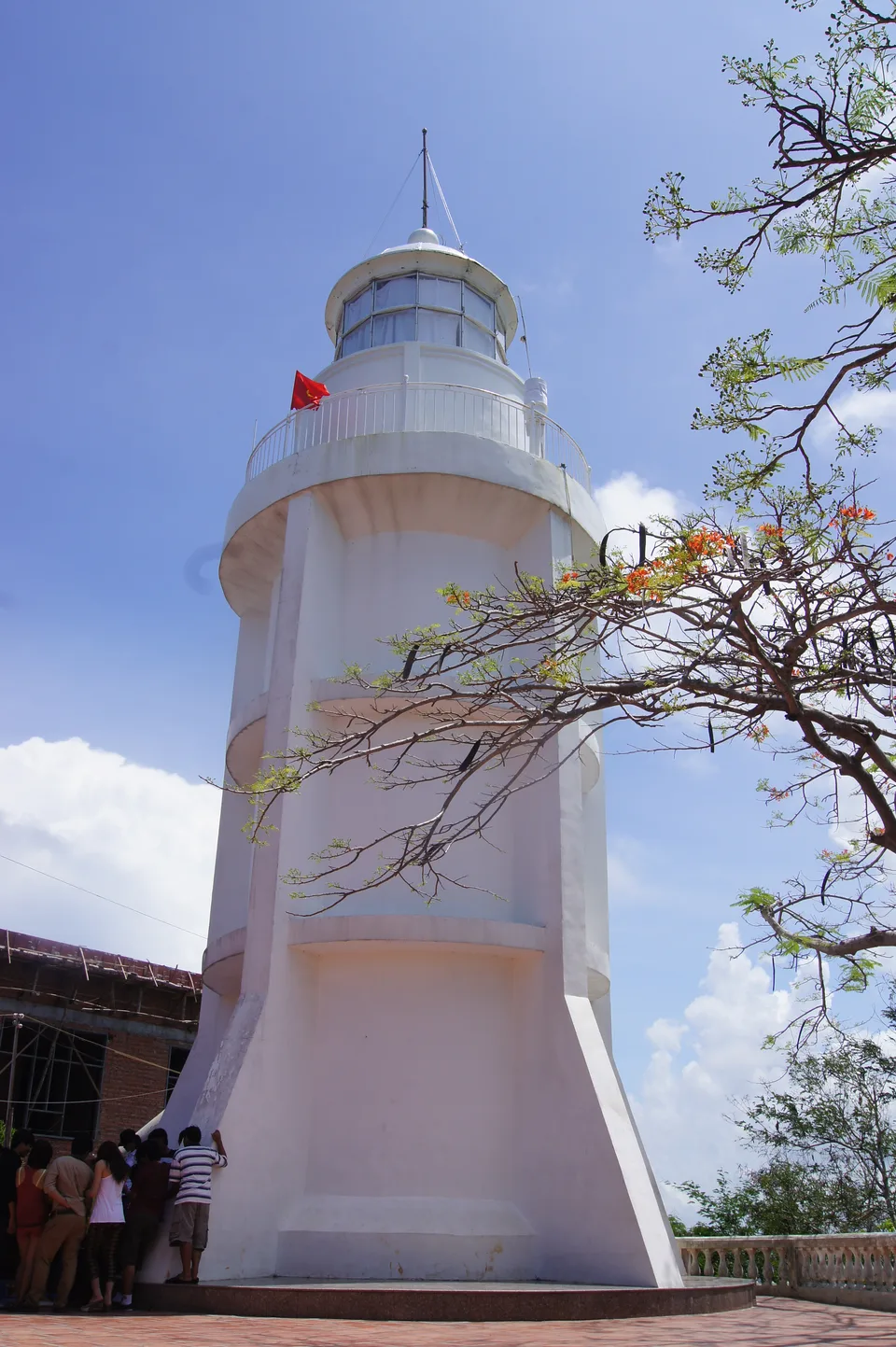
Before leaving, establish where your transport can safely stop and how much walking remains. Ask about the return pickup as well as the outward journey, particularly if anyone has limited mobility. Do not arrange a route that depends on descending an unfamiliar road after dark. The lighthouse photograph here shows the white tower in June 2010; its purpose is to identify the landmark, not to certify that every surrounding path or building is currently open.
Compare Ho May’s ticket products before paying
Ho May can fill much of a family day, but the ticket descriptions deserve attention. The operator’s 2026 ticket page distinguishes a full park product from a cheaper cable car and Royal Garden option. Published prices are VND500,000 for an adult full park ticket and VND250,000 for a child; the cable car and garden product is VND100,000 and VND50,000 respectively.
The operator classifies adults as taller than 1.3 metres, children as between 1 and 1.3 metres, and children below 1 metre as free. Confirm a boundary measurement before purchase. Check which activities your chosen ticket includes and their individual restrictions. The site lists general opening until 22:00 but rides until 18:00, so a late arrival should not be planned around a full evening of rides.
Book accommodation around a usable address
Hotels, guesthouses and apartment stays require different checks. For a brief visit, prioritise an easy arrival, a clear cancellation policy and the waterfront you actually want to use. For an apartment, establish whether reception, luggage storage, housekeeping and late check-in are included. A residential building with holiday units may function very differently from a hotel.
Request the room category and final price for your exact dates. Ask whether taxes, breakfast, parking and additional guests change the total. Families should verify bed arrangements and balcony security; travellers needing step-free access should ask about the entire route from pavement to room. A photograph of a lift does not establish that the entrance has no steps. Confirm whether nearby construction could affect the stay.
Arrive by air through a confirmed gateway
For a flight-based trip, plan the coastal transfer as a separate journey. Vietnam Airlines’ information for reaching Vung Tau describes connections through Ho Chi Minh City and onward travel by road. Do not buy a flight expecting an ordinary scheduled commercial arrival in the coastal city itself.
Read the actual airport code and terminal on your ticket, then give those details to the transfer provider. Agree on the meeting point, luggage allowance, tolls and what happens if the flight is delayed. A distant hotel’s airport transfer is not automatically included in its room rate. Avoid a tight connection between an arriving flight and the last onward departure: immigration, baggage collection and road conditions introduce uncertainty that an optimistic map estimate does not capture.
Take the ferry with the latest fare notice
GreenlinesDP offers a useful alternative to the road journey from central Ho Chi Minh City. Its fare notice effective 1 October 2026 lists Monday-to-Friday adult tickets, for ages 12 and above, at VND350,000. Seniors aged 63 and above and children aged 6–11 are VND300,000. Children under six travel free when sharing an accompanying adult’s seat. The notice does not establish a weekend fare, so obtain the price for your sailing.
Use the operator’s current service and booking information to confirm terminals, departure time and disruption notices. The advertised crossing is only part of the journey: add arrival formalities and transport at both ends. Keep a road alternative available if weather or service changes affect the return. Do not base an important flight connection on a ferry’s estimated arrival alone.
Compare road services by pickup and drop-off
An intercity coach or booked car may suit travellers with more luggage or an arrival that does not fit a ferry departure. Search the FUTA Bus booking service for the actual travel date and confirm the route details before paying. A company’s general route information does not prove that a particular departure still has seats.
Compare the complete journey. Ask whether the vehicle collects passengers at a central office, a roadside stop or the hotel, and whether a transfer is involved. Confirm the Vung Tau drop-off rather than assuming every service reaches the beachfront. For a private car, obtain the total charge and cancellation terms in writing. Allow extra margin when the coastal transfer forms part of a flight itinerary or a fixed appointment.
Move locally without building the trip around a scooter
Group nearby stops and use a booked car or taxi when the gap is inconvenient to walk. Have the destination saved with its full address, and check the pickup point before stepping into traffic. Short geographical distances can still involve exposed roads or an awkward hillside approach.
If considering a motorcycle, verify your own licence category, required Vietnamese recognition and insurance cover first. The FCDO’s Vietnam safety guidance describes road risks and warns against leaving a passport as rental collateral; its nationality-specific driving details should not be applied indiscriminately to every visitor. A first attempt at riding should not become the transport plan for a holiday. Travelling as a passenger also deserves a properly fitting helmet and a considered choice of operator.
Eat local dishes and ask precise seafood questions
Banh khot is an accessible starting point: small rice-based pancakes cooked in moulds, commonly topped with shrimp and eaten with herbs and dipping sauce. The national tourism guide to eating in Vung Tau introduces regional dishes without requiring you to commit to a large seafood meal on arrival.
For seafood priced by weight, establish the species, weight, unit price and cooking charge before ordering. Ask whether a displayed figure covers a kilogram, a portion or an individual item. That simple conversation makes a meal budget more reliable than an unverified average. Explain allergies clearly, including fish sauce or shellfish ingredients, and ask about preparation rather than relying on the dish’s English name. Choose food and water arrangements appropriate to your needs; local popularity alone is not a hygiene guarantee.
Build a budget from actual bookings
Use Vietnamese dong for comparisons and keep transport, accommodation, meals and activities in separate lines. Different Ho May tickets can substantially change a family day’s total. A kitchen may reduce meal costs if shopping fits your plans.
Price the essentials before adding optional attractions. For shopping, compare like-for-like quantities and ask for a receipt where available, particularly for a higher-value purchase. Keep some accessible cash while avoiding a large visible bundle. This guide does not assign a daily total or a supposed average rent: without a travel date, room standard and household size, those figures would imply precision that the available evidence does not support.
Choose the season and keep a weather alternative
Vietnam Tourism’s family holiday guide identifies November to April as the dry season and highlights December and January for breezier beach conditions. That is a planning pattern, not a guarantee for a particular week. Check the national meteorological service before a hill walk, a ferry journey or time on the shore.
Keep the first morning flexible and leave exposed activities movable. Strong wind, rain or uncomfortable heat can change what is sensible even when an attraction remains open. Follow local beach instructions and do not use an attractive photograph as evidence that swimming conditions are suitable. A short trip works better with one spare indoor or leisurely meal option than with every hour committed to weather-dependent plans.
Spend the first day finding your bearings
Arrive, leave your bags and eat before attempting a demanding attraction. Use the first afternoon for the waterfront nearest your accommodation, then compare the other shore if time and energy allow. This is a better moment to understand the street layout than to rush between distant viewpoints.
Choose dinner close enough to return easily, and confirm the next morning’s transport while you still have time to adjust it. If arrival is delayed, shorten the waterfront outing and preserve the meal and rest. Families can use this day to establish a comfortable pace; prospective residents can note grocery access, pavements and evening noise. Do not turn those first impressions into a lease decision, but use them to identify what needs another look during an ordinary weekday.
Give the second day one main outdoor objective
Choose the Christ statue climb or the lighthouse outing as the morning’s main objective, subject to current access and weather. Follow it with a long break rather than filling the middle of the day with another ascent. White Palace can provide a contrasting cultural visit if its opening arrangements fit.
Alternatively, make Ho May the principal paid activity and read the ticket inclusions before departure. A family park day and a hill-and-history day are different itineraries; trying to merge them can produce more transfers than enjoyment. On departure day, leave the hotel with a sensible buffer and keep the final meal nearby. Add a third night if an outward coastal excursion matters more than another rushed stop before the return journey.
Test housing before committing to a lease
For a move, arrange a short initial stay and inspect several homes in person. Visit a promising building at different times, listen from inside the bedroom and test the route to work. Check ventilation, signs of damp, air-conditioning performance and the condition of windows and doors. Ask who handles repairs and how urgent problems are reported.
Record the rent, deposit, payment currency, inventory, termination terms and refund conditions in a contract you understand. Establish the landlord’s authority to let the property before transferring money. The British government’s living-in-Vietnam guidance offers useful background for British residents, but individual legal and immigration circumstances still require current Vietnamese advice. Do not assume a holiday apartment can be rented long term on identical terms, or that a property purchase grants residence rights.
Treat the commute as a weekly commitment
The expanded Ho Chi Minh City boundary can obscure a practical distinction: a coastal home and an inland office may still be a demanding combination. Test the journey at the time you would actually travel, including pickup waits, transfers and the final walk. Repeat it before relying on a best-case trip.
For remote work, test connectivity inside the intended room and agree with the employer on permitted working arrangements. Ask the building about outages, backup arrangements and any restrictions on working from the property. A café connection is not evidence of home reliability. If frequent central-city attendance is essential, compare the coastal option with the Ho Chi Minh City page and an address closer to the workplace. Let the schedule decide, rather than the appeal of a weekend sea view.
Check schools and everyday household services
Families should contact schools before choosing a lease. Singapore International School at Vung Tau publishes information about its programmes, admissions and transport. Ask about places for the relevant year group, teaching language, assessment, the full annual bill and the actual collection route. A nearby campus does not guarantee admission or a suitable programme.
For the home, obtain written electricity, water, management, parking and internet charges. Ask to see meter readings and clarify whether the landlord adds a service margin. Check laundry arrangements, waste collection and the journey to regular shopping. Walk those routes with the household member who will use them most. These small details often distinguish a comfortable long stay from an apartment that looked attractive during a brief viewing.
Plan healthcare and medicines before a long stay
Check whether the care you regularly need is available locally, how appointments are arranged and what payment is expected. For specialist needs, establish a referral plan before committing to a coastal address. Ask the insurer about accepted providers, reimbursement and emergency transport rather than assuming that presenting a policy card settles the bill.
The FCDO’s Vietnam health information gives 115 as the ambulance number and advises checking insurance and medical evacuation cover. Review medicine rules before travel, particularly for controlled prescriptions; do not assume a prescription issued abroad establishes permission to import every medicine. Keep original packaging and seek the relevant official advice for your circumstances. For an urgent problem, use emergency services rather than waiting for an online travel recommendation.
Separate visitor entry from work and residence
Check requirements against your nationality, passport, purpose and intended dates. The official Vietnam e-visa portal states a maximum validity of 90 days, with single-entry and multiple-entry options costing USD25 and USD50 respectively. Check the permitted border gates and the conditions shown for your application. A maximum validity is not a promise that every applicant receives the same authorised stay.
Work has a separate approval framework. The government’s explanation of foreign-worker rules under Decree 219/2025 covers work permits and relevant exemptions; ask the employer which category applies and how immigration permission will be handled. Study requires the institution’s current instructions. Neither a visitor booking nor a short stay establishes permission to take local employment, and repeated tourist visits should not be presented as a permanent relocation strategy.
Confirm registration and organise the next step
Hotels and private accommodation hosts have responsibilities relating to foreign guests’ temporary residence declarations. Ask the host to confirm the arrangement before arrival, especially for an apartment rental. The national legal database provides the legislative background, while the Vietnam Immigration Department is the place to seek current procedures and official application links. Address records should match the accommodation you actually use.
For a complex move, use the Vietnam consultant listings or the broader VisaWand consultant directory to compare relevant services. Establish the adviser’s qualifications, scope and fees before engaging them. Keep copies of applications and decisions, and make housing commitments consistent with the permissions you have obtained. Advice can help organise the process; it cannot substitute for an official approval or guarantee an immigration outcome.
Consider another coastal base when it fits better
Long Hai and Ho Tram are worth comparing if your priority is a different beach setting or a resort-led stay. They require their own transport and accommodation decisions; a property marketed within the wider Vung Tau tourism area may be well beyond the urban peninsula. Check its exact location before treating a city restaurant or attraction as nearby.
For a first visit, decide whether the extra transfer advances the purpose of the trip. For relocation, compare weekday services and employment connections as carefully as the beach.
Official planning resources
Reviewed 17 October 2026. Use the official resources linked throughout this guide for admission, transport, housing and immigration decisions. Prices, services and rules can change; confirm the details relevant to your dates. Photography illustrates the locations and is not a live view.
View all official resources
- Ho Chi Minh City council on the expanded municipality
- Government list of Ho Chi Minh City wards after reorganisation
- Vietnam Tourism coastal scenery and landmarks
- Vietnam Tourism essential Vung Tau guide
- Museum operator admission fees including Bach Dinh
- Ba Ria Diocese Tao Phung pilgrimage centre
- Ho May Park 2026 ticket products
- Vietnam Airlines connections to Vung Tau
- GreenlinesDP fare adjustment from 1 October 2026
- GreenlinesDP official ferry booking and service notices
- FUTA Bus official booking service
- FCDO Vietnam safety and security advice
- Vietnam Tourism Vung Tau local food
- Vietnam Tourism family trips and seasons
- National Center for Hydro-Meteorological Forecasting
- FCDO living in Vietnam guidance
- Singapore International School at Vung Tau
- FCDO Vietnam healthcare and medicine information
- Vietnam National Electronic Visa system
- Government summary of foreign-worker rules under Decree 219/2025
- Vietnam national legal database
- Vietnam Immigration Department
Plan the next part of your journey
Explore the Vietnam guide, browse other cities or compare consultants for your travel and relocation questions.