Visa

Nashville beyond the evening show
Nashville makes the most sense when you plan around two maps: the compact downtown music district and the much wider city where people live, work and study. A hotel near Broadway can put museums and evening performances within walking distance. An apartment advertised as being in Nashville may require a very different transport budget and daily routine. Choosing the right base matters more than collecting every famous stop.
Tennessee’s capital sits on the Cumberland River. Country music is a compelling reason to visit, but the city also offers Black musical history, art, neighbourhood shopping and substantial public parks. Three days allow a useful introduction without spending every waking hour in entertainment venues. For a possible move, add ordinary weekdays to the trip and test the actual journey between a prospective home and your workplace.
A river settlement, a state capital and a musical centre
Nashville’s early settlement story developed around Fort Nashborough during the winter of 1779–80. The public library’s historical account connects its growth to the Cumberland trading port and later railway connections. The river remains a useful geographical reference: downtown and the central visitor attractions lie on one side, while East Nashville extends across it. Do not mistake a short distance on a map for an equally short road journey.
A state law adopted in 1843 established Nashville as Tennessee’s seat of government. Nashville and Davidson County consolidated their government in 1963, a milestone explained by the Metro government anniversary resource. Visitor neighbourhood names, postal addresses and administrative boundaries serve different purposes. If housing, school enrolment or a local service depends on jurisdiction, check the specific address rather than relying on a property advertisement’s broad Nashville label.
Hear the history behind Music City
The musical story reaches well beyond country radio. In 1871, students from Fisk University left Nashville on a fundraising journey that helped sustain the institution. The university’s history of the Jubilee Singers explains their international performances and the importance of spirituals. That history deserves a place alongside the recording industry and the more familiar country landmarks, without turning a working university into an assumed walk-in attraction.
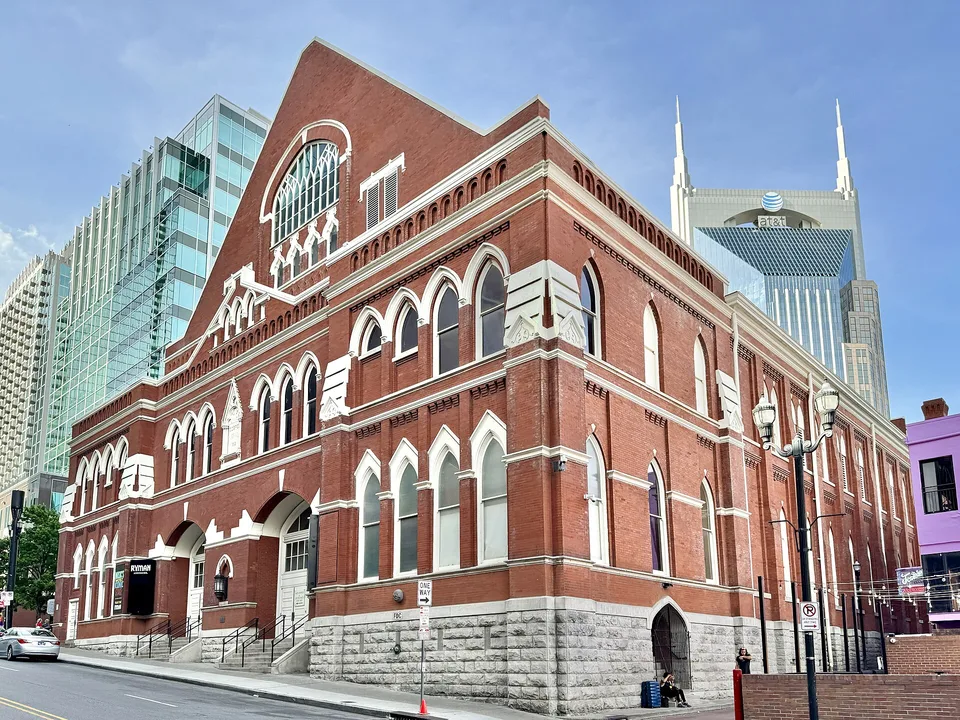
The Ryman began as the Union Gospel Tabernacle, with its first concert in 1892. It housed the Grand Ole Opry from 1943 to 1974 and reopened after restoration in 1994. Its official history makes a daytime visit more meaningful. Music Row is another distinct place: it represents the recording business, rather than being an alternative name for Lower Broadway’s bars. Match each experience to its actual location and ticket.
Choose a neighbourhood that fits your days
Downtown is the obvious starting point for a first visit focused on music. SoBro, south of Broadway, contains major attractions and convention facilities; the Gulch offers another concentration of hotels, shops and restaurants. The official neighbourhood directory helps identify these districts. Compare the exact hotel entrance with your intended destinations, and ask about room orientation if evening street activity could disturb your sleep.
Germantown, north of downtown, combines historic streets with restaurants and convenient access to the state museum and market area. East Nashville, across the Cumberland, offers record shops, vintage shopping, cafés and music venues spread through a broader residential district. 12South is a shopping and dining strip along 12th Avenue South, between Wedgewood Avenue and Sevier Park. These are different outings, not interchangeable walking extensions of Broadway. Group stops within one area before crossing town again.
Make the Country Music Hall of Fame your museum anchor
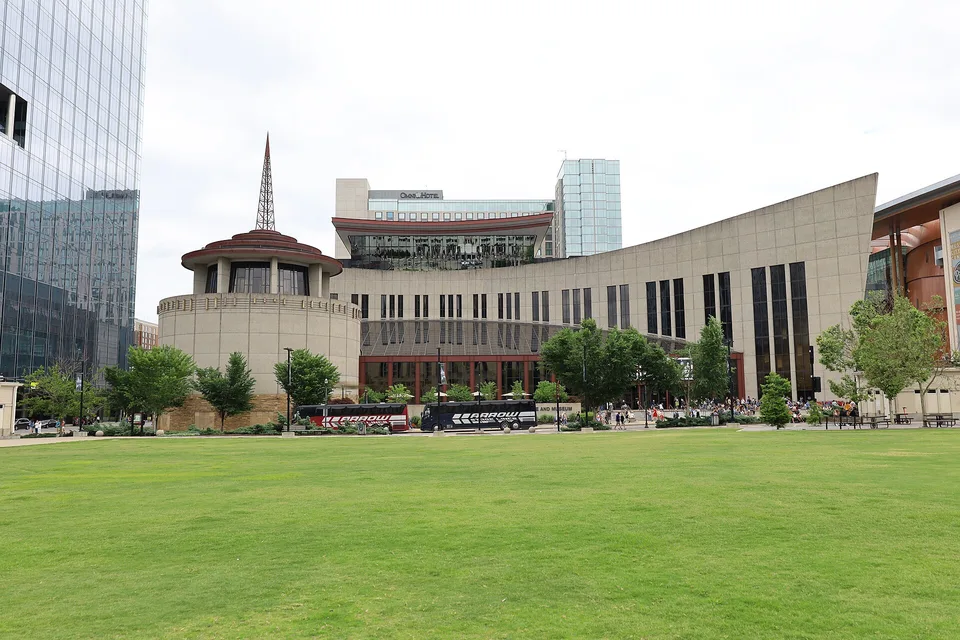
The Country Music Hall of Fame and Museum at 222 Rep. John Lewis Way South is a useful introduction to the artists, recordings and material culture behind the city’s reputation. Allow roughly two hours for the self-guided museum, then decide whether a supplementary experience interests you. That is a planning allowance, not a promise about queues or how quickly everyone reads the exhibits.
Normal opening is 9 a.m.–5 p.m., with holiday and special-event exceptions. The current ticket options list self-guided admission at $31.95 for adults aged 13 or older and $21.95 for children aged 6–12; check the final booking total. Historic RCA Studio B tours depart from the museum’s conservatory by organised bus; the operator asks participants to arrive 15 minutes beforehand. A ticket for that experience requires different timing from an ordinary museum visit. Avoid arranging your own arrival at the studio and assuming you can join there.
The Ryman and the Opry need separate plans
A Ryman daytime tour and an evening performance offer different ways to experience the building. The self-guided tour lets you concentrate on its history; a concert gives you the working venue. Read the ticket description carefully, because backstage access is a separate product and access to the stage depends on availability. An attractive photograph in promotional material does not guarantee that every visitor can stand in the same place.
The present Grand Ole Opry House is at 600 Opry Mills Drive in the Opryland and Music Valley area, away from the downtown Ryman. Check the venue printed on your booking, leave time for transport and plan the return trip before the show. The operator’s directions and parking information covers advance paid parking for evening shows. Do not build a schedule that treats an Opry performance as a quick walk after dinner downtown.
Centennial Park and the Parthenon
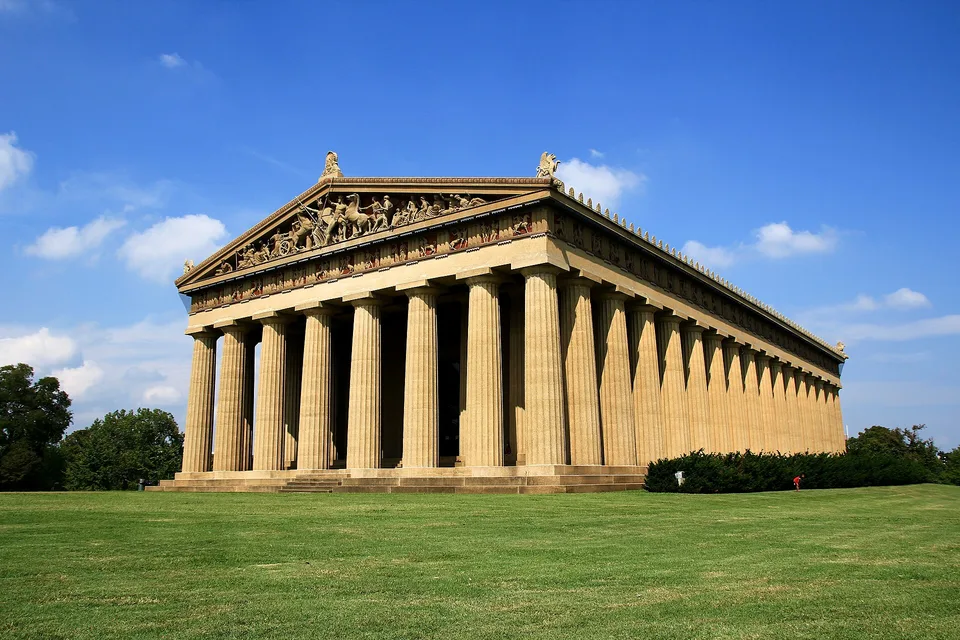
Centennial Park provides a different pace along West End Avenue: lawns, gardens, Lake Watauga and the Parthenon rather than another crowded entertainment stop. The park occupies former grounds of the 1897 Tennessee Centennial Exposition and opened as a public park in 1903. Its present concrete Parthenon was reconstructed between 1921 and 1931. The building contains an art museum and a full-scale replica of Athena.
Park access and museum admission follow separate rules. The museum currently charges $15 for adults, $10 for visitors aged 62 or older and children aged 4–17; younger children enter free. Tickets are purchased on site, and card payments carry a 2.3% convenience fee. Normal museum hours are Monday–Saturday 9 a.m.–4:30 p.m. and Sunday 12:30–4:30 p.m., with published exceptions. Bottles, even empty ones, and large bags are prohibited inside. Arrange luggage storage elsewhere before visiting.
A worthwhile museum day without an admission bill
The Tennessee State Museum offers free admission at 1000 Rosa L. Parks Boulevard, beside the Farmers’ Market and Bicentennial Capitol Mall State Park. Its galleries expand the trip beyond music into Tennessee’s natural history, Indigenous history and changing political and social life. Combine the museum with the nearby outdoor spaces rather than squeezing it between timed bookings on opposite sides of Nashville.
The museum closes on Mondays. Regular opening is Tuesday–Saturday 10 a.m.–5 p.m. and Sunday 1–5 p.m., with holiday closures. The shared parking lot has limited space and can fill on weekends; the operator asks visitors to respect neighbouring residential streets. Check its bag policy before arrival. Free entry makes this a practical choice for a tighter budget, but does not remove the need to account for transport, food and opening hours.
Book accommodation around the whole cost
Choose downtown or SoBro if the main purpose is to walk between central museums, dinner and music. Consider the Gulch for its own shops and dining, or Midtown and West End if Centennial Park or university-related appointments matter more. Opryland accommodation makes sense for activities in that area, but requires a separate plan for downtown. Use the official accommodation listings to identify properties, then inspect their own booking terms.
Compare the final checkout total, including taxes, parking, compulsory charges and cancellation rules. A lower room price farther out can lose its advantage after several car journeys. For a family or longer stay, confirm kitchen facilities, laundry access, bedding arrangements and any cleaning charge. Ask whether an advertised shuttle serves your exact destination at usable hours. A furnished short stay can help with a relocation search, but it does not establish that the same property is suitable or available for a long-term lease.
Arriving through Nashville International Airport
At BNA, the airport’s ground-transportation directions place the Ground Transportation Center on Level 1 of Terminal Garage 2. From the main terminal’s Level 1, follow the signs and covered pedestrian route. Ride-hailing, buses and other services have designated pickup arrangements; taxis use the centre’s South Wing. Follow the instructions for the mode you booked rather than assuming every vehicle meets passengers at the same terminal door.
WeGo Route 18 connects the airport with downtown’s Elizabeth Duff Transit Center at WeGo Central. The timetable reviewed for this guide showed services via Elm Hill, with scheduled journeys around 35–43 minutes on the displayed weekday trips. Older material mentions an express alternative; check the current departure you intend to use. Allow extra time for waiting, traffic, the terminal walk and the journey from WeGo Central to your accommodation. This bus connection is not an airport rail service.
WeGo fares and everyday transport
WeGo’s current local fare table lists a $2 adult two-hour fare with QuickTicket or supported contactless payment, a $4 day fare and a $65 calendar-month fare. Cash costs $2 for one ride, with no change or transfers. That distinction matters when a journey needs a connection. Keep the same payment method where required, and consult the operator’s instructions before assuming a pass or concession applies.
Discounted travel requires a WeGo Discount ID; age alone does not activate the discount. For a move east of downtown, investigate the WeGo Star commuter railway and its actual timetable. It serves the eastern corridor on weekday mornings and afternoons, rather than functioning as an all-day city metro. For buses, check both your outward departure and the last useful return. Walk the stop-to-door route too: the existence of a nearby bus stop does not establish that a late shift is manageable without a car.
Food, shopping and a realistic spending plan
Hot chicken is a recognisable Nashville meal: spiced fried chicken commonly served with white bread and pickles. Heat levels vary, so choose according to your tolerance rather than treating the strongest option as compulsory. The visitor board’s food information can help locate options. Read current menus directly, including allergy information and whether a dish is vegetarian, instead of relying on a neighbourhood’s reputation or an old restaurant roundup.
The Nashville Farmers’ Market combines an indoor market house with outdoor vendors. The building normally opens daily from 8 a.m.–8 p.m., but businesses keep individual hours and outdoor schedules vary by season. Leave room in the budget for tax, service charges or tips where applicable, transport and show tickets. For shopping, compare 12South’s boutiques with East Nashville’s record and vintage shops. Purchases are optional; a neighbourhood walk can be worthwhile without adding another bag to carry through museum security.
Prices worth using, and prices worth checking again
Some useful costs are published clearly: WeGo’s $4 digital day fare, the Parthenon’s $15 adult admission and free entry to the Tennessee State Museum. The Ryman’s self-guided tour was advertised at $25 plus tax under an autumn promotion ending October 31, 2026. Treat that as a dated offer, not a permanent fare. Verify the current price and product before paying, especially if a tour is packaged with another attraction.
Hotel rates, car rental, parking, meals and concert tickets depend on your dates and choices. Build a budget from actual bookable options rather than a supposed universal daily Nashville figure. Price one itinerary with central accommodation and buses, and another with an outer hotel and car expenses. For a household move, separate arrival costs from recurring bills; deposits and furnishings can make the first month considerably different from the months that follow.
For example, an adult using a digital local-bus day fare and buying standard Parthenon admission would allocate $19 before the museum’s possible card-payment fee. That calculation covers those two items only: it excludes meals, accommodation and any other transport or attraction. A free state-museum visit on another day can balance the cost of a booked music performance. Keep a separate allowance for the airport journey so you do not spend the return-trip money on your final evening.
Weather and when to visit
The National Weather Service’s Nashville climate table shows the seasonal difference clearly: January’s normal high is about 49°F, while July’s is around 91°F. Summer sightseeing needs breaks and indoor time; winter plans need warm clothing and flexibility when conditions disrupt travel. Rain falls throughout the year. Climate averages help with packing, but the forecast and current alerts determine what is sensible on a particular day.
Spring and autumn are reasonable starting points for a trip involving parks and walking, provided your dates also suit the performances you want. Compare accommodation prices around the actual event calendar before committing. Put outdoor activities earlier in a hot day and keep a museum alternative for wet weather. When considering a move, ask about heating, cooling and the home’s maintenance history rather than judging comfort from a brief visit during mild weather.
A three-day itinerary that leaves room to listen
Day one: begin with the Country Music Hall of Fame and Museum, allow time for lunch, and walk the downtown streets before your chosen evening performance. Add Studio B only if you have booked the appropriate departure and can give it space. Finish with a realistic return to your hotel, rather than assuming another late-night stop will always fit.
Day two: visit Centennial Park and the Parthenon, then choose a neighbourhood afternoon in 12South or the Midtown area. An evening at the Opry House needs its own outward and return transport. Day three: combine the Tennessee State Museum, Bicentennial Capitol Mall and Farmers’ Market, then explore Germantown or East Nashville according to your interests. Move the state museum day if it falls on Monday. With only two days, cut an area rather than compressing every attraction. This is an editorial suggestion; actual opening exceptions, tickets and weather take precedence.
Moving here: test the commute before choosing the lease
Start a housing search with the workplace, campus or regular appointment you must reach. Check the journey at the time you would actually travel, including transfers, parking and the walk at either end. A downtown sightseeing weekend cannot establish whether a home in another part of Nashville works for a household with two different commutes. Test both journeys and decide who would need the car when.
Visit shortlisted streets during an ordinary weekday and later in the evening. Locate groceries, a pharmacy, laundry facilities and useful transport. Ask about noise, deliveries, parking allocation, internet availability and how repairs are requested. For a student, confirm accommodation and transport arrangements with the institution. For employment, distinguish an accepted job and any required immigration permission from the possibility of finding work after arrival. Housing convenience cannot resolve eligibility to work.
If a car is essential, include insurance, fuel, maintenance and parking in the comparison between rentals. If you intend to rely on transit, save the relevant timetables and inspect the connection during your normal work hours. A cheaper home is useful only when the resulting routine is affordable and workable.
Housing paperwork and household setup
Request a written breakdown of rent, deposits, application charges, utilities, parking, pet terms and any compulsory service package. Clarify the lease length, renewal notice and early-termination terms. Verify the landlord or agent and the property before sending money, and document the condition at handover. The Tennessee Attorney General’s consumer-law resource identifies Davidson County among the counties covered by the state’s residential landlord-and-tenant framework; use its official assistance route for a specific dispute.
Nashville Electric Service lists a $250 residential security deposit, which can be waived following a successful credit check, and a $20 connection fee. It requests at least one business day’s notice and identification for a new account. Confirm whether you need your own electricity account and whether Metro Water Services billing is handled by the owner or tenant. Check providers for the exact address; do not assume every rental includes water, internet or heating costs.
Schools, health cover and ordinary services
Families should enter the proposed address in Metro Nashville Public Schools’ school finder before signing a lease. A school outside the assigned zone involves a separate optional application, eligibility and available space; the district does not provide bus transport for those outside-zone choices. Pre-kindergarten also has a different application process. Use the registration information to discuss documentation with the district rather than accepting an estate agent’s school promise.
Arrange health coverage for the relevant purpose and duration of your stay, and check that your chosen providers accept it. A travel policy and an employment-related household plan can have different conditions. Keep prescription records and allow time for establishing care. The Nashville Public Library offers free full-service cards to Davidson County residents, with identification and address verification. Libraries, school offices and utility customer services can make settling in easier, but their availability does not substitute for your own eligibility checks.
Tourism, work, study and permanent immigration
Nashville follows United States immigration rules. The State Department’s visitor-visa guidance distinguishes tourism from employment, degree study and permanent residence. Eligible travellers may use the Visa Waiver Program for tourism or permitted business visits of 90 days or less with approved ESTA and all other requirements met. Nationality alone is insufficient, and a visa or ESTA does not guarantee admission. Check official guidance before making non-refundable commitments.
For paid work, review the temporary worker categories and the employer’s role; most require an approved petition. For study, use the student-visa instructions and the institution’s international office. Permanent immigration involves a qualifying route and its own procedure. Buying property or finding an apartment provides neither work permission nor residence status. VisaWand’s United States country guide, destination information and consultant listings can support planning; official agencies remain the sources for application requirements and decisions.
Nearby alternatives and the decision to return
Historic downtown Franklin offers a regional outing centred on Main Street’s older buildings, shops and galleries. It is a separate city, so arrange transport and check opening times rather than treating it as another Nashville neighbourhood. If relocation is the purpose, compare an address there on its own commute and service arrangements. A pleasant day trip does not prove that a daily journey will suit your household.
For a broader comparison, VisaWand’s Austin city guide provides another music-oriented destination with its own transport and housing considerations. The United States location directory helps you browse places; individual listings may not contain a completed guide. Return to Nashville with a clear shortlist: the performances you want, the neighbourhood that serves your days, and, for a move, a tested commute and complete household budget. Those decisions are more useful than an itinerary that merely collects famous names.
Official planning resources
Reviewed 13 October 2026. Use the official resources linked throughout this guide for admission, transport, housing and immigration decisions. Prices, services and rules can change; confirm the details relevant to your dates. Photography illustrates the locations and is not a live view.
View all official resources
- Nashville Public Library account of the river settlement and growth
- University of Tennessee archive of the law establishing the state capital
- Metro government consolidation anniversary and history
- Fisk University and Jubilee Singers history
- Ryman Auditorium history and former Opry home
- Official Nashville neighbourhood directory
- Germantown visitor information
- East Nashville visitor information
- 12South shopping and neighbourhood geography
- Country Music Hall of Fame visit policies and Studio B departure instructions
- Current museum admission and experience prices
- Ryman tour products and current offers
- Grand Ole Opry House visit planning and venue addresses
- Opry House directions and evening parking arrangements
- Metro Parks Centennial Park history and visitor information
- Parthenon museum admission, hours and bag restrictions
- Free Tennessee State Museum entry, hours and practical information
- Official Nashville accommodation listings
- BNA ground-transportation pickup locations
- Current Route 18 airport timetable and detours
- WeGo local fares, cash-transfer restrictions and discounts
- WeGo Star weekday commuter service and stations
- Visitor information about Nashville hot chicken
- Farmers’ Market seasonal hours and customer parking limits
- National Weather Service Nashville climate tables
- Tennessee Attorney General consumer and tenant resources
- NES residential account requirements, deposits and connection fee
- Metro Water Services account and customer information
- Metro Nashville school zoning and optional-school rules
- Official school registration information
- Nashville library card eligibility and address verification
- Official visitor visa purposes and applications
- Visa Waiver Program and ESTA eligibility
- Official temporary worker visa categories
- Official student visa and school requirements
- Official permanent immigration categories
- Williamson County visitor bureau information on historic Franklin
Plan the next part of your journey
Explore the United States guide, browse other cities or compare consultants for your travel and relocation questions.