Visa
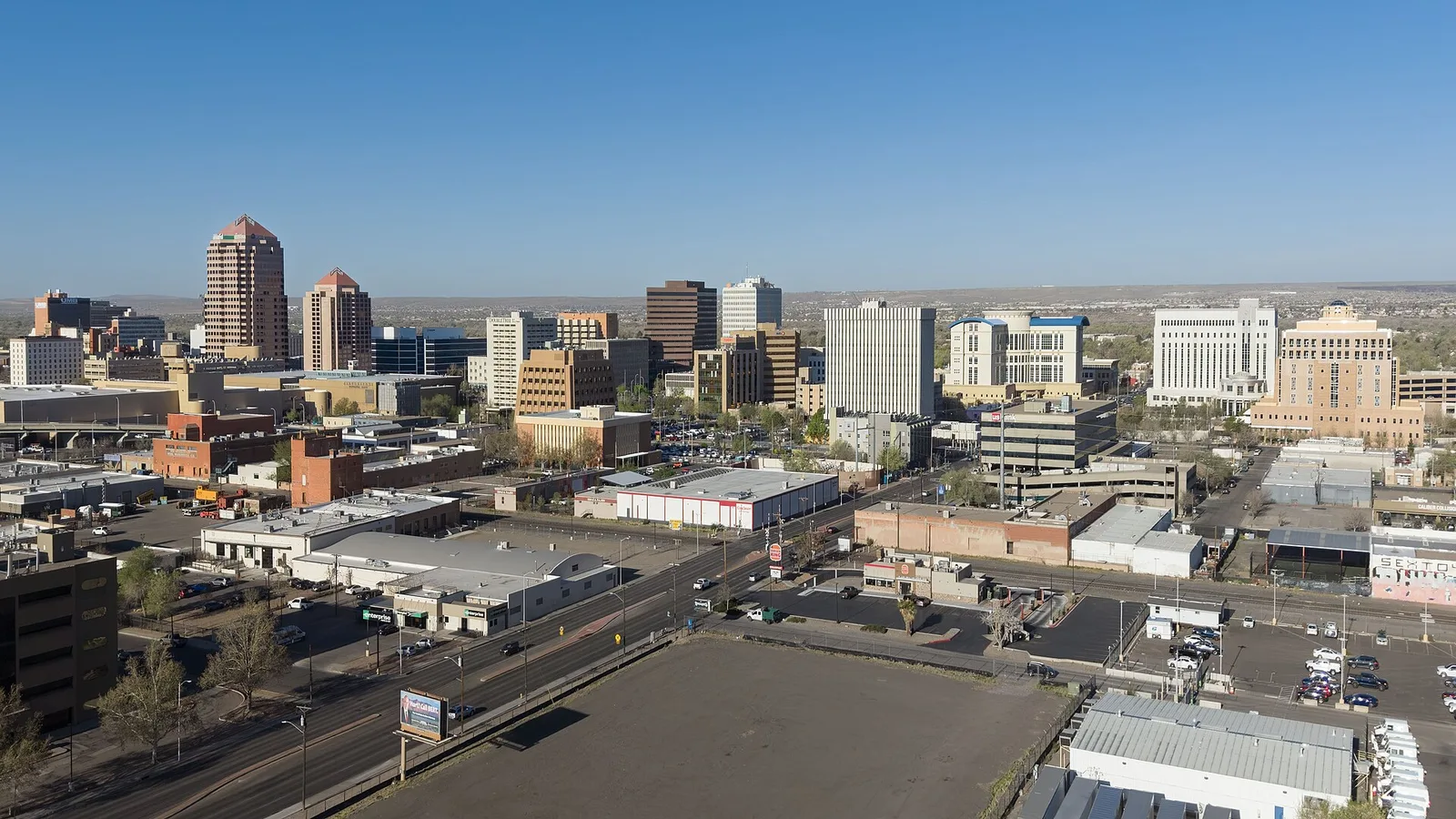
Albuquerque between the river and the mountains
Albuquerque is a city where the setting changes the practical decisions. Old Town's plaza, downtown streets and the Sandia foothills offer different kinds of days; they also require different journeys. A museum visit can stay within a compact district, while a mountain outing needs transport, suitable clothing and a plan that can change with the weather.
Start by choosing what matters most: art and history, Pueblo culture, the landscape or a longer investigation of everyday life. The strongest first visit connects a few of these interests without treating every attraction as compulsory. Leave time for meals, rest and the return journey rather than filling the calendar with tightly spaced bookings.
For someone considering relocation, geography becomes a household question. Test the route between a real home and workplace, understand the utility arrangements, and check schools against the exact address. A holiday around Old Town can reveal part of the city, but it cannot establish whether a particular rental suits an ordinary working week.
Old Town and a longer history
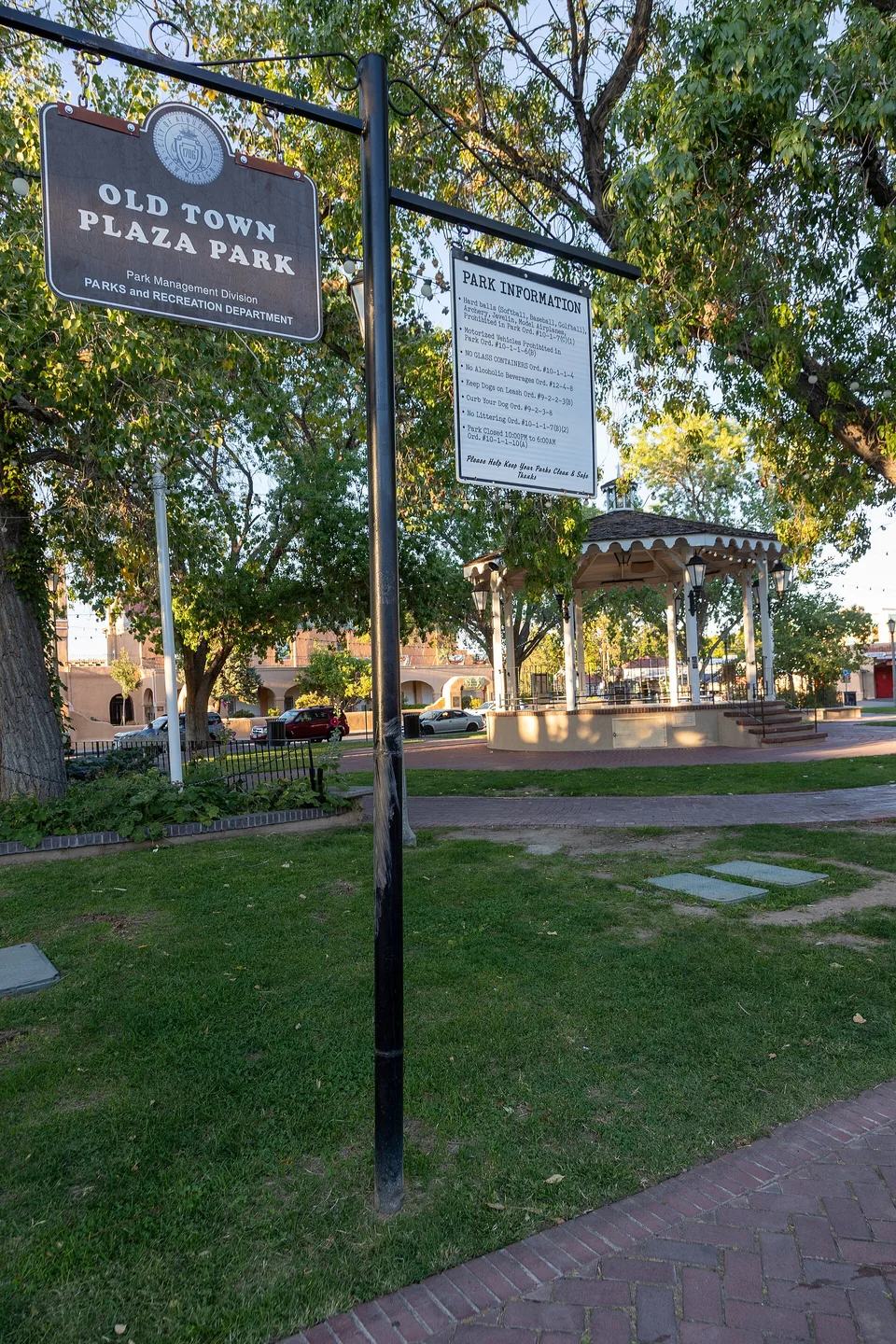
The city's municipal history records its founding in 1706. That date describes the colonial town's establishment, not the beginning of human life in the region. The Indian Pueblo Cultural Center provides an essential way to learn about Pueblo history and contemporary culture through an institution where Pueblo people tell their own stories.
Old Town makes a useful starting point for an architectural and cultural visit. Use the official district information to connect the plaza, shops and museum area, and check individual opening hours before travelling for a specific business. A walk through the streets and an indoor visit need not occupy the same pace.
Avoid treating a living community as a static historical display. Shops, religious places and residential streets have their own rules and purposes. Ask before photographing where permission is needed, respect entrances and private property, and let the visit include present-day life as well as the city's historical buildings.
Albuquerque Museum: modest prices and specific free periods
The Albuquerque Museum at 2000 Mountain Road NW opens Tuesday–Sunday, 9am–5pm, with Monday and holiday closures. Its published general admission is $6 for out-of-state adults, $5 for New Mexico resident adults, $4 for seniors aged 65 and over, and $3 for children aged 4–12; younger children enter free.
There are useful free-admission periods: Sunday mornings from 9am–1pm and the first Wednesday of the month. The museum explicitly excludes Balloon Fiesta from the free-admission arrangement, so do not assume a festival-week visit qualifies. Check the calendar and selected ticket before making that saving part of your budget.
Choose the exhibitions that interest your party and leave time for the surrounding Old Town area. Casa San Ysidro has separate tour admission and should not be mistaken for an additional building included automatically in a museum ticket. A reasonably priced visit still benefits from advance planning when opening days or a particular exhibition determine the trip.
The Indian Pueblo Cultural Center and community visits
The Indian Pueblo Cultural Center presents the histories and contemporary life of New Mexico's 19 Pueblos through exhibitions, murals and cultural programmes. Its own visitor information is a better foundation for understanding these communities than assuming they share one history or an identical approach to visitors.
Check the current programme before travelling for a dance, tour or particular exhibition. The museum, courtyard, restaurant and store answer different interests, and a meal booking is not automatically a museum admission. Allow time to read and look closely rather than treating a cultural visit as a short stop between photographs.
Visiting a Pueblo itself requires another conversation. The Center's community-visit guidance asks visitors to call the Pueblo directly at least two days ahead to confirm that it is open. Follow that community's rules on entry, photography and events. A public visitor resource does not establish permission to enter every place or photograph a ceremony. Plans should remain flexible if a community is closed to visitors.
For another concrete admission comparison, the Cultural Center's published visitor prices list standard adult admission at $12 on weekdays and $15 on weekends. Reduced categories have their own eligibility conditions, so check the appropriate category before calculating a family total. The price includes the museum and current exhibits, with scheduled activities depending on the programme. Opening hours, ticket terms and the day's events should be read together: a general admission price does not establish that a particular performance will take place during your visit.
Downtown, Nob Hill and the neighbourhood map
The official neighbourhood directory is useful for separating a few very different trip settings. Old Town's plaza does not substitute for downtown, and neither should be confused with a foothills address. Choose a district around the activities you want, then check the journey to the next one.
Use the city and district maps to arrange shopping, meals and transport together. Nob Hill's Central Avenue corridor can be investigated as a neighbourhood outing; a specific shop or restaurant still needs its own opening-hour check. Avoid building a day around a business merely because an older guide mentions it.
For relocation, put a prospective address on a daily-journey map. Check groceries, healthcare, school arrangements and the commute at the times you would travel. A visitor district can offer an appealing afternoon without answering every household need. Compare the actual building and route rather than choosing a home solely through the name of its neighbourhood.
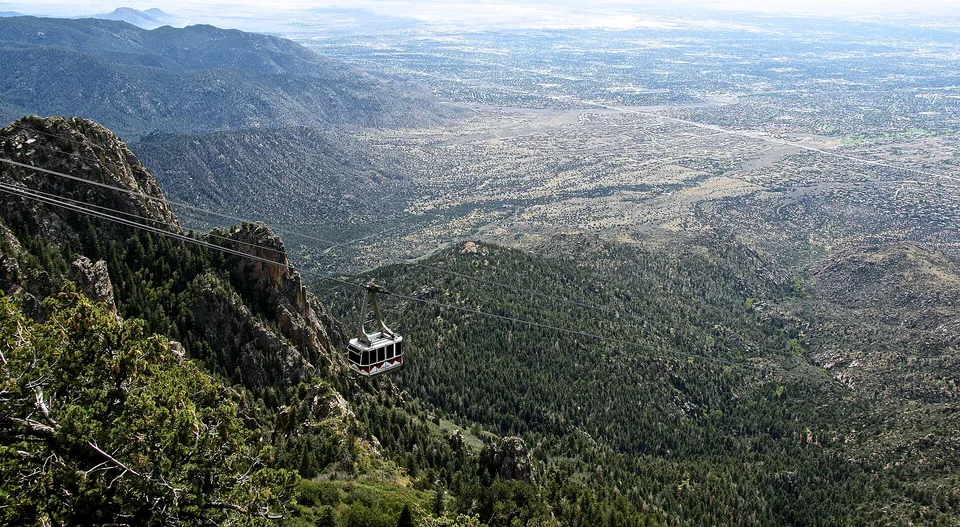
Sandia Peak Tramway: plan for the mountain
The Sandia Peak Tramway's guidance describes a roughly 15-minute ride to the upper terminal, with departures rather than a rigid timed boarding schedule. Purchase the selected ticket through the operator's booking page and keep room in the day for waiting and the journey back down. A dining reservation at the summit is not a guarantee of immediate tram boarding.
The upper terminal is at 10,378 feet, substantially higher than the city. Conditions can change quickly, so bring suitable layers, water and footwear rather than assuming the weather at your accommodation will continue at the top. Check current operating notices before setting out, and preserve another activity if weather interrupts service.
The operator describes wheelchair and walker access through the terminals, cars and decks. Discuss specific requirements directly, including the onward route beyond the deck if you want to walk farther. Strollers are permitted, while pets are not; service animals are treated separately. Confirm the complete price and applicable fees when booking.
Petroglyph National Monument: go to the right trailhead
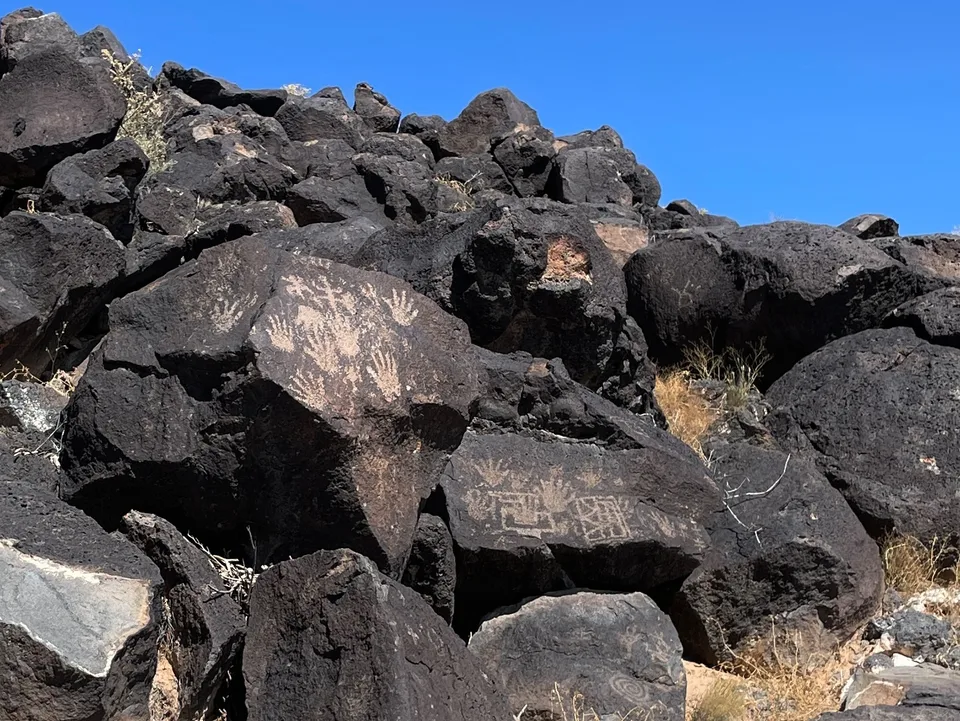
Petroglyph National Monument has a consequential arrival detail: there are no petroglyph-viewing trails at the visitor centre. The National Park Service advises visitors being dropped there to ask the driver to wait, because another journey is needed to reach a viewing trailhead. You do not have to visit the centre before hiking.
Use the official directions to select a trail suited to your available time and mobility. The monument's entrance is free, but that does not remove the need to understand access and parking arrangements. The visitor centre and gated trailhead parking areas close at 4.30pm; Boca Negra Canyon has its own opening and last-entry times.
Check the trail information and current alerts before leaving. Take water, allow for exposed conditions, and follow the park's rules around the rocks and cultural resources. The visit should be about looking and learning, rather than treating carvings as a surface to touch or an object to take home. Arrange the return transport as carefully as arrival.
Airport arrivals and the limits of the bus option
Albuquerque International Sunport's ground-transport page lists Route 50 as serving the terminal on weekdays and Saturdays. It marks Route 250 as temporarily suspended. Do not rely on an older description of that shuttle when organising an arrival; check the current city timetable against your flight date and time.
The airport places rideshare pickup by Door 7 on the baggage-claim level and taxis by Door 2. Compare the complete journey with the available bus connection, particularly if arriving late or on a day without the listed bus service. Your hotel's precise location matters more than its general Albuquerque label.
Rental cars use a separate centre reached by a free airport shuttle operating around the clock. That shuttle's hours do not mean regular city buses run all night. Establish the collection and return terms with the rental provider and budget for parking at your accommodation. A car can assist with dispersed outings, but should be chosen around the actual itinerary rather than assumed necessary for every day.
Fare-free city buses and realistic commuting
The city's current transit information states that ABQ RIDE services operate with zero fares. Fixed-route buses follow published paths and signed stops, so plan around the route and timetable rather than simply the absence of a ticket price. Free travel can still involve a transfer or a long wait.
Check the current schedule for each journey, including service changes and holiday arrangements. An airport bus, a Central Avenue outing and a suburban commute answer different transport questions. Do not assume the same operating days or frequency throughout the network.
For a prospective resident, test travel at the hour you would actually leave home and finish work. Include the walk from the stop, groceries and any school journey. Compare that with driving costs and parking arrangements before deciding whether a household needs a car. A pleasant visitor itinerary offers only a partial test of transport; a repeatable ordinary week is the more useful measure for relocation.
Choosing accommodation around the journey
Start with the places you expect to visit, then compare accommodation on the same map. Old Town makes sense for a trip centred on the plaza and nearby museum. Downtown deserves consideration when rail connections are important. An airport-area room can simplify an early departure, but its usefulness for sightseeing depends on the onward journey. These are planning priorities, not guarantees about every property's location or service.
The tourism board's searchable accommodation directory provides a starting point for comparing properties. Its regional listings extend beyond Albuquerque itself: check the street address before treating a result as a city-centre option. Confirm accessibility directly, including the route from parking or reception to the bedroom, rather than relying only on an amenity icon.
Compare the final payable total, cancellation deadline, parking charge and any breakfast provision. Families and longer-stay visitors should establish whether a kitchenette is usable for their intended meals and whether laundry is available. For a reconnaissance trip before moving, consider dividing the stay between sightseeing and testing an ordinary residential routine. A hotel beside an attraction cannot establish how convenient a distant prospective home will be.
New Mexican food and a budget with clear boundaries
Albuquerque's official food overview describes a cuisine shaped by Native American, Spanish and Mexican traditions. Red and green chile are useful starting points for exploring local menus. Ask about ingredients and heat rather than assuming colour predicts either. Dietary requirements deserve a direct conversation: a familiar dish name does not establish how its sauce, stock or filling is prepared.
Build the food budget from actual menus near your accommodation and outings. Check whether displayed prices include the items you expect, then allow for applicable tax and your intended tip. A grocery stop can make breakfasts and picnic lunches easier, but verify opening hours and the journey back with shopping. Spending less on meals is only useful if the saving does not create an expensive transport detour.
Admission costs are clearer than a universal daily spending estimate. The Albuquerque Museum publishes a $6 general-admission price for an adult from outside New Mexico, while Petroglyph National Monument has no entrance fee. Tram tickets, accommodation and car hire require current quotes. Keep those large variable purchases separate from the smaller predictable costs instead of presenting one daily figure as suitable for every visitor.
Rail Runner trips beyond Albuquerque
The New Mexico Rail Runner Express fare page describes six fare zones along the corridor between Belen and Santa Fe. The ticket depends on the zones travelled; a city bus being free does not make this train free. The operator publishes different onboard and online day-pass prices, so calculate the journey before buying rather than borrowing a fare from another route.
Check the current timetable in both directions before committing to a day trip. Allow time between the station and the actual place you want to visit, and identify the return train before starting the outing. A rail connection can make Santa Fe worth considering alongside Albuquerque, but it should not be treated as a frequent urban shuttle without checking the service available that day.
VisaWand's Santa Fe location directory provides its recorded geographical details and consultant-search links. Use it to explore another location, alongside the operator's timetable for a proposed rail journey.
Housing decisions before signing a lease
A permanent move requires a different map from a holiday. Put the workplace, regular shopping and any school or care commitments on it before comparing properties. Visit an address at different times, examine the actual parking and pedestrian access, and test the commute. A neighbourhood name cannot tell you whether a particular home meets your household's needs.
Ask for a written breakdown of rent, deposits, application charges and utilities. Establish which services the owner pays for, which accounts you must open, and whether the advertised amount changes with the lease term. Inspect heating, cooling, windows and appliances; record the condition at handover. Obtain permission and charges for pets in writing if relevant. These checks make two apparently similar offers easier to compare.
Use the New Mexico courts' landlord and tenant resources for state-specific information and forms. Consult the current material or obtain qualified advice about a disputed clause rather than applying rules remembered from another state. Short-term accommodation can give a newcomer time to inspect housing and understand the commute before accepting a longer commitment. Build that temporary expense into the relocation budget instead of assuming a permanent home will be ready on arrival.
Electricity, schools and the first ordinary week
PNM's new-customer instructions ask applicants to arrange electricity at least three business days before moving. Establish the service address, proposed start date and any connection charge or deposit with the provider. The account process lists identifying information; newcomers who cannot supply an item should contact PNM directly to establish their options. Electricity setup should be coordinated with the tenancy start, not left until the evening of arrival.
Confirm the arrangement for water, heating fuel and internet at the particular property. Some services may be included in rent while others require an individual account. Ask for recent usage information where available, distinguishing actual consumption from a landlord's estimate. An attractive monthly rent is only part of the household's recurring cost.
Families can start with Albuquerque Public Schools' registration instructions and its address-based school finder. Establish the relevant school, registration documents and transport arrangements before using an assumed school assignment to choose housing. Keep copies of previous school records and ask the district how to handle a transfer.
For healthcare, compare the coverage available through work, study or an individual policy, including the provider network and prescription arrangements. Visitors should check their travel policy's duration and exclusions; prospective residents need to establish coverage appropriate to their circumstances. A hospital being nearby does not establish that a particular insurance plan will cover routine treatment there.
Seasons, elevation and a workable three-day visit
The tourism board's seasonal weather information describes Albuquerque's high-desert conditions and substantial differences between summer and winter. Spring and autumn are useful starting points for comparing dates, while summer outings need heat-conscious planning and winter trips should allow for cold and possible snow. Check the forecast for the actual visit, especially before heading uphill: conditions at the tram's upper terminal are a separate consideration from downtown weather.
Bring layers and carry water for outdoor time. Plan a shorter first walk before committing to a strenuous outing at elevation. A sunny forecast does not establish that a mountain trail is appropriate for your equipment or experience. Use the park or attraction's current operating information alongside the forecast, and retain an indoor alternative when weather changes the plan.
For three days, group experiences geographically rather than attempting every headline attraction at once:
Day one: explore Old Town, allowing time around the plaza and for the Albuquerque Museum during its opening hours. Choose lunch nearby and leave space for looking through shops rather than booking a distant activity immediately afterwards. Museum galleries provide context for the streets outside; the combination works better with an unhurried afternoon.
Day two: visit the Indian Pueblo Cultural Center and consult its programme for the date. Allow time for the exhibits before adding another outing. A meal there can fit the day if the restaurant's current service suits your plans. This visit does not confer access to Pueblo communities, which have their own visitor arrangements.
Day three: choose Petroglyph National Monument or the Sandia Peak Tramway around the weather, transport and household's interests. For the monument, identify the correct viewing trailhead before departure. For the tram, leave flexibility for boarding and conditions. Attempt both only after comparing the complete journeys; a single well-planned outdoor experience can be more satisfying than two hurried arrivals.
Someone considering relocation should add a separate weekday for housing appointments and a trial commute. Those tasks compete with sightseeing for time and should not be squeezed into an already full museum day.
Visiting, working, studying and settling legally
Albuquerque follows United States immigration rules; choosing the city does not create a separate visa entitlement. Begin with the purpose of the stay. The State Department's visitor-visa guidance distinguishes temporary tourism from activities requiring another immigration category. A holiday itinerary or accommodation booking does not authorise employment or permanent residence.
Eligible travellers using the Visa Waiver Program generally visit for business or tourism for no more than 90 days and need the applicable travel authorisation. Check official ESTA information against your nationality, passport and circumstances. Approval allows travel under the programme's conditions; admission remains a border decision. Avoid treating repeated short visits as a substitute for residence.
For employment, study or a permanent move, investigate the appropriate official route before committing to a start date, course or lease. Review USCIS information and the relevant consular instructions; the correct process depends on individual eligibility. VisaWand's United States country guide provides wider planning context, while its consultant listings can help identify professional support. Verify the adviser’s qualifications and scope before engaging them, and use government pages for applications and current requirements.
Official planning resources
Reviewed 13 October 2026. Use the official resources linked throughout this guide for admission, transport, housing and immigration decisions. Prices, services and rules can change; confirm the details relevant to your dates. Photography illustrates the locations and is not a live view.
View all official resources
- Official Albuquerque neighbourhood directory
- Official Albuquerque district maps
- Sunport current ground transport
- ABQ RIDE routes, schedules and zero fares
- Sandia Peak Tramway ticket booking
- Sandia Peak Tramway visitor questions
- Sunport rental car centre shuttle
- Petroglyph National Monument entrance fees
- Albuquerque Museum visitor information
- Indian Pueblo Cultural Center community visiting guidance
- Albuquerque municipal historical account
- Official Old Town visitor information
- Indian Pueblo Cultural Center
- Petroglyph National Monument trailheads and hours
- Albuquerque Museum admission prices
- New Mexico courts landlord and tenant resources
- PNM new residential service instructions
- Albuquerque Public Schools registration and transfers
- Indian Pueblo Cultural Center hours and prices
- Official regional accommodation directory
- Official New Mexican cuisine overview
- Rail Runner Express fare zones and tickets
- Official Albuquerque seasonal weather information
- US visitor visa purposes and applications
- CBP official ESTA eligibility information
- US Citizenship and Immigration Services
Plan the next part of your journey
Explore the United States guide, browse other cities or compare consultants for your travel and relocation questions.